• Home
  • Latest
  • Fortune 500
  • Finance
  • Tech
  • Leadership
  • Lifestyle
  • Rankings
  • Multimedia

Trendingnow

1

After forcing workers back to the office, Goldman Sachs and JPMorgan Chase are now letting their staff work remotely—but only for the World Cup

2

The Pentagon said Iran War costs $29 billion,but the real cost is closer to $200 billion—and counting

3

Markets tumble worldwide as Fed resets expectations: $400 billion wiped off SpaceX stock

1

After forcing workers back to the office, Goldman Sachs and JPMorgan Chase are now letting their staff work remotely—but only for the World Cup

2

The Pentagon said Iran War costs $29 billion,but the real cost is closer to $200 billion—and counting

3

Markets tumble worldwide as Fed resets expectations: $400 billion wiped off SpaceX stock
Commentary

Why parmesan cheese may cease to exist in America

By
Nicola Persico
Nicola Persico
and
Nicola Scocchi
Nicola Scocchi
Down Arrow Button Icon
By
Nicola Persico
Nicola Persico
and
Nicola Scocchi
Nicola Scocchi
Down Arrow Button Icon
June 4, 2015, 11:52 AM ET
86495443
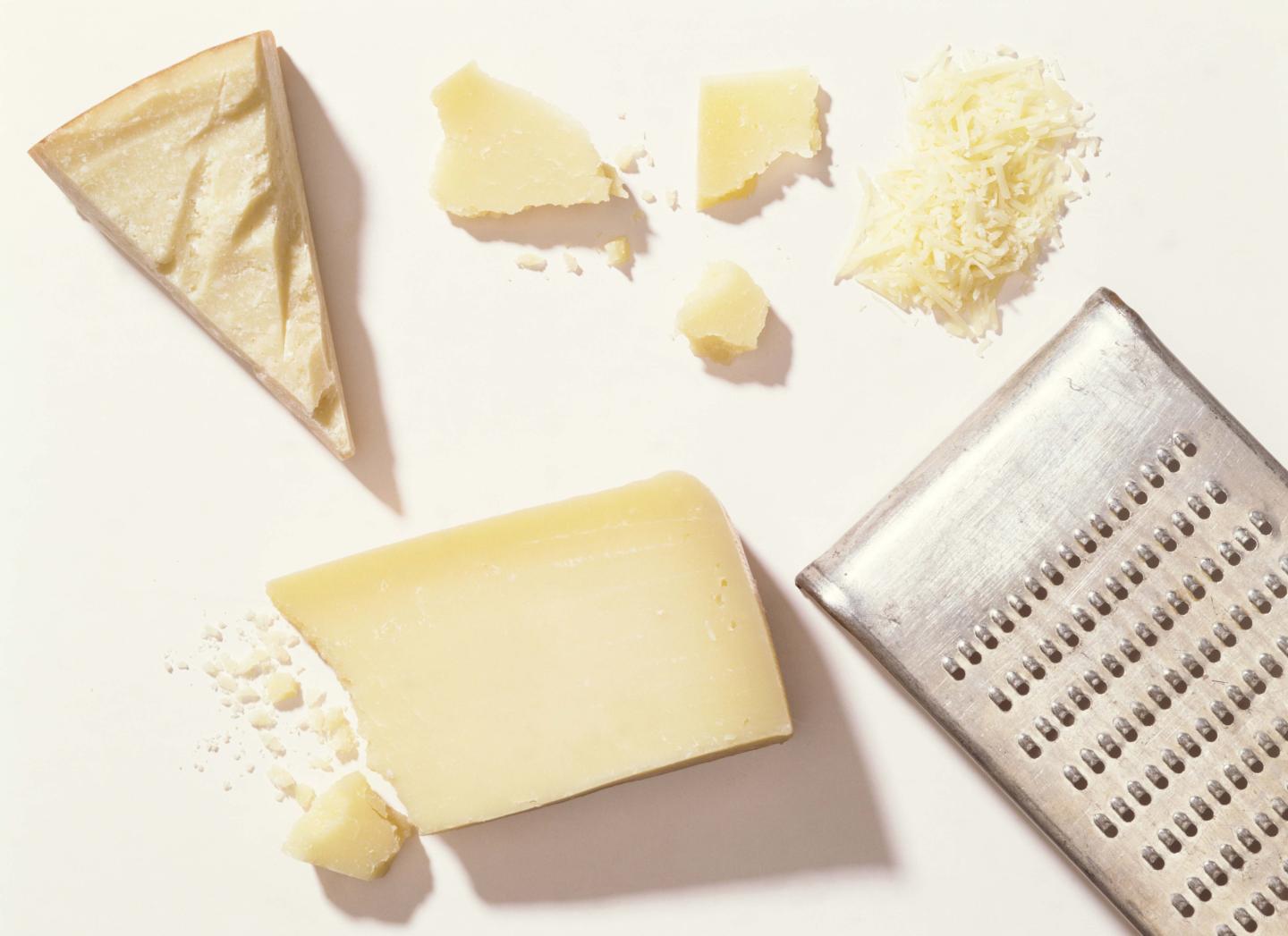
Parmesan cheese with graterPhotograph by Getty Images
Add Fortune on Google for similar content.

As the European Parliament continues to negotiate a trade deal between the U.S. and European Union, a key issue to watch concerns a concept called geographical indications (GI) — that is, how the names of foods and products from specific regions are derived. These names are viewed as non-tariff barriers, which matter because they are the last significant friction in international trade, which the Transatlantic Investment Partnership treaty aims to lower.

The EU is fond of being sticklers for naming their foods a certain way, the US not so much. For example, in Europe parmesan cheese can only be marketed as Parmigiano Reggiano if it is produced in the Reggio Emilia area. Cheeses that are very similar in taste and texture, but are not produced in that geographical area must find themselves another name; this is why in Italy parmesan cheese is also available under the less exclusive (and cheaper) brand Grana Padano. In the US, by contrast, anyone anywhere can produce parmesan cheese and market it under that name.

The difference between these two legal regimes is significant. The EU system pinpoints a product, such as parmesan cheese, and makes it into a brand. This makes it difficult for competitors to introduce a competing product, and thus protects incumbents. Economic theory suggests that this would prop up prices. At the same time, quality can be expected to be maintained high because, with few authorized producers, nobody has an incentive to dilute quality.

The U.S. approach, by contrast, allows anyone to market their cheese as parmesan. This encourages competition and keeps a lid on prices. On the other hand, quality may well suffer especially if cheese makers end up competing in the price dimension. Which approach, the EU or the US one, is better depends on the circumstances.

Among EU countries, Italy is the one with the greater number of GI-recognized brand (beside Parmigiano Reggiano, think Prosciutto di Parma, Chianti Classico, Mozzarella di Bufala Campana, Mortadella Bologna, etc.). Italian producers are so fond of the GI protection that they have come up with a new, broad concept of counterfeiting: “italian sounding.” According to the Italian Ministry of the Economy, brand names that sound Italian cannot be utilized by foreign producers. Following this novel doctrine, one congresswoman recently raised in Parliament the concern of “italian-sounding” counterfeiting with regards to Parrano cheese.

Parrano is a cheese that tastes like Parmesan and has the consistency of Gouda. It is produced by a Dutch company, it is marketed in the US, and it is delicious. However, the name has clearly been chosen to evoke Parmigiano. Congresswoman Alessandra Terrosi took issue with that, and asked the Italian government to intervene. The government answered that they were exploring diplomatic channels. We do not know the outcome of this diplomacy.

The Parrano cheese case highlights another important consequence of the EU’s broad approach to brand name protection. If Congresswoman Terrosi were to prevail and the name Parrano was deemed illegal, then a supermarket customer would not be able to guess that this cheese tastes very similar to Parmigiano. This would presumably hurt sales. Thus, a socially useful innovation (soft parmesan cheese, finally!) would be discouraged.

EU producers view the TTIP as an opportunity to extend the GI (and maybe even “italian-sounding”) principle to the US. The US will likely resist this push. The negotiations are ongoing. While the final outcome is difficult to predict, the stakes are high for many producers – and for consumers, too. If the EU’s position prevails, US customers may find Parrano cheese and many other goods to be suddenly unavailable.

Nicola Persico is a professor at Northwestern University’s Kellogg School of Management and Nicola Scocchi is an Accredited Parliamentary Assistant in the European Parliament. This article constitutes the personal opinions of Nicola Scocchi and Nicola Persico and not the one of their employers.

About the Authors
By Nicola Persico
See full bioRight Arrow Button Icon
By Nicola Scocchi
See full bioRight Arrow Button Icon
Add Fortune on Google for similar content.

Latest in Commentary

Finance
Lorem ipsum dolor sit amet, consectetur adipiscing elit, sed do eiusmod tempor incididunt ut labore et dolore magna aliqua. Ut enim ad minim veniam
By Fortune Editors
October 20, 2025
Finance
Lorem ipsum dolor sit amet, consectetur adipiscing elit, sed do eiusmod tempor incididunt ut labore et dolore magna aliqua. Ut enim ad minim veniam
By Fortune Editors
October 20, 2025
Finance
Lorem ipsum dolor sit amet, consectetur adipiscing elit, sed do eiusmod tempor incididunt ut labore et dolore magna aliqua. Ut enim ad minim veniam
By Fortune Editors
October 20, 2025
Finance
Lorem ipsum dolor sit amet, consectetur adipiscing elit, sed do eiusmod tempor incididunt ut labore et dolore magna aliqua. Ut enim ad minim veniam
By Fortune Editors
October 20, 2025
Finance
Lorem ipsum dolor sit amet, consectetur adipiscing elit, sed do eiusmod tempor incididunt ut labore et dolore magna aliqua. Ut enim ad minim veniam
By Fortune Editors
October 20, 2025
Finance
Lorem ipsum dolor sit amet, consectetur adipiscing elit, sed do eiusmod tempor incididunt ut labore et dolore magna aliqua. Ut enim ad minim veniam
By Fortune Editors
October 20, 2025

Most Popular

Finance
Lorem ipsum dolor sit amet, consectetur adipiscing elit, sed do eiusmod tempor incididunt ut labore et dolore magna aliqua. Ut enim ad minim veniam
By Fortune Editors
October 20, 2025
Finance
Lorem ipsum dolor sit amet, consectetur adipiscing elit, sed do eiusmod tempor incididunt ut labore et dolore magna aliqua. Ut enim ad minim veniam
By Fortune Editors
October 20, 2025
Finance
Lorem ipsum dolor sit amet, consectetur adipiscing elit, sed do eiusmod tempor incididunt ut labore et dolore magna aliqua. Ut enim ad minim veniam
By Fortune Editors
October 20, 2025
Finance
Lorem ipsum dolor sit amet, consectetur adipiscing elit, sed do eiusmod tempor incididunt ut labore et dolore magna aliqua. Ut enim ad minim veniam
By Fortune Editors
October 20, 2025
Finance
Lorem ipsum dolor sit amet, consectetur adipiscing elit, sed do eiusmod tempor incididunt ut labore et dolore magna aliqua. Ut enim ad minim veniam
By Fortune Editors
October 20, 2025
Finance
Lorem ipsum dolor sit amet, consectetur adipiscing elit, sed do eiusmod tempor incididunt ut labore et dolore magna aliqua. Ut enim ad minim veniam
By Fortune Editors
October 20, 2025
Fortune Secondary Logo
Rankings
  • 100 Best Companies
  • Fortune 500
  • Global 500
  • Fortune 500 Europe
  • Most Powerful Women
  • World's Most Admired Companies
  • See All Rankings
  • Lists Calendar
Sections
  • Finance
  • Fortune Crypto
  • Features
  • Leadership
  • Health
  • Commentary
  • Success
  • Retail
  • Mpw
  • Tech
  • Lifestyle
  • CEO Initiative
  • Asia
  • Politics
  • Conferences
  • Europe
  • Newsletters
  • Personal Finance
  • Environment
  • Magazine
  • Education
Customer Support
  • Frequently Asked Questions
  • Customer Service Portal
  • Privacy Policy
  • Terms Of Use
  • Single Issues For Purchase
  • International Print
Commercial Services
  • Advertising
  • Fortune Brand Studio
  • Fortune Analytics
  • Fortune Conferences
  • Business Development
  • Group Subscriptions
About Us
  • About Us
  • Press Center
  • Work At Fortune
  • Terms And Conditions
  • Site Map
  • About Us
  • Press Center
  • Work At Fortune
  • Terms And Conditions
  • Site Map
  • Facebook icon
  • Twitter icon
  • LinkedIn icon
  • Instagram icon
  • Pinterest icon

Latest in Commentary

steve
Commentary250 Years of Innovation
Steve Case: America was built by entrepreneurs. Here’s how we keep that edge for the next 250 years
By Steve CaseJune 24, 2026
2 hours ago
t
CommentaryWhite House
Trump mistakes the bully pulpit for bullying leadership — history’s villains were never heroes
By Jeffrey Sonnenfeld and Steven TianJune 24, 2026
2 hours ago
mg
CommentaryHealth
The ‘tech neck’ time bomb: why 43 million young Americans could cripple U.S. health care within a generation
By Michael GerlingJune 24, 2026
3 hours ago
sb
Commentaryclimate change
The climate policy triangle: why leaders can no longer choose between growth, security and sustainability
By Sebastian BuckupJune 23, 2026
17 hours ago
brett
CommentaryManagement
Middle managers aren’t going extinct—they’re evolving into something more powerful
By Brett HurtJune 23, 2026
1 day ago
ravi
CommentaryAI agents
Yale School of Management: surveillance pricing is just the beginning. AI agents will be the real test of corporate trust
By Ravi Dhar and Jon IwataJune 23, 2026
1 day ago

Most Popular

After forcing workers back to the office, Goldman Sachs and JPMorgan Chase are now letting their staff work remotely—but only for the World Cup
Success
After forcing workers back to the office, Goldman Sachs and JPMorgan Chase are now letting their staff work remotely—but only for the World Cup
By Orianna Rosa RoyleJune 23, 2026
1 day ago
The Pentagon said Iran War costs $29 billion,but the real cost is closer to $200 billion—and counting
Economy
The Pentagon said Iran War costs $29 billion,but the real cost is closer to $200 billion—and counting
By Jacqueline MunisJune 24, 2026
7 hours ago
Markets tumble worldwide as Fed resets expectations: $400 billion wiped off SpaceX stock
Banking
Markets tumble worldwide as Fed resets expectations: $400 billion wiped off SpaceX stock
By Jim EdwardsJune 23, 2026
1 day ago
Current price of oil as of June 23, 2026
Personal Finance
Current price of oil as of June 23, 2026
By Joseph HostetlerJune 23, 2026
1 day ago
Texas and Charlotte used to build huge McMansions—now they're copying the California design tricks they once mocked
Real Estate
Texas and Charlotte used to build huge McMansions—now they're copying the California design tricks they once mocked
By Sydney LakeJune 22, 2026
2 days ago
Current price of gold as of June 23, 2026
Personal Finance
Current price of gold as of June 23, 2026
By Danny BakstJune 23, 2026
1 day ago

© 2026 Fortune Media IP Limited. All Rights Reserved. Use of this site constitutes acceptance of our Terms of Use and Privacy Policy | CA Notice at Collection and Privacy Notice | Do Not Sell/Share My Personal Information
FORTUNE is a trademark of Fortune Media IP Limited, registered in the U.S. and other countries. FORTUNE may receive compensation for some links to products and services on this website. Offers may be subject to change without notice.