• Home
  • Latest
  • Fortune 500
  • Finance
  • Tech
  • Leadership
  • Lifestyle
  • Rankings
  • Multimedia
Featuresbooks

The serious business of pulp fiction

By
Zocalo Public Square
Down Arrow Button Icon
By
Zocalo Public Square
Down Arrow Button Icon
April 15, 2015, 10:01 AM ET
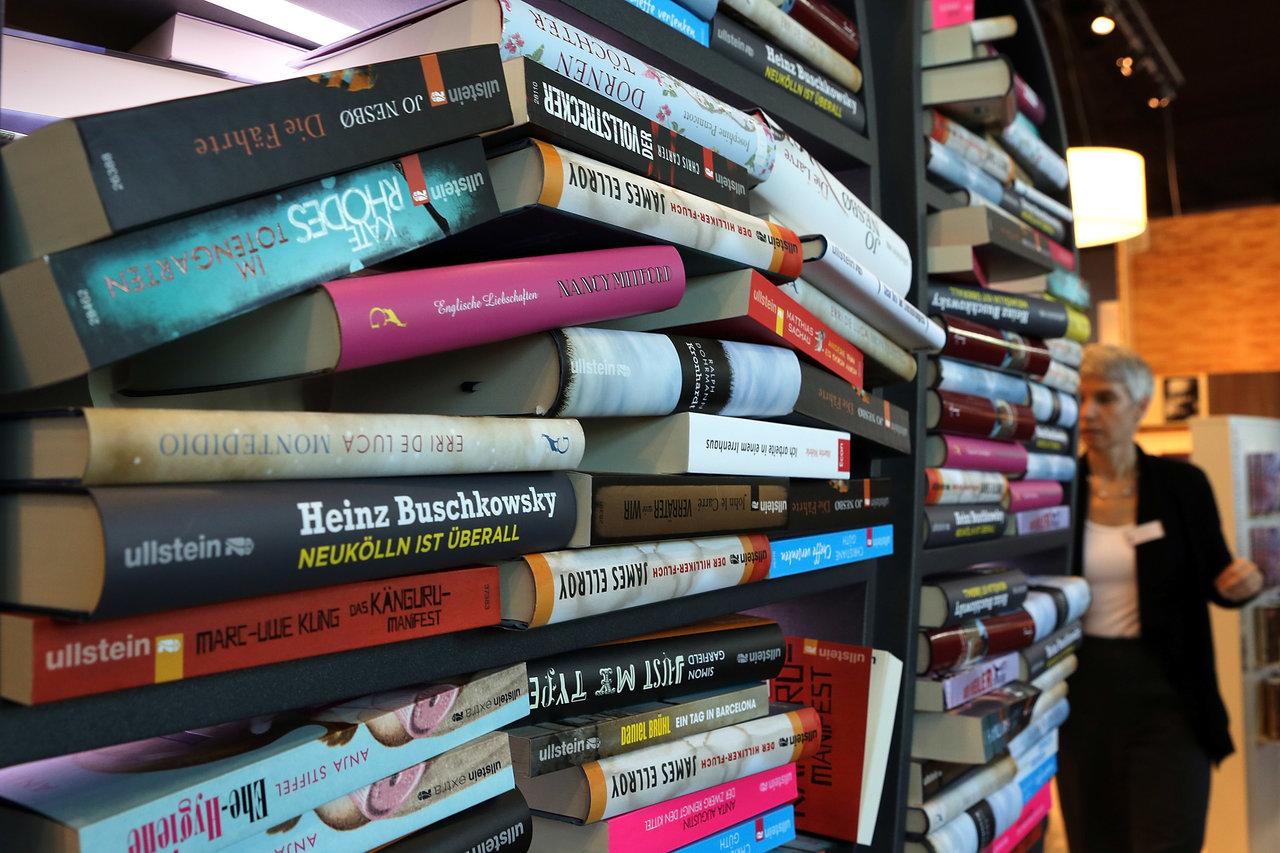
Frankfurt Book Fair 2012
FRANKFURT AM MAIN, GERMANY - OCTOBER 11: A stack of books at the Frankfurt Book Fair on October 11, 2012 in Frankfurt, Germany. The Frankfurt Book Fair is the largest in the world and will run from October 10-14, 2012.on October 11, 2012 in Frankfurt am Main, Germany. (Photo by Hannelore Foerster/Getty Images)Photograph by Hannelore Foerster — Getty Images

This post is in partnership with Zocalo Public Square. The article below was originally published at zocalopublicsquare.org.

By Paula Rabinowitz

Cheap paperback books are like sex: They claim attention, elicit memories good and bad, and get talked about endlessly. The mid-20th century was the era of pulp, which landed in America in 1939.

You could pick up these paper-bound books at the corner drugstore or bus station for a quarter. They had juicy covers featuring original (and sometimes provocative) art, blurring the lines between canonical literature and the low genres of crime, romance, and Westerns.

Paperbacks went beyond lurid fiction. They brought high culture and scholarly nonfiction to readers, covering every conceivable taste and topic, from anti-Semitism (James Parkes’ 1946 An Enemy of the People) to works by diplomats, philosophers, physicists, and anthropologists.

At 25 to 35 cents a pop—wages for a night of babysitting or the cost of a pack of cigarettes— paperbacks could be had by anyone, and so enabled teenagers and poor and working people to enter fully into the cultural landscape. In the 1950s, these books created secret communities of readers who fashioned identities through ownership; for example, women in rural America might come to recognize themselves as lesbians after finding Women’s Barracks by Tereska Torrès on a candy store rack.

Unlike other forms of mass media that could be consumed at home—radio and later, television—paperbacks offered more than ephemeral content. Compact enough to carry anywhere, they provided content not only in their pages and covers, but also as objects. The books’ shape, smell, feel, even the sound of their cracking bindings helped to create a rare sense of connection among readers, booksellers, publishers, and authors.

Paperbacks could be serious business. In His Eye Is on the Sparrow (1952), Ethel Waters told her story of fighting against racism, poverty, and abuse to become a singer and actress on Broadway and in Hollywood. Daphne Rooke’s Mittee (1953) unveiled South African apartheid through an interracial love triangle involving a white man, a white woman, and her mixed race female servant. The book included a glossary of Afrikaans terminology for U.S. readers to enlarge their vocabulary and open their eyes to distant parts of the world.


Since the publication of my book America Pulp: How Paperbacks Brought Modernism to Main Street, I have heard many personal stories that confirm my argument about how paperbacks permeated daily life. Dozens of people—total strangers, long-ago boyfriends, friends of friends, collectors, bibliographers—have written to me.

I recently received an email from one reader, who wrote about her relative, Jack Nemec, who wrote a dozen kinky titles, including Sin Caravan, The Spy Who Came to Bed, and The Darkest Urge. Some relatives are a “smidge embarrassed that we have a ‘porn’ writer in the family,” she wrote—in fact, they threw out all his books after he died. Her email concluded that she is a “bit proud that we’re a part of this little part of Americana.”

Her pride zeroes in on the crux of what pulp meant in the middle of the 20th century—and how we might understand it now. These books are a little piece of Americana. Appealing to every taste, paperbacks were (and still are) trafficked—bartered, bought, exchanged, sequestered, hidden, destroyed … and loved. Because they carry traces of both the illicit and aspirational, they figure as distillations of America’s various dreams.

Pulp elevated working people into writers and collectors and was a quirky means for immigrants to assimilate to American culture. A New York artist described in an email how she remembered trips to Pete Bianchi’s soda fountain and tobacco store in Ohio, “where our father used to take us kids for comic books and treats, and where he could peruse the rotating shelves of pulp mysteries.” Those drugstore visits to find books that were unavailable at the local library still inhabit readers’ memories. Those books were a part of the landscape of Smalltown, U.S.A. They made us who we are: a pocket-book nation.

Cheap paperbacks helped to forge modern ideas about race, sex, war, science, and much more. During their heyday from the late 1930s to the late 1950s, pulp spread the practice of everyday reading, bringing to a mass audience of avid readers—everything from smut to theology; from whodunits to Macbeth. Paperbacks ’R’ Us.

Paula Rabinowitz is professor of English at the University of Minnesota and author of America Pulp: How Paperbacks Brought Modernism to Main Street. She wrote this for What It Means to Be American, a national conversation hosted by the Smithsonian and Zócalo Public Square.

About the Author
By Zocalo Public Square
See full bioRight Arrow Button Icon

Latest in Features

Finance
Lorem ipsum dolor sit amet, consectetur adipiscing elit, sed do eiusmod tempor incididunt ut labore et dolore magna aliqua. Ut enim ad minim veniam
By Fortune Editors
October 20, 2025
Finance
Lorem ipsum dolor sit amet, consectetur adipiscing elit, sed do eiusmod tempor incididunt ut labore et dolore magna aliqua. Ut enim ad minim veniam
By Fortune Editors
October 20, 2025
Finance
Lorem ipsum dolor sit amet, consectetur adipiscing elit, sed do eiusmod tempor incididunt ut labore et dolore magna aliqua. Ut enim ad minim veniam
By Fortune Editors
October 20, 2025
Finance
Lorem ipsum dolor sit amet, consectetur adipiscing elit, sed do eiusmod tempor incididunt ut labore et dolore magna aliqua. Ut enim ad minim veniam
By Fortune Editors
October 20, 2025
Finance
Lorem ipsum dolor sit amet, consectetur adipiscing elit, sed do eiusmod tempor incididunt ut labore et dolore magna aliqua. Ut enim ad minim veniam
By Fortune Editors
October 20, 2025
Finance
Lorem ipsum dolor sit amet, consectetur adipiscing elit, sed do eiusmod tempor incididunt ut labore et dolore magna aliqua. Ut enim ad minim veniam
By Fortune Editors
October 20, 2025

Most Popular

Finance
Lorem ipsum dolor sit amet, consectetur adipiscing elit, sed do eiusmod tempor incididunt ut labore et dolore magna aliqua. Ut enim ad minim veniam
By Fortune Editors
October 20, 2025
Finance
Lorem ipsum dolor sit amet, consectetur adipiscing elit, sed do eiusmod tempor incididunt ut labore et dolore magna aliqua. Ut enim ad minim veniam
By Fortune Editors
October 20, 2025
Finance
Lorem ipsum dolor sit amet, consectetur adipiscing elit, sed do eiusmod tempor incididunt ut labore et dolore magna aliqua. Ut enim ad minim veniam
By Fortune Editors
October 20, 2025
Finance
Lorem ipsum dolor sit amet, consectetur adipiscing elit, sed do eiusmod tempor incididunt ut labore et dolore magna aliqua. Ut enim ad minim veniam
By Fortune Editors
October 20, 2025
Finance
Lorem ipsum dolor sit amet, consectetur adipiscing elit, sed do eiusmod tempor incididunt ut labore et dolore magna aliqua. Ut enim ad minim veniam
By Fortune Editors
October 20, 2025
Finance
Lorem ipsum dolor sit amet, consectetur adipiscing elit, sed do eiusmod tempor incididunt ut labore et dolore magna aliqua. Ut enim ad minim veniam
By Fortune Editors
October 20, 2025
Fortune Secondary Logo
Rankings
  • 100 Best Companies
  • Fortune 500
  • Global 500
  • Fortune 500 Europe
  • Most Powerful Women
  • World's Most Admired Companies
  • See All Rankings
  • Lists Calendar
Sections
  • Finance
  • Fortune Crypto
  • Features
  • Leadership
  • Health
  • Commentary
  • Success
  • Retail
  • Mpw
  • Tech
  • Lifestyle
  • CEO Initiative
  • Asia
  • Politics
  • Conferences
  • Europe
  • Newsletters
  • Personal Finance
  • Environment
  • Magazine
  • Education
Customer Support
  • Frequently Asked Questions
  • Customer Service Portal
  • Privacy Policy
  • Terms Of Use
  • Single Issues For Purchase
  • International Print
Commercial Services
  • Advertising
  • Fortune Brand Studio
  • Fortune Analytics
  • Fortune Conferences
  • Business Development
  • Group Subscriptions
About Us
  • About Us
  • Press Center
  • Work At Fortune
  • Terms And Conditions
  • Site Map
  • About Us
  • Press Center
  • Work At Fortune
  • Terms And Conditions
  • Site Map
  • Facebook icon
  • Twitter icon
  • LinkedIn icon
  • Instagram icon
  • Pinterest icon

Latest in Features

Anduril CEO Brian Schimpf
MagazineDefense
Inside Anduril: Meet the quiet engineer-CEO building America’s $31 billion weapons startup
By Allie GarfinkleMay 6, 2026
6 days ago
A Michigan farm town voted down plans for a giant OpenAI-Oracle data center. Weeks later, construction began
MagazineData centers
A Michigan farm town voted down plans for a giant OpenAI-Oracle data center. Weeks later, construction began
By Sharon GoldmanMay 6, 2026
6 days ago
The American Express CEO defied haters who said he’d never have the top job—winning with millennials and Gen Z and trouncing the competition
MagazineAmerican Express
The American Express CEO defied haters who said he’d never have the top job—winning with millennials and Gen Z and trouncing the competition
By Shawn TullyMay 6, 2026
6 days ago
Photo of Marc Benioff
Magazinecommunication
Salesforce CEO Marc Benioff turned his earnings call into a vodcast. Why other Fortune 500 CEOs might follow
By Rachel VentrescaMay 6, 2026
6 days ago
Intel Chief Exec, Lip-Bu Tan, on stage
EuropeIntel
Intel’s share price just blew the doors off. One man thinks he knows the reason why
By Kamal AhmedApril 27, 2026
15 days ago
Who owns ideas in the AI age?
MagazinePublishing
Who owns ideas in the AI age?
By Francesca CassidyApril 8, 2026
1 month ago

Most Popular

Forget U.S. debt, China's total borrowing is in 'a league of its own'—much worse and deteriorating faster, analyst says
Economy
Forget U.S. debt, China's total borrowing is in 'a league of its own'—much worse and deteriorating faster, analyst says
By Jason MaMay 11, 2026
13 hours ago
OpenAI CEO Sam Altman says Gen Z and millennials are using ChatGPT like a 'life advisor'—but college students might be one step ahead
Tech
OpenAI CEO Sam Altman says Gen Z and millennials are using ChatGPT like a 'life advisor'—but college students might be one step ahead
By Sydney LakeMay 10, 2026
2 days ago
‘This is the way’: Elon Musk endorses Warren Buffett’s famed 5-minute plan to fix the national debt
Economy
‘This is the way’: Elon Musk endorses Warren Buffett’s famed 5-minute plan to fix the national debt
By Jacqueline MunisMay 10, 2026
2 days ago
Microsoft’s CFO admits she joined the tech giant without even knowing her salary—and then missed her first day of work
Success
Microsoft’s CFO admits she joined the tech giant without even knowing her salary—and then missed her first day of work
By Preston ForeMay 11, 2026
14 hours ago
Red flag test: former CEO explains why he rejects job candidates who say they can start right away
Success
Red flag test: former CEO explains why he rejects job candidates who say they can start right away
By Orianna Rosa RoyleMay 9, 2026
3 days ago
Current price of oil as of May 11, 2026
Personal Finance
Current price of oil as of May 11, 2026
By Joseph HostetlerMay 11, 2026
17 hours ago

© 2026 Fortune Media IP Limited. All Rights Reserved. Use of this site constitutes acceptance of our Terms of Use and Privacy Policy | CA Notice at Collection and Privacy Notice | Do Not Sell/Share My Personal Information
FORTUNE is a trademark of Fortune Media IP Limited, registered in the U.S. and other countries. FORTUNE may receive compensation for some links to products and services on this website. Offers may be subject to change without notice.