• Home
  • Latest
  • Fortune 500
  • Finance
  • Tech
  • Leadership
  • Lifestyle
  • Rankings
  • Multimedia

Trendingnow

1

MacKenzie Scott alone accounted for one-third of America's $19.2 billion in megagifts last year

2

Now worth $200 million, Sarah Jessica Parker credits being ‘one of eight kids that struggled financially’ for her hunger, ambition, and work ethic

3

Ray Dalio says the U.S. just had its 'Suez moment'—and history says what comes next could end an empire

1

MacKenzie Scott alone accounted for one-third of America's $19.2 billion in megagifts last year

2

Now worth $200 million, Sarah Jessica Parker credits being ‘one of eight kids that struggled financially’ for her hunger, ambition, and work ethic

3

Ray Dalio says the U.S. just had its 'Suez moment'—and history says what comes next could end an empire
TechStartups & Venture

9 startup ideas that were ahead of their time

By
Erin Griffith
Erin Griffith
Down Arrow Button Icon
By
Erin Griffith
Erin Griffith
Down Arrow Button Icon
March 29, 2015, 9:00 AM ET
Pets.com Put To Sleep
The pets.com sock puppet dog stars in a commercial for the company, Los Angeles, California, January 11, 2000. The San Francisco-based pet products company announced on November 7, 2000 that it was shutting down after failing to secure a financial backer or buyer. (Photo by Bob Riha/Liaison/Getty Images)Photograph by Bob Riha Jr. — Getty Images
Add Fortune on Google for similar content.

Venture investors are fond of their truisms, to the point that the startup world is riddled with clichés. But few cut deeper than the one about timing: “The only thing worse than being wrong is being early.” It’s impossible to count the number of startups which failed because the world wasn’t ready for them yet. Since the dotcom bubble, many of the era’s biggest flops have been revived in different forms to become viable businesses.

Today’s revivals have a few key things going for them this time around. For starters, it’s a matter of simple numbers: In 2000, only 43% of Americans were using the Internet. Today, 86% of the country is online and more than half of the population carries the Internet around in their pocket. The addressable audience for a Web startup is much larger.

Further, logistics networks from the likes of FedEx (FDX) and UPS (UPS) are more developed, more efficient, and more cost-effective than they were in the late 1990s. Lastly, thanks to cloud computing and open source software, the cost of starting up has shrunk from millions of dollars to hundreds of thousands or less. This lowers the stakes for starting a business, which means early-stage failures aren’t costing investors millions.

Below, several good ideas which were simply ahead of their time.

Same-day delivery

360831 06: Kozmo.com CEO Joseph Park makes a delivery on his moped in New York City, December 1, 1999. (Photo by Evan Kafka/Liaison)

Uber has turned smartphones into remote controls for life. Press a button and just about anything you want will show up—booze, groceries, manicures, flowers, even weed. Amazon (AMZN) and Google (GOOG) now offer same-day delivery, with countless startup—including Uber—hot on their heels.

Same-day delivery was the premise of famous Web 1.0 blow-ups Kozmo.com and Webvan. Kozmo.com lost hundreds of millions in value in the dotcom crash; Webvan lost over a billion in investor money. They failed because they didn’t make money on their services. Today, Kozmo.com’s co-founder has revived the idea with MaxDelivery.com which has a small customer base of under 100,000, but has grown slowly and steadily since 2005 on its own profits, supporting a staff of 130. The recent influx of new startups offering anything you want on-demand proves that the idea wasn’t bad, but the timing was.

Pet food delivery
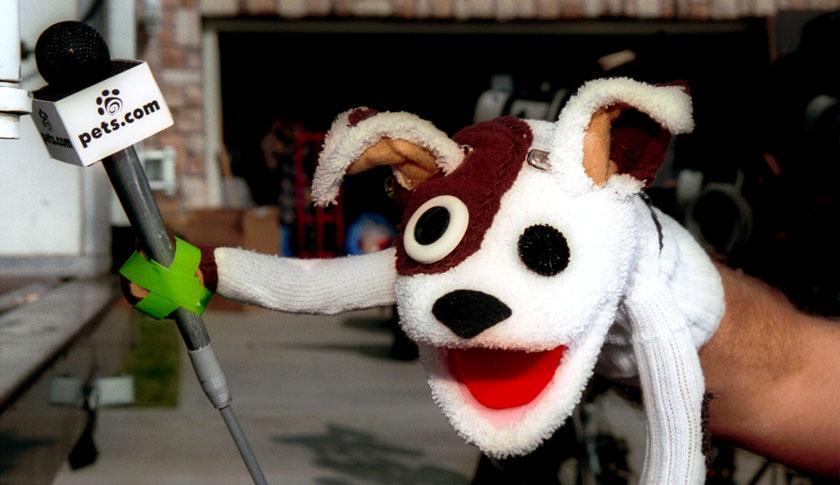
The market for “pet parents,” who treat their dogs as well as children is a massive one, and that has only grown since the days of the dotcom bubble. But Pets.com, the most famous dotcom-era blow-up, was plagued by a simple logistical issue: In 1999, it didn’t make financial sense to ship giant bags of pet food across the country.

Today, several companies have taken advantage of improvements from an improved national delivery network and revived this idea. Petflow.com expected $50 million in sales in 2014 and Bark&Co, a dog supply delivery service, claims it is a $100 million-per-year business. Even Petco has launched a repeat delivery service.

Smartwatches
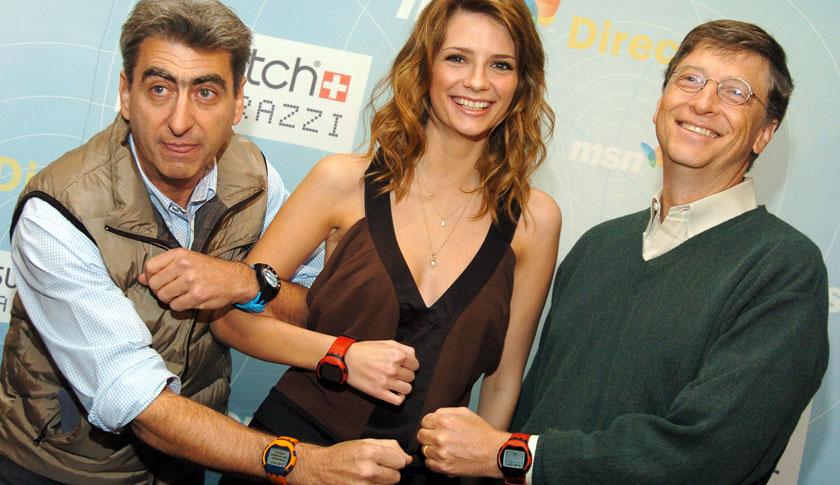
G. Nicolas Hayek, CEO of Swatch Group, Mischa Barton and Bill Gates, chairman Microsoft (Photo by Theo Wargo/WireImage for OMEGA)

The jury is still out on whether smartwatches will become as big a category as iPods or tablets, but they've certainly moved beyond novelty status. Analysts predict Apple (AAPL) will sell at least 30 million Apple Watches when it goes on sale in April.

But Apple's smartwatch predecessors, Pebble and Samsung, weren't first to the smartwatch game. Microsoft (MSFT) debuted a smartwatch prototype in 2004. Impressively, it preceded the smartphone. According to Techspot, these Microsoft smartwatches used FM radio signals to bring news, weather, and other information into the watches, which were made by Suunto, Fossil, Tissot, and Swatch. Somehow, it never caught on.

Group buying sites

In the late '90s, group buying sites were just as common as they were in the Groupon era. This includes the most well-known, Letsbuyit.com, as well as Mercata, which scrapped its IPO plans in 2001 and shut down. Others include Mobshop.com, ActBig, Zwirl.com, and C-Tribe.com. AOL (AOL) and Yahoo (YHOO) had plans to launch their own group-buying sites, too. None of those companies survived the dotcom crash—except Actbig.com, apparently.

In 2009, Groupon revived the concept. One could argue that the daily deals category remains a novelty, as I recently did in this article. My colleague Dan Primack recently counter-argued that Groupon is still a $5 billion company, which is not to be dismissed.

Vertical e-commerce
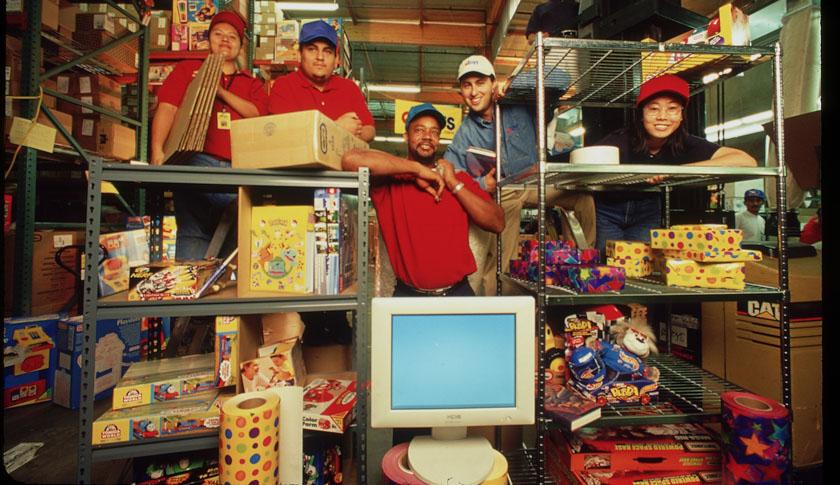
EToys employees amid wares at online toy store's distribution center. (Photo by Alan Levenson/The LIFE Images Collection/Getty Images)

In the dotcom era, Boo.com sold hip apparell, eToys.com sold toys, and Eve.com, Reflect.com, and Beautyjungle.com sold cosmetics. The idea, in the early days of e-commerce, was to pick a category and own it.

Then King Amazon wiped out the competition. The site that started selling books quickly became “The Everything Store,” dominating e-commerce and convincing the world that in order to win at e-commerce, you had to do it all. Niche shopping sites like Boo.com, Beautyjungle.com, and eToys flamed out. (eToys went bankrupt and sold to Toys-R-Us.)

Now highly specialized e-commerce is held up as the only way to compete with Amazon. You have companies like Warby Parker, Bonobos, J. Hilburn, Harry’s, Everlane, and Dollar Shave Club flourishing because they have a specific brand and make their own products. Category-focused players like Wayfair for furniture, Birchbox for cosmetics, Asos and Nasty Gal for trendy clothing, Honest Company for baby products, and Baublebar for jewelry, are thriving as well. The more specific and unique your edge on Amazon is, the better.

Digital currency
Both Beanz and Flooz, two startups, sites sold digital currency that could be used for online shopping. They raised $100 million and $35 million in venture funding, respectively. After the dotcom crash, when both companies failed, the idea of “internet money” was widely panned. But now, its clear from the hundreds of cryptocurrencies and hundreds of millions invested into bitcoin-related startups that many believe virtual currency will last.

Virtual reality
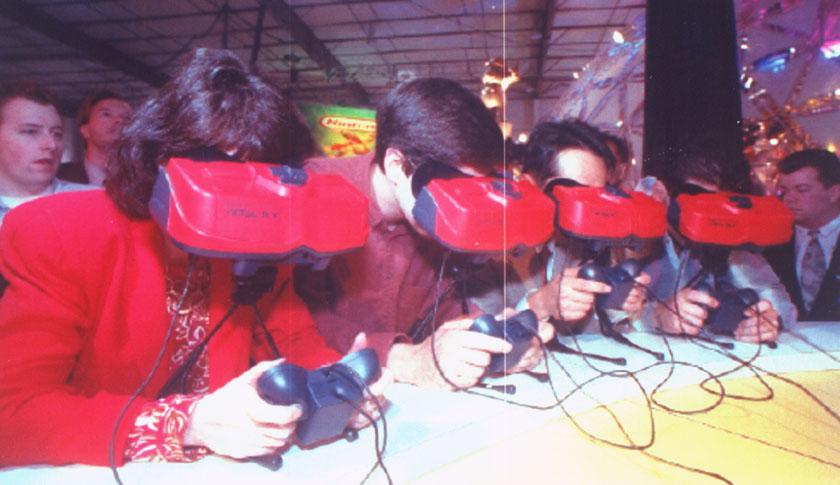
Customers using headgear & controls to test Nintendo's Virtual Boy video game at 1995 Winter Consumer Electronics Show. (Photo by Marty Katz/The LIFE Images Collection/Getty Images)

Nintendo’s “Virtual Boy,” a virtual reality gaming headset, was released in 1995 and discontinued the following year. It had plenty of problems: It wasn’t exactly portable. It was expensive. It wasn’t comfortable to wear. And the screen was monochrome. (Not to mention an assumption that only boys would want to play with it.) The one thing it has in common with today’s virtual reality headsets from Oculus VR and Samsung is that it reviewers at the time found it to be “asocial.”

Livestreaming apps

Before Justin.tv, there was JenniCam, which launched in 1996. It was just a woman broadcasting her life for a $15 per month subscription. (Today we call that reality TV.) In 2007, Justin.tv aimed to offer the same service to smartphone users. It didn’t catch on as hoped, and Viddy, the hit video app that followed it, failed too. Today, the viral success of Meerkat, and the anticipation for Twitter’s (TWTR) answer, Periscope, show that the use case is real. We just needed faster streaming, better cameras, and a greater appetite for video content first.

Touch computing
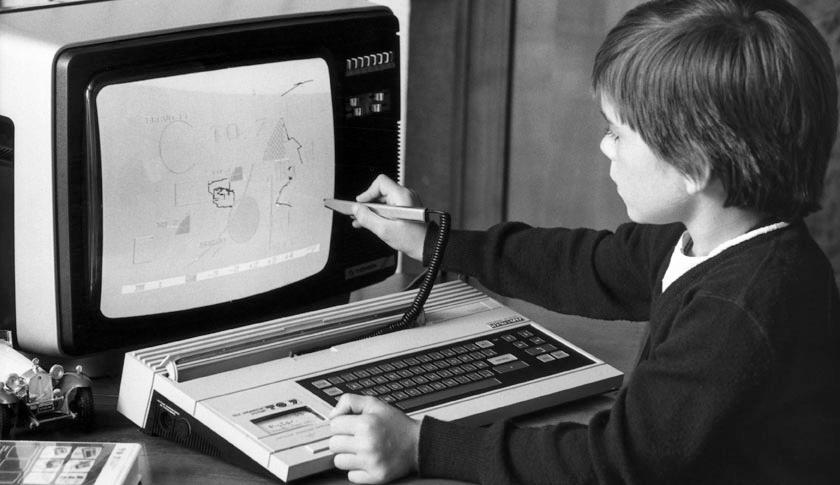
The THOMSON TO7 tele-computer and family micro-computer from November 1982, provided with an optical pen stored in the central case. Le télé-ordinateur et micro-ordinateur familial TO7 de THOMSON né en novembre 1982 et muni d'un stylo optique logé dans le boîtier central.

Apple didn’t invent touch computing with the iPhone, but it certainly popularized it. In the 1980s, a number of pen computing companies offered tablet computers with styluses, including Go Corp, Pencept, and Linus and Communications Intelligence Corporation. Windows for Pen Computing launched in 1993 and Apple’s Newton MessagePad launched in 1993.

Bonus: Google Glass
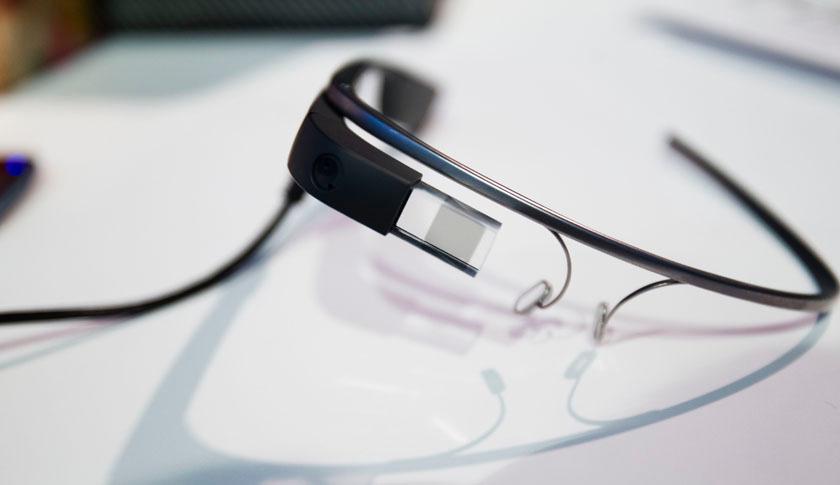
A pair of Google Glass connected glasses sits on display on day three of the Mobile World Congress in Barcelona, Spain, on Wednesday, Feb. 26, 2014.

Two years after the introduction of Glass, its clear we won’t be walking around with computers on our faces anytime soon. Commentators blame the invasiveness, the ugly design, and the fear they have created. Either way, the world isn’t ready for Glass yet.

But despite news that Google had stopped selling the devices, Glass isn’t entirely dead. It has flourished in places where workers can benefit from hands-free computing, like warehouses, factories, and construction sites. They’re already wearing safety glasses, so the style factor is irrelevant. Beyond that, Google executive chairman Eric Schmidt recently said that the company continues to work on Glass. The company is certain it has a good idea on its hands. It’s just a little ahead of its time.

About the Author
By Erin Griffith
See full bioRight Arrow Button Icon
Add Fortune on Google for similar content.

Latest in Tech

Finance
Lorem ipsum dolor sit amet, consectetur adipiscing elit, sed do eiusmod tempor incididunt ut labore et dolore magna aliqua. Ut enim ad minim veniam
By Fortune Editors
October 20, 2025
Finance
Lorem ipsum dolor sit amet, consectetur adipiscing elit, sed do eiusmod tempor incididunt ut labore et dolore magna aliqua. Ut enim ad minim veniam
By Fortune Editors
October 20, 2025
Finance
Lorem ipsum dolor sit amet, consectetur adipiscing elit, sed do eiusmod tempor incididunt ut labore et dolore magna aliqua. Ut enim ad minim veniam
By Fortune Editors
October 20, 2025
Finance
Lorem ipsum dolor sit amet, consectetur adipiscing elit, sed do eiusmod tempor incididunt ut labore et dolore magna aliqua. Ut enim ad minim veniam
By Fortune Editors
October 20, 2025
Finance
Lorem ipsum dolor sit amet, consectetur adipiscing elit, sed do eiusmod tempor incididunt ut labore et dolore magna aliqua. Ut enim ad minim veniam
By Fortune Editors
October 20, 2025
Finance
Lorem ipsum dolor sit amet, consectetur adipiscing elit, sed do eiusmod tempor incididunt ut labore et dolore magna aliqua. Ut enim ad minim veniam
By Fortune Editors
October 20, 2025

Most Popular

Finance
Lorem ipsum dolor sit amet, consectetur adipiscing elit, sed do eiusmod tempor incididunt ut labore et dolore magna aliqua. Ut enim ad minim veniam
By Fortune Editors
October 20, 2025
Finance
Lorem ipsum dolor sit amet, consectetur adipiscing elit, sed do eiusmod tempor incididunt ut labore et dolore magna aliqua. Ut enim ad minim veniam
By Fortune Editors
October 20, 2025
Finance
Lorem ipsum dolor sit amet, consectetur adipiscing elit, sed do eiusmod tempor incididunt ut labore et dolore magna aliqua. Ut enim ad minim veniam
By Fortune Editors
October 20, 2025
Finance
Lorem ipsum dolor sit amet, consectetur adipiscing elit, sed do eiusmod tempor incididunt ut labore et dolore magna aliqua. Ut enim ad minim veniam
By Fortune Editors
October 20, 2025
Finance
Lorem ipsum dolor sit amet, consectetur adipiscing elit, sed do eiusmod tempor incididunt ut labore et dolore magna aliqua. Ut enim ad minim veniam
By Fortune Editors
October 20, 2025
Finance
Lorem ipsum dolor sit amet, consectetur adipiscing elit, sed do eiusmod tempor incididunt ut labore et dolore magna aliqua. Ut enim ad minim veniam
By Fortune Editors
October 20, 2025
Fortune Secondary Logo
Rankings
  • 100 Best Companies
  • Fortune 500
  • Global 500
  • Fortune 500 Europe
  • Most Powerful Women
  • World's Most Admired Companies
  • See All Rankings
  • Lists Calendar
Sections
  • Finance
  • Fortune Crypto
  • Features
  • Leadership
  • Health
  • Commentary
  • Success
  • Retail
  • Mpw
  • Tech
  • Lifestyle
  • CEO Initiative
  • Asia
  • Politics
  • Conferences
  • Europe
  • Newsletters
  • Personal Finance
  • Environment
  • Magazine
  • Education
Customer Support
  • Frequently Asked Questions
  • Customer Service Portal
  • Privacy Policy
  • Terms Of Use
  • Single Issues For Purchase
  • International Print
Commercial Services
  • Advertising
  • Fortune Brand Studio
  • Fortune Analytics
  • Fortune Conferences
  • Business Development
  • Group Subscriptions
About Us
  • About Us
  • Press Center
  • Work At Fortune
  • Terms And Conditions
  • Site Map
  • About Us
  • Press Center
  • Work At Fortune
  • Terms And Conditions
  • Site Map
  • Facebook icon
  • Twitter icon
  • LinkedIn icon
  • Instagram icon
  • Pinterest icon

Latest in Tech

Sam Altman and Donald Trump.
AIOpenAI
OpenAI agrees to stagger rollout of its most powerful model to only Trump-approved customers
By Eva Roytburg and Beatrice NolanJune 26, 2026
8 hours ago
gr
PoliticsElections
Anthropic and OpenAI waged a $27 million proxy war in a Manhattan congressional race. The winner told them both to get lost
By Sasha RogelbergJune 26, 2026
8 hours ago
fire
Europeclimate change
Greece tackles climate change wildfire risk with satellite network that can spot a blaze the size of a parking space
By Derek Gatopoulos and The Associated PressJune 26, 2026
10 hours ago
AI boom may be on its last legs amid stock volatility and dash for cash—but will go out in a blaze of glory with ‘blow-off phase’ before bubble pops
AItech stocks
AI boom may be on its last legs amid stock volatility and dash for cash—but will go out in a blaze of glory with ‘blow-off phase’ before bubble pops
By Jason MaJune 26, 2026
12 hours ago
m
LawMeta
‘Careless People’ author claims Meta surveilled her for a year to enforce her silence
By Barbara Ortutay and The Associated PressJune 26, 2026
12 hours ago
apple
Big TechApple
Apple blames inflationary effect of AI for price hikes: ‘We have never seen a component price increase this much’
By Barbara Ortutay and The Associated PressJune 26, 2026
12 hours ago

Most Popular

MacKenzie Scott alone accounted for one-third of America's $19.2 billion in megagifts last year
Success
MacKenzie Scott alone accounted for one-third of America's $19.2 billion in megagifts last year
By Sydney LakeJune 25, 2026
2 days ago
Now worth $200 million, Sarah Jessica Parker credits being ‘one of eight kids that struggled financially’ for her hunger, ambition, and work ethic
Success
Now worth $200 million, Sarah Jessica Parker credits being ‘one of eight kids that struggled financially’ for her hunger, ambition, and work ethic
By Orianna Rosa RoyleJune 24, 2026
3 days ago
Ray Dalio says the U.S. just had its 'Suez moment'—and history says what comes next could end an empire
Economy
Ray Dalio says the U.S. just had its 'Suez moment'—and history says what comes next could end an empire
By Nick LichtenbergJune 26, 2026
21 hours ago
The bond market knows something about the $39 trillion national debt that Washington doesn’t
Economy
The bond market knows something about the $39 trillion national debt that Washington doesn’t
By Eva RoytburgJune 25, 2026
1 day ago
Trump turns on Big Oil donors who spent nearly $100 million to get him elected—now he wants the DOJ to investigate them for price gouging
Economy
Trump turns on Big Oil donors who spent nearly $100 million to get him elected—now he wants the DOJ to investigate them for price gouging
By Tristan BoveJune 25, 2026
1 day ago
Current price of oil as of June 25, 2026
Personal Finance
Current price of oil as of June 25, 2026
By Joseph HostetlerJune 25, 2026
2 days ago

© 2026 Fortune Media IP Limited. All Rights Reserved. Use of this site constitutes acceptance of our Terms of Use and Privacy Policy | CA Notice at Collection and Privacy Notice | Do Not Sell/Share My Personal Information
FORTUNE is a trademark of Fortune Media IP Limited, registered in the U.S. and other countries. FORTUNE may receive compensation for some links to products and services on this website. Offers may be subject to change without notice.