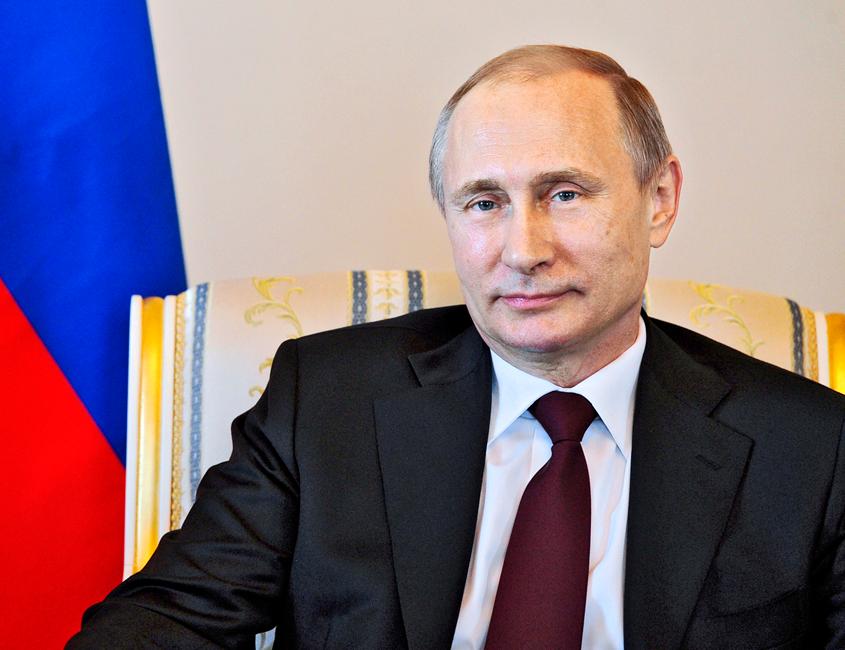
Until recently Vladimir Putin was customarily included in lists of the world’s most powerful people. Throughout a nearly 16-year reign, Putin’s brand of leadership—full of swagger, bare-chested photo ops, and tiger hunting—has brought him wide popularity at home and even grudging admiration abroad, a fact that was made clear by his selection as Time’s 2007 Person of the Year. “[He] makes a decision and he executes it—quickly. And then everybody reacts. That’s what you call a leader,” said former New York mayor Rudy Giuliani on Fox News last year. After Putin’s 2009 speech at the World Economic Forum in Davos, the CEO of one of the world’s largest companies told me, “He is a thug, but we have no option other than to deal with him and his cronies. He is just too powerful.”
At least that’s how it has been so far. Now times are changing. Putin continues to wield immense power, but less than before, and betting that his power will increase would be a long shot. The Russian President is clearly more constrained than he has been at any time since he took office, as multiple changes overtaking the country make his grip on power less secure. Unlike the Russia of the early 2000s, when Putin ushered in a transformative and economically uplifting era, the country today is spiraling downward. The economy teeters on the brink of recession, battered by falling oil prices (50% of government revenue comes from the sale of oil and gas), onerous economic sanctions, massive capital flight, and disappearing foreign investment.
Last year alone, the ruble lost half its value, food prices rose 23%, and inflation accelerated to 16.7%. The Kremlin has had to deploy massive resources to bail out some of the nation’s largest companies and banks. Standard & Poor’s in January cut the country’s credit rating to junk. The continuing conflict with Ukraine may lead to more sanctions and isolation from the international community. And Russia’s corruption is notorious: In a 2014 survey Transparency International ranked it 137th out of 172 countries, tied with Iran, Nigeria, and Lebanon.
Yet Putin’s approval rating hovers around an astonishing 85%. Even in a police state where censorship stifles opinion polls, it’s clear that he enjoys broad support. His takeover of Crimea was viewed favorably at home, where most feel the peninsula rightfully belongs to Russia, and his continued belligerence along the border with Ukraine reinvigorates national pride. Years of high oil prices that ended only last fall brought Russia a dramatic rise in prosperity: Poverty waned, the middle class expanded, and overflowing government coffers enabled Putin to fund all kinds of feel-good initiatives for a society still reeling from the indignities of losing its standing as a super-power.
Domestically, such popularity masks an extremely dark side. Putin has made life at least difficult for political opponents; critics are often silenced, jailed, or worse. Even if Putin was not directly responsible for the brazen murder of opposition leader and Putin critic Boris Nemtsov, he has cultivated an atmosphere that strongly discourages dissent. The Kremlin has consolidated control over nearly all Russian media and has moved to block, close, or censor any independent press and the Internet. In a country where 90% of citizens get their news from television and the three main stations are controlled by the state, Putin exerts enormous influence in crafting the message delivered into Russian homes. While enjoying their newfound middle-class comforts—and toasting their benefactor—many seem to have grown apathetic about the swelling police state.
But how long can high approval ratings last in a country so economically and socially frail? To hold off the storm, Putin is successfully distracting the public with international theatrics that tap into his people’s devotion to the motherland. Unfortunately, the maneuver will only deepen the more troubling economic crisis at hand by further cutting off the nation from the global economy. Even after 16 years of absolute power, Putin isn’t immune to forces that will erode the barriers that have kept him on top.
Those forces are global: In every continent and across every sector of human activity, the old order is losing ground. Previously uncontested leaders in government, the military, religious organizations, and businesses are being undermined by unknown or once negligible actors: “micropowers.” Think of ISIS, the destabilizing fringe political parties in Europe, and destructive lone hackers like Edward Snowden.
Deep transformations in society drive those trends. There is more of everything—more people, countries, cities, political parties, and armies; more goods and services, and more companies selling them; more weapons, medicines, students, computers. More people are in the global middle class. Because of this “more” revolution, humanity on the whole is living longer and healthier lives, with basic needs addressed far better than ever. In addition, this more of everything now moves more, making the world harder to control. Information travels faster and wider. Migration and urbanization are uprooting and transforming towns and cities. Global trade has skyrocketed, and money moves at the speed of the Internet. Power needs a captive audience, so the mobility revolution makes it easier for the subjects of unwanted power to evade it and lets challengers circumvent the barriers that shield the incumbents.
Because of the more and mobility revolutions, people’s mindsets and worldviews are being vastly broadened: I call this the mentality revolution. Changes in mentality and attitudes toward power and authority reflect a growing global consensus regarding the importance of individual autonomy as well as a corresponding popular intolerance of authoritarianism. Increased globalization enables people from disparate parts of the world to see how others live—and gives them aspirations to live better.
Russia has not escaped these trends. After former Secretary of State Condoleezza Rice met with young entrepreneurs in Moscow in 2007, she wrote in the Washington Post that while they were a relatively small percentage of Russia’s people, they represented “a burgeoning urban middle class who own their apartments, furnish them at Ikea, and spoil their children at McDonald’s. They … have different expectations for the future.” The middle class has flourished under Putin, and until the economy turned, it was expected to continue to grow in numbers and increase its living standards. Its members have grown accustomed to better-paying jobs and certain luxuries, like imported goods, modern electronics, cars, and better housing, health, and education. This is bound to change for the worse. As unemployment and inflation rise while the economy shrinks, the deteriorating conditions are bound to nurture popular discontent and even unrest.
During a recent presentation on the importance of independent media, one of the singers in Pussy Riot, the Moscow-based punk band highly critical of Putin, said, “Most Russians, they don’t know about what the government is doing.” Putin’s real troubles will begin when the word inevitably gets out.
Is Vladimir Putin one of world’s most -powerful heads of state? Undoubtedly. Is his power increasing, and is he secure in his position? Of course not. Is he a great leader? Not even close.
Moisés Naím is a distinguished fellow at the Carnegie Endowment for International Peace and the author of The End of Power: From Boardrooms to Battlefields and Churches to States, Why Being in Charge Isn’t What It Used to Be (Basic Books).
Check out our World’s 50 Greatest Leaders list here.
This story is from the April 1, 2015 issue of Fortune.