• Home
  • Latest
  • Fortune 500
  • Finance
  • Tech
  • Leadership
  • Lifestyle
  • Rankings
  • Multimedia
Leadershipfarming

The last state standing against corporate farming weighs a change

By
Leah Douglas
Leah Douglas
Down Arrow Button Icon
By
Leah Douglas
Leah Douglas
Down Arrow Button Icon
March 24, 2015, 7:00 AM ET
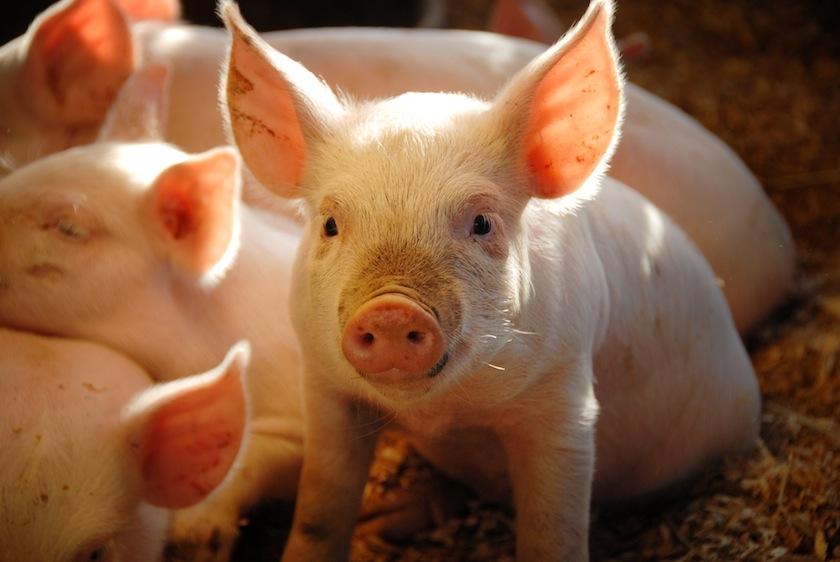
pigs
pigsPhotograph by Nicole Neily—Getty Images

When Jim Knopik looks over the fences of his family farm, there isn’t a neighbor for miles. “I’ve been on the same farm since I was a year-and-a-half old,” he muses. “Twenty years ago, there was a farmer or residence on every quarter-section of land. Within two miles of our place, there were 50 families farming.”

Now, he says, “Only one or two are still there.”

Knopik’s story is a familiar one in rural America. As agricultural corporations have grown more powerful over the last generation, millions of family farmers have simply sold out. Those who remain must often work off-farm jobs, grow vast quantities of commodity crops, or go into debt to make ends meet.

Knopik, who is a 65-year-old hog farmer, has fought for decades to protect Nebraska’s family farms. In 1997, he organized protests against a proposed factory farm in his town of Fullerton. Later, when an influx of cheap factory farm meat caused the price of pork to drop precipitously, he established a co-op to maintain a market for his farm and other independent pork producers.

Now, he’s involved in a new fight, one that’s taking place in the Nebraska state legislature. A proposed bill, Legislative Bill 176, would overturn Nebraska’s ban on corporate ownership of hogs. Knopik and others believe the bill could open the door for giant meatpackers like Smithfield to assume even more control over the state’s meat industry.

State Senator Ken Schilz introduced LB 176 in the Nebraska state legislature in January to overturn a 15-year-old law – the Competitive Livestock Markets Act – that bans corporations from owning livestock except in the days immediately before slaughter. Known colloquially as the “packer ban,” the law was intended to force corporations to buy their animals from independent producers, thereby supporting a competitive livestock market.

This isn’t the first time Schilz has attempted to overturn the CLMA. Last year, the senator introduced a bill that would have overturned the packer ban on cattle as well as hogs. That bill died in committee after farmers, ranchers, and advocates testified for over six hours against it.

LB 176 would not lift the prohibition on packers owning hog farms, but it would allow corporations to own hogs and then contract with independent farmers to raise them. Rather than sell those hogs in an open market, the famers would receive a fee for their services. The bill “says packers … can own pigs if there’s a producer that keeps and feeds them,” explains John Crabtree of the Center for Rural Affairs in Lyon, Nebraska. “The problem with that, of course, is that it’s a shell game.”

Crabtree says that this model leaves producers without any bargaining power. Farmers would have to assume “all the risk of having the operation, [borrow] all the money. But the packers would get … most of the profit.” Contractual relationships between farmers and packers have become an everyday reality in the world of industrialized livestock production. Tyson pioneered the contract model with chicken production in the 1950s. Within a few years of its introduction, about 95% of chicken farmers were raising their animals under contract.

Over the past two decades, the number of pigs and cattle raised on contract has grown dramatically. In 1993, 87% of U.S. hogs were sold on the cash market. By 2001, that share had dropped to 17%. The remaining 83% were controlled by meatpackers, either through direct ownership or by contract with farmers.

A few giant meatpackers are responsible for these changes. Just four packers—Smithfield, Tyson, JBS, and Cargill—dominate the U.S. pork industry. Altogether, these companies control 65% of the market. In many parts of the country, there are only one or two packers nearby for farmers to contract with. That translates to fewer business options for farmers. Vern Jantzen, a fourth-generation farmer, has experienced firsthand the effects the consolidated marketplace has had on Nebraska hog producers. “If they say we just don’t need your pigs, where do you go? What do you do?” he asks. “They call the shots.”

Big packers exert outsize influence over the livestock market through “vertical integration,” a scenario in which a company takes control over several links in its supply chain. In the meat industry, packers own the animals that farmers raise, sell farmers the animals’ feed, then process the animals in their own slaughterhouses. “Vertical integration is very anticompetitive behavior,” says Crabtree. “[It] ruins the market for all producers.”

Big packers have already overturned most federal restrictions on vertical integration. Now, they’re targeting state-level restrictions on corporate ownership of livestock.

Nebraska’s law is one of the last remaining packer bans in the country. In states where corporations have pushed for the overturn of packer ban legislation, the results have been dramatic. In Iowa, Smithfield successfully sued to overturn that state’s decades-old provision against corporate farming in 2003. According to USDA data, the number of hogs in factory farms in Iowa increased by 75% between 1997 and 2007. Now, virtually all of the state’s hogs are raised on industrial farms.

Some farmers are especially concerned about the rumored involvement of Chinese-owned Smithfield in lobbying for the passage of LB 176. Shuanghui International acquired Smithfield for over $7 billion in 2013, marking the largest Chinese acquisition of an American company in history. That purchase, along with others by Brazilian meatpackers, has changed the debate surrounding big corporations’ involvement in the food industry. “The question becomes, where do those profits go?” asks Jantzen. “If we spend money on pork products, part of the money is going to go to China. Anytime we get a big operation like this, what does it do to the local community?”

On February 10, LB 176 was brought before the Nebraska State Senate Agriculture Committee. The committee heard testimony from nearly a dozen farmer advocacy groups and several individual farmers. Proponents of the bill, led by the Nebraska Pork Producers Association, argued that giving farmers the ability to contract with packers would yield new economic opportunity in Nebraska. The NPPA did not respond to requests for comment for this story.

Jim Knopik is unconvinced that LB 176 would benefit Nebraska farmers. “Most people don’t realize [the] the effects of this long term,” he says. “This is going to affect my family and my family’s families for a long time.”

Reflecting on the fact that this is the second year in a row Nebraska farmers have had to fight to uphold the packer ban, Crabtree says he wonders how long they will be able to hold out. “Are we just going to have to combat this every single year until people are finally so weary they can’t stand up to it anymore?”

Leah Douglas is a reporter and policy analyst with the Open Markets Program at New America. She covers food and agriculture policy.

Watch more business news from Fortune:

About the Author
By Leah Douglas
See full bioRight Arrow Button Icon

Latest in Leadership

Finance
Lorem ipsum dolor sit amet, consectetur adipiscing elit, sed do eiusmod tempor incididunt ut labore et dolore magna aliqua. Ut enim ad minim veniam
By Fortune Editors
October 20, 2025
Finance
Lorem ipsum dolor sit amet, consectetur adipiscing elit, sed do eiusmod tempor incididunt ut labore et dolore magna aliqua. Ut enim ad minim veniam
By Fortune Editors
October 20, 2025
Finance
Lorem ipsum dolor sit amet, consectetur adipiscing elit, sed do eiusmod tempor incididunt ut labore et dolore magna aliqua. Ut enim ad minim veniam
By Fortune Editors
October 20, 2025
Finance
Lorem ipsum dolor sit amet, consectetur adipiscing elit, sed do eiusmod tempor incididunt ut labore et dolore magna aliqua. Ut enim ad minim veniam
By Fortune Editors
October 20, 2025
Finance
Lorem ipsum dolor sit amet, consectetur adipiscing elit, sed do eiusmod tempor incididunt ut labore et dolore magna aliqua. Ut enim ad minim veniam
By Fortune Editors
October 20, 2025
Finance
Lorem ipsum dolor sit amet, consectetur adipiscing elit, sed do eiusmod tempor incididunt ut labore et dolore magna aliqua. Ut enim ad minim veniam
By Fortune Editors
October 20, 2025

Most Popular

Finance
Lorem ipsum dolor sit amet, consectetur adipiscing elit, sed do eiusmod tempor incididunt ut labore et dolore magna aliqua. Ut enim ad minim veniam
By Fortune Editors
October 20, 2025
Finance
Lorem ipsum dolor sit amet, consectetur adipiscing elit, sed do eiusmod tempor incididunt ut labore et dolore magna aliqua. Ut enim ad minim veniam
By Fortune Editors
October 20, 2025
Finance
Lorem ipsum dolor sit amet, consectetur adipiscing elit, sed do eiusmod tempor incididunt ut labore et dolore magna aliqua. Ut enim ad minim veniam
By Fortune Editors
October 20, 2025
Finance
Lorem ipsum dolor sit amet, consectetur adipiscing elit, sed do eiusmod tempor incididunt ut labore et dolore magna aliqua. Ut enim ad minim veniam
By Fortune Editors
October 20, 2025
Finance
Lorem ipsum dolor sit amet, consectetur adipiscing elit, sed do eiusmod tempor incididunt ut labore et dolore magna aliqua. Ut enim ad minim veniam
By Fortune Editors
October 20, 2025
Finance
Lorem ipsum dolor sit amet, consectetur adipiscing elit, sed do eiusmod tempor incididunt ut labore et dolore magna aliqua. Ut enim ad minim veniam
By Fortune Editors
October 20, 2025
Fortune Secondary Logo
Rankings
  • 100 Best Companies
  • Fortune 500
  • Global 500
  • Fortune 500 Europe
  • Most Powerful Women
  • World's Most Admired Companies
  • See All Rankings
  • Lists Calendar
Sections
  • Finance
  • Fortune Crypto
  • Features
  • Leadership
  • Health
  • Commentary
  • Success
  • Retail
  • Mpw
  • Tech
  • Lifestyle
  • CEO Initiative
  • Asia
  • Politics
  • Conferences
  • Europe
  • Newsletters
  • Personal Finance
  • Environment
  • Magazine
  • Education
Customer Support
  • Frequently Asked Questions
  • Customer Service Portal
  • Privacy Policy
  • Terms Of Use
  • Single Issues For Purchase
  • International Print
Commercial Services
  • Advertising
  • Fortune Brand Studio
  • Fortune Analytics
  • Fortune Conferences
  • Business Development
  • Group Subscriptions
About Us
  • About Us
  • Press Center
  • Work At Fortune
  • Terms And Conditions
  • Site Map
  • About Us
  • Press Center
  • Work At Fortune
  • Terms And Conditions
  • Site Map
  • Facebook icon
  • Twitter icon
  • LinkedIn icon
  • Instagram icon
  • Pinterest icon

Latest in Leadership

Qualcomm CEO Cristiano Amon says 2026 is the year AI agents go mainstream—and the smartphone’s and the smartphone’s reign as your primary device is ending
AIFortune 500: Titans and Disruptors of Industry
Qualcomm CEO Cristiano Amon says 2026 is the year AI agents go mainstream—and the smartphone’s and the smartphone’s reign as your primary device is ending
By Fortune EditorsMay 10, 2026
1 hour ago
Blackstone CEO Stephen Schwarzman
SuccessCareers
Blackstone CEO admits his first big investment loss nearly brought him to tears—but the lesson put him on a path to now being worth $47 billion
By Emma BurleighMay 10, 2026
7 hours ago
nicole
MPWWealth
Meet Goldman’s athlete whisperer: the woman who stands guard against $1 billion of fraud targeting sports fortunes
By Nick LichtenbergMay 10, 2026
10 hours ago
Young man working on laptop with headphones in modern coffeeshop
Future of Workskills gap
AI generated identical résumés for a man and a woman: Hers was more likely to be labeled ‘weak,’ while his got a 97% approval rating
By Eleanor PringleMay 10, 2026
11 hours ago
‘I lost more money than anybody in the history of capitalism!’: Remembering Ted Turner
C-SuiteFinance
‘I lost more money than anybody in the history of capitalism!’: Remembering Ted Turner
By Shawn TullyMay 10, 2026
11 hours ago
As hantavirus outbreak unfolds, the CDC is missing in action, experts say. ‘I’m very sorry to say that we are not prepared’
PoliticsHealth
As hantavirus outbreak unfolds, the CDC is missing in action, experts say. ‘I’m very sorry to say that we are not prepared’
By Mike Stobbe and The Associated PressMay 9, 2026
1 day ago

Most Popular

'Employers are increasingly turning to degree and GPA' in hiring: Recruiters retreat from ‘talent is everywhere,’ double down on top colleges
Future of Work
'Employers are increasingly turning to degree and GPA' in hiring: Recruiters retreat from ‘talent is everywhere,’ double down on top colleges
By Jake AngeloMay 9, 2026
1 day ago
Ted Cruz says the quiet part out loud: Trump accounts are Social Security personal accounts as GOP senator reveals 'dirty little secret'
Politics
Ted Cruz says the quiet part out loud: Trump accounts are Social Security personal accounts as GOP senator reveals 'dirty little secret'
By Jason MaMay 9, 2026
1 day ago
‘This is the way’: Elon Musk endorses Warren Buffett’s famed 5-minute plan to fix the national debt
Economy
‘This is the way’: Elon Musk endorses Warren Buffett’s famed 5-minute plan to fix the national debt
By Jacqueline MunisMay 10, 2026
7 hours ago
OpenAI CEO Sam Altman says Gen Z and millennials are using ChatGPT like a 'life advisor'—but college students might be one step ahead
Tech
OpenAI CEO Sam Altman says Gen Z and millennials are using ChatGPT like a 'life advisor'—but college students might be one step ahead
By Sydney LakeMay 10, 2026
7 hours ago
Red flag test: former CEO explains why he rejects job candidates who say they can start right away
Success
Red flag test: former CEO explains why he rejects job candidates who say they can start right away
By Orianna Rosa RoyleMay 9, 2026
1 day ago
Trump thinks he's flying to Beijing with leverage. China spent 6 years making sure he doesn't have any
Commentary
Trump thinks he's flying to Beijing with leverage. China spent 6 years making sure he doesn't have any
By Steve H. HankeMay 10, 2026
9 hours ago

© 2026 Fortune Media IP Limited. All Rights Reserved. Use of this site constitutes acceptance of our Terms of Use and Privacy Policy | CA Notice at Collection and Privacy Notice | Do Not Sell/Share My Personal Information
FORTUNE is a trademark of Fortune Media IP Limited, registered in the U.S. and other countries. FORTUNE may receive compensation for some links to products and services on this website. Offers may be subject to change without notice.