• Home
  • Latest
  • Fortune 500
  • Finance
  • Tech
  • Leadership
  • Lifestyle
  • Rankings
  • Multimedia

Trendingnow

1

Now worth $200 million, Sarah Jessica Parker credits being ‘one of eight kids that struggled financially’ for her hunger, ambition, and work ethic

2

Amazon's record Prime Day masks a darker truth: Americans are spending more and getting less

3

Ray Dalio just finished a 10-day trip to China. He says global leaders know America ‘doesn’t have what it takes to fight to maintain its empire’

1

Now worth $200 million, Sarah Jessica Parker credits being ‘one of eight kids that struggled financially’ for her hunger, ambition, and work ethic

2

Amazon's record Prime Day masks a darker truth: Americans are spending more and getting less

3

Ray Dalio just finished a 10-day trip to China. He says global leaders know America ‘doesn’t have what it takes to fight to maintain its empire’
TechDigital Security

Yahoo says goodbye to passwords. Is it a good idea?

By
David Meyer
David Meyer
Down Arrow Button Icon
By
David Meyer
David Meyer
Down Arrow Button Icon
March 16, 2015, 11:15 AM ET
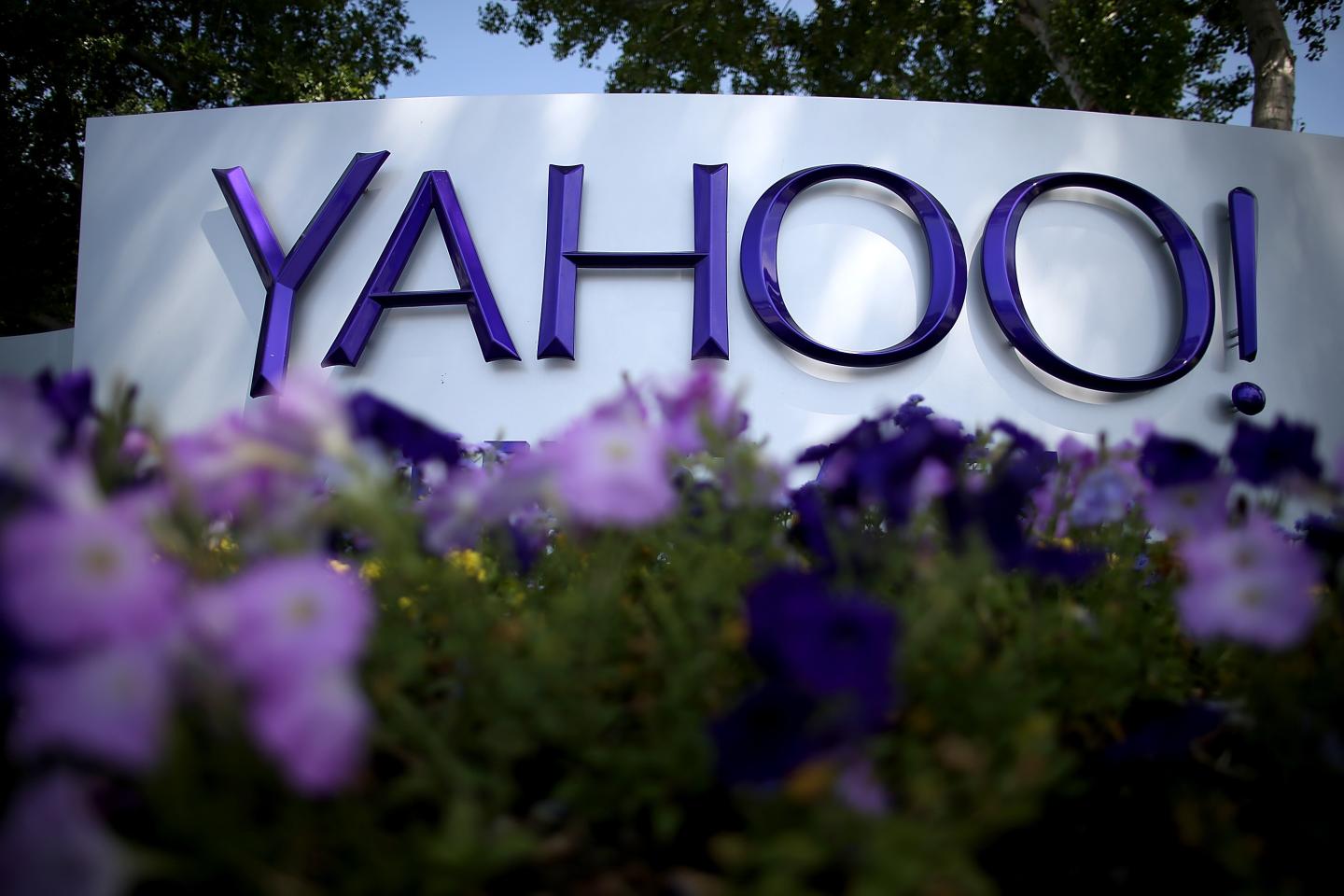
Yahoo's Headquarters In Sunnyvale, California
Photograph by Justin Sullivan—Getty Images
Add Fortune on Google for similar content.

On Sunday at SXSW, Yahoo (YHOO) unveiled a new login procedure that does away with the need for remembering passwords. It’s a welcome advance for digital security, but no panacea.

In recent years, one of the most important developments in digital security has been two-factor authentication, which lets users prove their identity upon log-in by both knowing something (a password) and possessing something (a particular phone, to which the service provider sends a code).

Yahoo’s new log-in mechanism, currently available only for U.S.-based users, is a logical extension and simplification of two-factor authentication. Since the password is no longer king, it’s dispensed with in favor of relying solely on the “what you have” factor.

As people do tend to reuse passwords, and as truly-secure combinations of characters are hard to remember, evolving past the password is a welcome move. However, it does put a lot of emphasis on the handset itself as the modern identity card. If you lose your phone — or if you lack the signal coverage needed to receive that all-important text message with the authentication code in it — you’re in trouble.

There also are issues around the use of such mechanisms – and indeed, two-factor authentication systems — when you’re travelling abroad. The cost of roaming mobile services can be high, and many people get local or roaming SIM cards in the countries they’re visiting. As these are associated with different phone numbers, receiving the code for a Yahoo Mail login would mean reinserting one’s domestic SIM card and paying a quarter to take the SMS.

Nonetheless, these potential pitfalls don’t negate the benefits of moving past the password (which remains in place as an option, for now).

We’ll probably see this new model really take hold when wearables like smartwatches become more widespread. Such devices are even more likely than phones to be permanently in hand, and their biometric sensors could be capable of verifying identity through fingerprint, pulse or voice. If battery life can be extended and some safeguards can be put in place for broken/stolen/lost wearables, their use as new-age keys seems inevitable.

Encryption Advance

Yahoo also showed off its progress in developing a simple way to encrypt and decrypt emails. Like with the company’s new login procedure, it’s a caveat-laden step in the right direction.

When it comes to usability issues, the difficulty of remembering strong passwords has nothing on the trickiness of using the end-to-end email encryption technology known as PGP, or “Pretty Good Privacy”. For example, Edward Snowden confidant Glenn Greenwald almost missed the biggest story of his life because he couldn’t figure out how to get PGP running

So there’s a huge amount of interest in making PGP easier to use, particularly as it would let the big web firms off the hook when spies and law enforcement come knocking for the keys to their users’ encrypted communications. If end-to-end encryption is in use, the keys reside with the users themselves and, much to the chagrin of British Prime Minister David Cameron, there’s no other place to go if you want to decrypt those communications.

Google (GOOG) last year announced that it was working on a browser plugin that would allow Gmail-to-Gmail emails to be encrypted in this way. Yahoo came on-board in August, and on Sunday at SXSW showed off the progress it’s been making on its own plugin, which is based on Google’s work.

A video showed how the system would work once it rolls out by year-end, and Yahoo also quite smartly released the plugin’s source code so that security professionals can poke around and hopefully give it greater credibility by launch. This early release of the code also will help other webmail providers create compatible encryption systems, so people can mask their communications with more correspondents.

This trend is not limited to the big U.S. providers. One week ago, the largest German webmail providers, including Deutsche Telekom and United Internet, announced their own browser plugin for end-to-end PGP encryption, developed in conjunction with an open-source project called Mailvelope. This is intended for use with the cross-provider De-Mail system – a government-led initiative to promote identity-verified email over paper for official purposes – but again it sees end-to-end encryption hit the mainstream through the use of relatively simple-to-use browser plugins.

All of this may result in greater privacy to a large extent, but it’s important to realize that end-to-end email encryption has its limits. Today’s email technology is inherently leaky – you can encrypt the contents of the message, but you can’t encrypt the information about who is corresponding with whom and when. This metadata is in itself highly revealing and, until the next generation of email rolls around – perhaps the Dark Mail being developed by PGP creator Phil Zimmermann – no amount of encrypting the contents of an email will achieve full privacy for the correspondents.

David Meyer (@superglaze) is a technology writer based in Berlin, covering issues ranging from policy and privacy to emerging technologies and markets.

About the Author
By David Meyer
LinkedIn icon
See full bioRight Arrow Button Icon
Add Fortune on Google for similar content.

Latest in Tech

Finance
Lorem ipsum dolor sit amet, consectetur adipiscing elit, sed do eiusmod tempor incididunt ut labore et dolore magna aliqua. Ut enim ad minim veniam
By Fortune Editors
October 20, 2025
Finance
Lorem ipsum dolor sit amet, consectetur adipiscing elit, sed do eiusmod tempor incididunt ut labore et dolore magna aliqua. Ut enim ad minim veniam
By Fortune Editors
October 20, 2025
Finance
Lorem ipsum dolor sit amet, consectetur adipiscing elit, sed do eiusmod tempor incididunt ut labore et dolore magna aliqua. Ut enim ad minim veniam
By Fortune Editors
October 20, 2025
Finance
Lorem ipsum dolor sit amet, consectetur adipiscing elit, sed do eiusmod tempor incididunt ut labore et dolore magna aliqua. Ut enim ad minim veniam
By Fortune Editors
October 20, 2025
Finance
Lorem ipsum dolor sit amet, consectetur adipiscing elit, sed do eiusmod tempor incididunt ut labore et dolore magna aliqua. Ut enim ad minim veniam
By Fortune Editors
October 20, 2025
Finance
Lorem ipsum dolor sit amet, consectetur adipiscing elit, sed do eiusmod tempor incididunt ut labore et dolore magna aliqua. Ut enim ad minim veniam
By Fortune Editors
October 20, 2025

Most Popular

Finance
Lorem ipsum dolor sit amet, consectetur adipiscing elit, sed do eiusmod tempor incididunt ut labore et dolore magna aliqua. Ut enim ad minim veniam
By Fortune Editors
October 20, 2025
Finance
Lorem ipsum dolor sit amet, consectetur adipiscing elit, sed do eiusmod tempor incididunt ut labore et dolore magna aliqua. Ut enim ad minim veniam
By Fortune Editors
October 20, 2025
Finance
Lorem ipsum dolor sit amet, consectetur adipiscing elit, sed do eiusmod tempor incididunt ut labore et dolore magna aliqua. Ut enim ad minim veniam
By Fortune Editors
October 20, 2025
Finance
Lorem ipsum dolor sit amet, consectetur adipiscing elit, sed do eiusmod tempor incididunt ut labore et dolore magna aliqua. Ut enim ad minim veniam
By Fortune Editors
October 20, 2025
Finance
Lorem ipsum dolor sit amet, consectetur adipiscing elit, sed do eiusmod tempor incididunt ut labore et dolore magna aliqua. Ut enim ad minim veniam
By Fortune Editors
October 20, 2025
Finance
Lorem ipsum dolor sit amet, consectetur adipiscing elit, sed do eiusmod tempor incididunt ut labore et dolore magna aliqua. Ut enim ad minim veniam
By Fortune Editors
October 20, 2025
Fortune Secondary Logo
Rankings
  • 100 Best Companies
  • Fortune 500
  • Global 500
  • Fortune 500 Europe
  • Most Powerful Women
  • World's Most Admired Companies
  • See All Rankings
  • Lists Calendar
Sections
  • Finance
  • Fortune Crypto
  • Features
  • Leadership
  • Health
  • Commentary
  • Success
  • Retail
  • Mpw
  • Tech
  • Lifestyle
  • CEO Initiative
  • Asia
  • Politics
  • Conferences
  • Europe
  • Newsletters
  • Personal Finance
  • Environment
  • Magazine
  • Education
Customer Support
  • Frequently Asked Questions
  • Customer Service Portal
  • Privacy Policy
  • Terms Of Use
  • Single Issues For Purchase
  • International Print
Commercial Services
  • Advertising
  • Fortune Brand Studio
  • Fortune Analytics
  • Fortune Conferences
  • Business Development
  • Group Subscriptions
About Us
  • About Us
  • Press Center
  • Work At Fortune
  • Terms And Conditions
  • Site Map
  • About Us
  • Press Center
  • Work At Fortune
  • Terms And Conditions
  • Site Map
  • Facebook icon
  • Twitter icon
  • LinkedIn icon
  • Instagram icon
  • Pinterest icon

Latest in Tech

Sundar Pichai
SuccessCareers
Google CEO tells graduates to stop obsessing over first jobs because ‘very few moments are make or break’ in life—a lesson he learned in Vegas
By Preston ForeJune 25, 2026
49 minutes ago
Softbank CEO dismisses Elon Musk’s extraterrestrial data center idea in favor of maximizing Earth-side construction now: ‘He who strikes first wins’
AITech
Softbank CEO dismisses Elon Musk’s extraterrestrial data center idea in favor of maximizing Earth-side construction now: ‘He who strikes first wins’
By Marco Quiroz-GutierrezJune 25, 2026
1 hour ago
VivaTech entrance in Paris.
NewslettersEye on AI
Europe’s AI wake-up call: cybersecurity threats, sovereignty fears, and a growing demand for ROI dominated VivaTech
By Beatrice NolanJune 25, 2026
1 hour ago
Digital transformation technology strategy, IoT, internet of things. Businessman using smart phone with AI and Digital Icons design.
AICFO Daily
Top CFOs warn AI success depends on training employees, not just buying technology
By Sheryl EstradaJune 25, 2026
3 hours ago
Samin Menon (left) Neil Movva (right)
Startups & VentureVenture Capital
Exclusive: A former Apple engineer thinks AI infrastructure is built for the wrong future. Investors just gave him $80 million to fix it
By Lily Mae LazarusJune 25, 2026
4 hours ago
Lux Capital cofounder Josh Wolfe’s limited-odds, high-stakes 2027 predictions
NewslettersTerm Sheet
Lux Capital cofounder Josh Wolfe’s limited-odds, high-stakes 2027 predictions
By Allie GarfinkleJune 25, 2026
5 hours ago

Most Popular

Now worth $200 million, Sarah Jessica Parker credits being ‘one of eight kids that struggled financially’ for her hunger, ambition, and work ethic
Success
Now worth $200 million, Sarah Jessica Parker credits being ‘one of eight kids that struggled financially’ for her hunger, ambition, and work ethic
By Orianna Rosa RoyleJune 24, 2026
1 day ago
Amazon's record Prime Day masks a darker truth: Americans are spending more and getting less
Retail
Amazon's record Prime Day masks a darker truth: Americans are spending more and getting less
By Nick LichtenbergJune 24, 2026
1 day ago
Ray Dalio just finished a 10-day trip to China. He says global leaders know America ‘doesn’t have what it takes to fight to maintain its empire’
Asia
Ray Dalio just finished a 10-day trip to China. He says global leaders know America ‘doesn’t have what it takes to fight to maintain its empire’
By Nick LichtenbergJune 24, 2026
1 day ago
MacKenzie Scott alone accounted for one-third of America's $19.2 billion in megagifts last year
Success
MacKenzie Scott alone accounted for one-third of America's $19.2 billion in megagifts last year
By Sydney LakeJune 25, 2026
9 hours ago
After forcing workers back to the office, Goldman Sachs and JPMorgan Chase are now letting their staff work remotely—but only for the World Cup
Success
After forcing workers back to the office, Goldman Sachs and JPMorgan Chase are now letting their staff work remotely—but only for the World Cup
By Orianna Rosa RoyleJune 23, 2026
2 days ago
Trump’s international student crackdown kicked off a domino effect that could shave nearly $500 billion off the economy
Economy
Trump’s international student crackdown kicked off a domino effect that could shave nearly $500 billion off the economy
By Tristan BoveJune 24, 2026
21 hours ago

© 2026 Fortune Media IP Limited. All Rights Reserved. Use of this site constitutes acceptance of our Terms of Use and Privacy Policy | CA Notice at Collection and Privacy Notice | Do Not Sell/Share My Personal Information
FORTUNE is a trademark of Fortune Media IP Limited, registered in the U.S. and other countries. FORTUNE may receive compensation for some links to products and services on this website. Offers may be subject to change without notice.