• Home
  • Latest
  • Fortune 500
  • Finance
  • Tech
  • Leadership
  • Lifestyle
  • Rankings
  • Multimedia

Trendingnow

1

The Pentagon said Iran War costs $29 billion, but the real cost is closer to $200 billion—and counting

2

Now worth $200 million, Sarah Jessica Parker credits being ‘one of eight kids that struggled financially’ for her hunger, ambition, and work ethic

3

After forcing workers back to the office, Goldman Sachs and JPMorgan Chase are now letting their staff work remotely—but only for the World Cup

1

The Pentagon said Iran War costs $29 billion, but the real cost is closer to $200 billion—and counting

2

Now worth $200 million, Sarah Jessica Parker credits being ‘one of eight kids that struggled financially’ for her hunger, ambition, and work ethic

3

After forcing workers back to the office, Goldman Sachs and JPMorgan Chase are now letting their staff work remotely—but only for the World Cup
Samsung

Samsung and the curious case of the red OLED

By
Kevin Purdy
Kevin Purdy
Down Arrow Button Icon
By
Kevin Purdy
Kevin Purdy
Down Arrow Button Icon
November 13, 2014, 11:57 AM ET
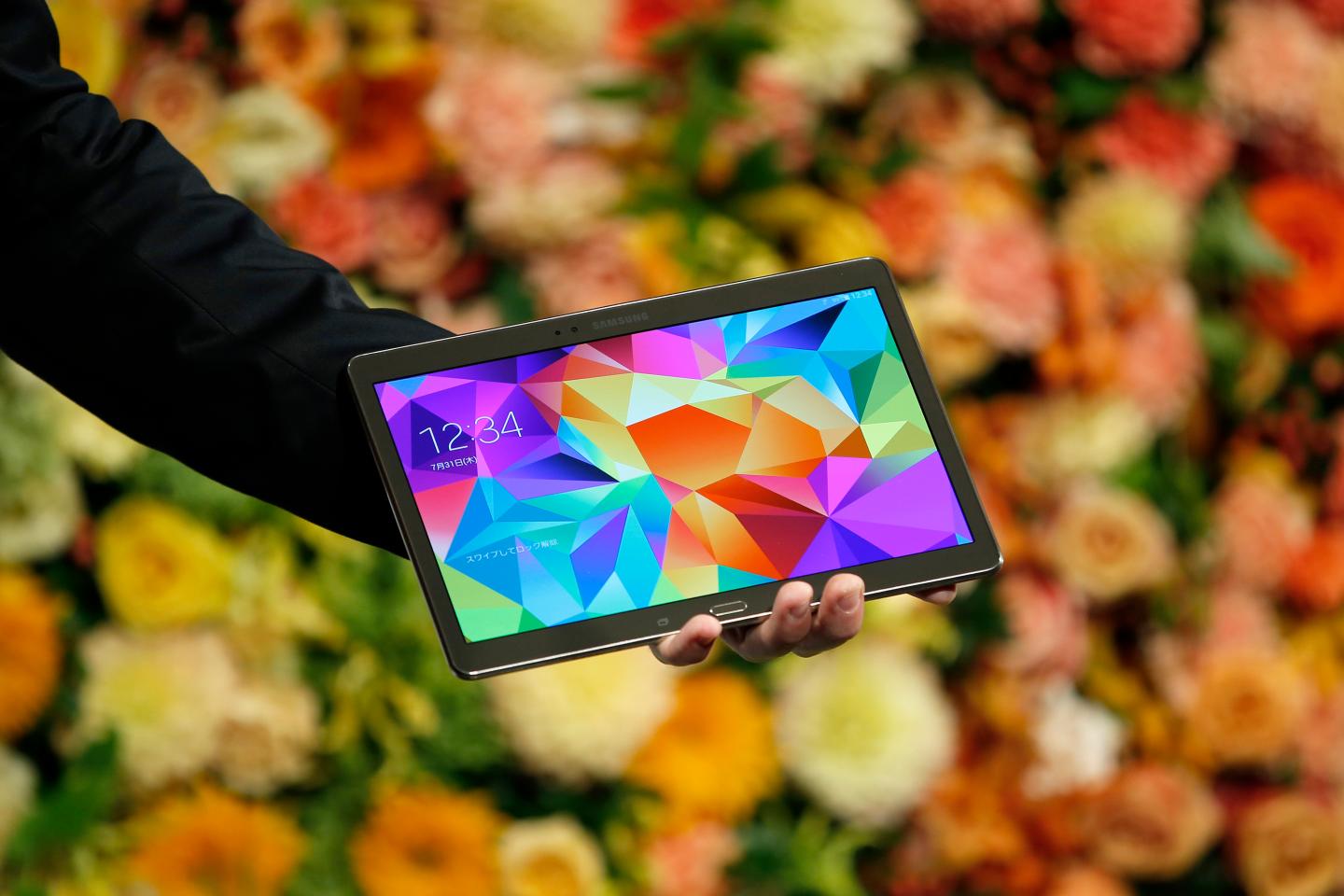
Photo courtesy: Kiyoshi Ota — Bloomberg/Getty Images
Add Fortune on Google for similar content.

When critics of Samsung see the Korean technology mega-corporation turn out yet another huge, impressively sharp screen for a new phone or tablet computer, it makes them see red.

Well, not red, actually—more like a super-saturated, unrealistically bright version of red.

Samsung is the near-undisputed king of OLED, or organic light-emitting diode, display technology. It has been using its dominant position in that market as a source of stability as it enters an increasingly untenable situation: eroding sales on both ends of the phone price spectrum. On the low end where profit margins are thin, Samsung has been under attack by local manufacturers such as Xiaomi, which have been willing to sacrifice profit for the sake of market share. On the high end where margins are better, rivals such as Apple’s iPhone have proved to be fiercely competitive. Every company in the business hopes that large sales volumes will make their big bets pay off in the end; the question is what will prompt consumers to buy one glassy device over another.


Samsung hopes that display technology will be one of those things as its rivals use less flashy but more trusted screen technology.

Apple’s iPhones and iPads and roughly two-thirds of all smartphones have LCD, or liquid-crystal display, screens. LCDs essentially twist and untwist liquid crystals to allow a certain amount of light through each red, green, or blue sub-pixel, the term for the components that make up each individual pixel in a display. The technology is well-known and well-worn, but it comes with a major downside: liquid crystals provide no light of their own. The necessary backlight that accompanies such displays is a substantial draw on battery life; taken together with the crystals and other necessary technology, such displays make the resulting screen thicker and more rigid.

Most of Samsung’s modern devices have AMOLED (as in “active-matrix organic light-emitting diode”) displays. The technology involves passing a current through tiny, thin films of organic material (red, green, or blue), which cause them to throw off colored light. AMOLED screens generate their own light, so they do not need a backlight. Even better, when the pixels are not needed, they are actually “off,” saving device power and allowing blacks to be deeper and truer than with LCDs. Manufacturing and material improvements have made AMOLED displays thinner, extremely pixel-dense, occasionally curved, and able to display a huge range of colors.

Most importantly, these manufacturing improvements come largely from one single maker: Samsung Display, a division of Samsung Electronics. “There may be a couple of other players, technically, but, really, these displays come from Samsung,” says Vinita Jakhanwal, senior director of analyst firm IHS. “There is no other OLED or AMOLED maker making displays for mobile phones or tablets.”

Samsung certainly wants to talk about its display technology. In a video promotion for its Galaxy Tab S tablet this summer, women purchase salad bowls, dresses, and shoes online, only to sigh in deep exasperation when a different shade of blue-green, yellow, or shale comes out of the box. The Galaxy Tab S, the voice-over claims, displays the “professional RGB standard” and each pixel is a “living pixel, capable of producing a variety of color combinations.” The message: Samsung’s screens are organic, different, and simply better at colors.

In reality, this is the opposite of what many industry pundits claim. The colors displayed on Samsung’s Galaxy Tab S, according to Dieter Bohn, an editor for the tech-lifestyle website The Verge, “still tend to look over-saturated to my eyes,” though he added that “Samsung has toned things down considerably from years past.” In an otherwise positive review of a newer Galaxy S5 smartphone model, Anandtech, a computer hardware site, made note of “minor issues with excessive green in the color balance.” In essence, people seem to agree that the colors of AMOLED displays are more vivid. Whether or not those colors are natural or accurate based on what the eye would see in real life is another matter entirely.

Samsung may be sensitive to accusations of color problems because one of its main rivals is on record about it. Apple CEO Tim Cook told a Goldman Sachs investors’ conference in February 2013 that “the color saturation is awful” on OLED displays. He added: “If you ever buy anything online and you want to really know what the color is . . . you should really think twice before you depend on the color of the OLED display.”

Part of the issue has to do with a seeming strength of AMOLED technology. It can create a wider range of colors than other display technologies. While the colors of most images are limited to fit inside the 18-year-old sRGB color gamut, AMOLED screens can technically reach far beyond that range, and Samsung often lets them. Some Samsung devices offer a display-correcting “mode”— “Professional Photo” is one—but for the most part, Samsung allows colors to run bolder and more saturated, especially in the red part of the visible spectrum.

“The colors look really off to me, but it’s up to you whether you like this effect or not,” says Erica Griffin, an in-depth video device reviewer, in her take on Samsung’s Galaxy S5. “I know Samsung is heading for an effect that’s eye-catching, to get people’s attention . . . For some people, that looks pretty, and for others it’s just an eyesore.”

It’s also a look that may change as you use your device. The organic materials used to make blues in OLED displays wear out far more quickly than the reds or greens. As they start to wear out, the overall balance of color shifts. Samsung and other device makers often try to correct for this—for example, by making blue sub-pixels twice as large—but it remains an unsolved issue.

A Samsung spokesperson pointed to the company’s latest displays, dubbed Quad-HD Super AMOLED, as having “an immersive viewing experience with a high contrast ratio and a wider color range” than the competition. The Galaxy Tab S featured in the aforementioned ad has a dedicated chip in it that can stabilize colors. At its most basic setting, tech site Anandtech says it mostly has the desired effect.

Colors are important on mobile devices for one overarching reason: managed expectations. Knowing that Twitter uses a sky blue color for its logo, it can be jarring for users and marketers alike to see a version with a tinge of green. LCD display technology certainly is not standing still—displays are becoming thinner, brighter, and even more high-definition. But IHS’s Jakhanwal notes that it is more than just colors, battery life, or thinness that gets a device into buyers’ hands.

“The winners are going to be the device that has not just superior display technology, but superior overall performance,” she says. “Nobody is really going to feel good that, ‘Now I have the brightest tablet,’ or ‘Now my colors are more real.’ It’s a combination of features that make the display and the device.” Which may be good reason for Samsung and its market-moving AMOLED research teams more time to move its displays out of the red.

Next, read: “Logged In,” Fortune’s personal technology column, written by Jason Cipriani and published every Tuesday.

About the Author
By Kevin Purdy
See full bioRight Arrow Button Icon
Add Fortune on Google for similar content.

Latest in

Finance
Lorem ipsum dolor sit amet, consectetur adipiscing elit, sed do eiusmod tempor incididunt ut labore et dolore magna aliqua. Ut enim ad minim veniam
By Fortune Editors
October 20, 2025
Finance
Lorem ipsum dolor sit amet, consectetur adipiscing elit, sed do eiusmod tempor incididunt ut labore et dolore magna aliqua. Ut enim ad minim veniam
By Fortune Editors
October 20, 2025
Finance
Lorem ipsum dolor sit amet, consectetur adipiscing elit, sed do eiusmod tempor incididunt ut labore et dolore magna aliqua. Ut enim ad minim veniam
By Fortune Editors
October 20, 2025
Finance
Lorem ipsum dolor sit amet, consectetur adipiscing elit, sed do eiusmod tempor incididunt ut labore et dolore magna aliqua. Ut enim ad minim veniam
By Fortune Editors
October 20, 2025
Finance
Lorem ipsum dolor sit amet, consectetur adipiscing elit, sed do eiusmod tempor incididunt ut labore et dolore magna aliqua. Ut enim ad minim veniam
By Fortune Editors
October 20, 2025
Finance
Lorem ipsum dolor sit amet, consectetur adipiscing elit, sed do eiusmod tempor incididunt ut labore et dolore magna aliqua. Ut enim ad minim veniam
By Fortune Editors
October 20, 2025

Most Popular

Finance
Lorem ipsum dolor sit amet, consectetur adipiscing elit, sed do eiusmod tempor incididunt ut labore et dolore magna aliqua. Ut enim ad minim veniam
By Fortune Editors
October 20, 2025
Finance
Lorem ipsum dolor sit amet, consectetur adipiscing elit, sed do eiusmod tempor incididunt ut labore et dolore magna aliqua. Ut enim ad minim veniam
By Fortune Editors
October 20, 2025
Finance
Lorem ipsum dolor sit amet, consectetur adipiscing elit, sed do eiusmod tempor incididunt ut labore et dolore magna aliqua. Ut enim ad minim veniam
By Fortune Editors
October 20, 2025
Finance
Lorem ipsum dolor sit amet, consectetur adipiscing elit, sed do eiusmod tempor incididunt ut labore et dolore magna aliqua. Ut enim ad minim veniam
By Fortune Editors
October 20, 2025
Finance
Lorem ipsum dolor sit amet, consectetur adipiscing elit, sed do eiusmod tempor incididunt ut labore et dolore magna aliqua. Ut enim ad minim veniam
By Fortune Editors
October 20, 2025
Finance
Lorem ipsum dolor sit amet, consectetur adipiscing elit, sed do eiusmod tempor incididunt ut labore et dolore magna aliqua. Ut enim ad minim veniam
By Fortune Editors
October 20, 2025
Fortune Secondary Logo
Rankings
  • 100 Best Companies
  • Fortune 500
  • Global 500
  • Fortune 500 Europe
  • Most Powerful Women
  • World's Most Admired Companies
  • See All Rankings
  • Lists Calendar
Sections
  • Finance
  • Fortune Crypto
  • Features
  • Leadership
  • Health
  • Commentary
  • Success
  • Retail
  • Mpw
  • Tech
  • Lifestyle
  • CEO Initiative
  • Asia
  • Politics
  • Conferences
  • Europe
  • Newsletters
  • Personal Finance
  • Environment
  • Magazine
  • Education
Customer Support
  • Frequently Asked Questions
  • Customer Service Portal
  • Privacy Policy
  • Terms Of Use
  • Single Issues For Purchase
  • International Print
Commercial Services
  • Advertising
  • Fortune Brand Studio
  • Fortune Analytics
  • Fortune Conferences
  • Business Development
  • Group Subscriptions
About Us
  • About Us
  • Press Center
  • Work At Fortune
  • Terms And Conditions
  • Site Map
  • About Us
  • Press Center
  • Work At Fortune
  • Terms And Conditions
  • Site Map
  • Facebook icon
  • Twitter icon
  • LinkedIn icon
  • Instagram icon
  • Pinterest icon

Latest in

Getting past the pilot: Why so many AI test projects have trouble scaling
SuccessBrainstorm Tech
Getting past the pilot: Why so many AI test projects have trouble scaling
By Alexei OreskovicJune 24, 2026
7 hours ago
US says chemical maker Chemours will pay $450M in penalties and relief programs to three states to settle ‘forever chemicals’ case
EnvironmentEnvironment
US says chemical maker Chemours will pay $450M in penalties and relief programs to three states to settle ‘forever chemicals’ case
By The Associated PressJune 24, 2026
9 hours ago
A Viking ship named Havhingsten af Glendalough - the Sea Stallion of Glendalough -, the world's largest replica of a Viking warship, sets out 01 JUly 2007 from the Viking Museum in Roskilde, Denmark, on a voyage to Dublin in Ireland, where it is scheduled to arrive 14 August.
EuropeScience
1,000-year-old massive textile factory unearthed in Denmark—and it belonged to the Vikings
By James Brooks and The Associated PressJune 24, 2026
9 hours ago
‘Godmother of AI’ and tech entrepreneurs draw investors by pivoting from chatbots to ‘world models’ saying AI has to read the room, not just books
AIRobots
‘Godmother of AI’ and tech entrepreneurs draw investors by pivoting from chatbots to ‘world models’ saying AI has to read the room, not just books
By The Associated PressJune 24, 2026
9 hours ago
Trump’s Iran war provoked the Senate enough to get it to symbolically vote to curb his war powers for the first time
PoliticsDonald Trump
Trump’s Iran war provoked the Senate enough to get it to symbolically vote to curb his war powers for the first time
By The Associated PressJune 24, 2026
9 hours ago
‘We are in agony’: Today Show host Savannah Guthrie begs public for help as reports surface her missing 84-year-old mom might be dead
North AmericaMedia
‘We are in agony’: Today Show host Savannah Guthrie begs public for help as reports surface her missing 84-year-old mom might be dead
By The Associated PressJune 24, 2026
9 hours ago

Most Popular

The Pentagon said Iran War costs $29 billion, but the real cost is closer to $200 billion—and counting
Economy
The Pentagon said Iran War costs $29 billion, but the real cost is closer to $200 billion—and counting
By Jacqueline MunisJune 24, 2026
23 hours ago
Now worth $200 million, Sarah Jessica Parker credits being ‘one of eight kids that struggled financially’ for her hunger, ambition, and work ethic
Success
Now worth $200 million, Sarah Jessica Parker credits being ‘one of eight kids that struggled financially’ for her hunger, ambition, and work ethic
By Orianna Rosa RoyleJune 24, 2026
23 hours ago
After forcing workers back to the office, Goldman Sachs and JPMorgan Chase are now letting their staff work remotely—but only for the World Cup
Success
After forcing workers back to the office, Goldman Sachs and JPMorgan Chase are now letting their staff work remotely—but only for the World Cup
By Orianna Rosa RoyleJune 23, 2026
2 days ago
Amazon's record Prime Day masks a darker truth: Americans are spending more and getting less
Retail
Amazon's record Prime Day masks a darker truth: Americans are spending more and getting less
By Nick LichtenbergJune 24, 2026
15 hours ago
Ray Dalio just finished a 10-day trip to China. He says global leaders know America ‘doesn’t have what it takes to fight to maintain its empire’
Asia
Ray Dalio just finished a 10-day trip to China. He says global leaders know America ‘doesn’t have what it takes to fight to maintain its empire’
By Nick LichtenbergJune 24, 2026
17 hours ago
Current price of gold as of June 23, 2026
Personal Finance
Current price of gold as of June 23, 2026
By Danny BakstJune 23, 2026
2 days ago

© 2026 Fortune Media IP Limited. All Rights Reserved. Use of this site constitutes acceptance of our Terms of Use and Privacy Policy | CA Notice at Collection and Privacy Notice | Do Not Sell/Share My Personal Information
FORTUNE is a trademark of Fortune Media IP Limited, registered in the U.S. and other countries. FORTUNE may receive compensation for some links to products and services on this website. Offers may be subject to change without notice.