• Home
  • Latest
  • Fortune 500
  • Finance
  • Tech
  • Leadership
  • Lifestyle
  • Rankings
  • Multimedia

Trendingnow

1

After forcing workers back to the office, Goldman Sachs and JPMorgan Chase are now letting their staff work remotely—but only for the World Cup

2

The Pentagon said Iran War costs $29 billion, but the real cost is closer to $200 billion—and counting

3

Markets tumble worldwide as Fed resets expectations: $400 billion wiped off SpaceX stock

1

After forcing workers back to the office, Goldman Sachs and JPMorgan Chase are now letting their staff work remotely—but only for the World Cup

2

The Pentagon said Iran War costs $29 billion, but the real cost is closer to $200 billion—and counting

3

Markets tumble worldwide as Fed resets expectations: $400 billion wiped off SpaceX stock
FinanceChina

The great China growth debate: Ripe for a slowdown or full speed ahead?

By
Chris Matthews
Chris Matthews
Down Arrow Button Icon
By
Chris Matthews
Chris Matthews
Down Arrow Button Icon
November 5, 2014, 5:00 AM ET
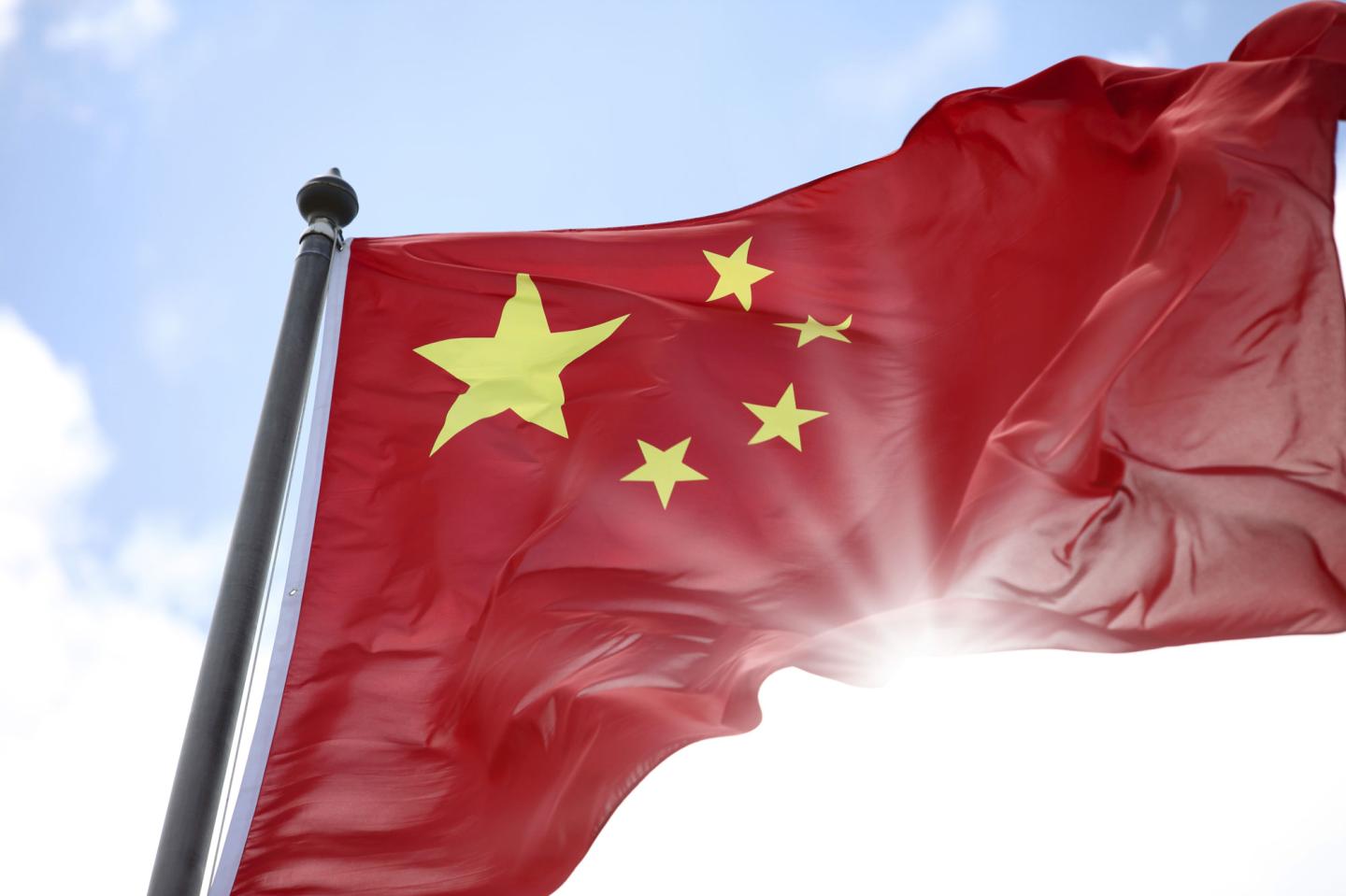
China flag
China National FlagPhotograph by blackred—Getty Images
Add Fortune on Google for similar content.

With Europe mired in what can now be fairly described as a depression, and the United States barely growing above its expected, long-term trend, economists are desperate to find some other source of global economic growth that can be counted on to push the world forward.

That’s one reason why economists have been paying such close attention to China lately. The Chinese economy is a fantastic success story, growing by roughly 10% a year from 1980 until 2010. Growth has slowed somewhat in China in the past few years, but it’s still coming in at somewhere between 7% and 8% annually. And that’s for an economy that’s already adding more than $9 trillion a year to global output, according to World Bank estimates, the second highest contribution after the United States.

China is integral to global growth, and that’s one reason why people took notice when Larry Summers published a working paper in October arguing that projections for the Chinese economy were way off the mark. The noted economist and former Treasury Secretary wrote that China’s long run of outstanding growth will likely come to an end soon. Summers points to two trends to support his argument. The first is that after 30 years of truly outstanding growth, it would be anomalous for the Chinese economy to continue to grow well above the world average as mainstream organizations like the World Bank predict it will. In the paper, which Summers co-wrote with economist Lant Pritchett, the authors write:

Many of the great economic forecasting errors of the past half century came from excessive extrapolation of performance in the recent past and treating a country’s growth rate as a permanent characteristic rather than a transient condition. Paul Samuelson’s textbook predicted in 1961 that there was a substantial chance that the USSR would overtake the United States economically by the 1980s. There was a widespread view right up until the end of the 1980s that Japan would continue to grow and outcompete the world. Or in the opposite direction, consider the pervasive pessimism of even a decade ago regarding Africa. Since then, African countries emerged as a majority of the world’s most rapidly growing nations.

With this in mind, Summers and Pritchett analyze the growth patterns of a broad collection of developing economies, finding that it is much more common for a country to grow slowly after a long period of rapid growth than for that country to continue to perform as it had been. Furthermore, they find that it is much more likely for wealthy countries to be democratic than authoritarian. The only country in recent history to achieve the status of a developed nation while remaining relatively authoritarian is Singapore, a nation of just 5.4 million people. Summers argues that it would be doubtful that a country of 1.3 billion people like China could emulate a tiny island state and, in any case, even Singapore remains far more democratic than China by most measures.

In other words, for China to reach the 6.6% per capita growth the World Bank expects it to achieve between 2011 and 2033, it would have to do something no economy has ever done before. It’s possible that this will happen, but how likely is it really?

Another economist skeptical of a continuation of the China growth miracle is David Levy of theThe Jerome Levy Forecasting Center, who argues that over-investment in China will soon lead to a rapid slowdown in that nation and, potentially, a global recession.

There are many economists, however, who are dubious of these doubters. They argue that China is a special case. Australian economist Stephen Grenville of the Lowry Institute argues that it’s not wise to predict the future growth of China based on experiences of economies so vastly different from it. “There is a range of experiences—often widely different—hidden within the average. True, Brazil had more than two decades with no growth at all in per capita income. On the other hand Taiwan, Singapore, South Korea and Hong Kong (and earlier, Japan) had quite long periods of fairly sustained economic growth which have taken them to high levels of per-capital income. What relevance does Brazil’s failed growth experience have for China?”

Carl Weinberg, chief economist at High Frequency Economics, sees no reason for Chinese growth to slow down markedly in the near future. He argues that China perfectly fits the model of a “modernizing” economy, one that is defined by a growing population; sustained productivity growth; a rapid growth in urban relative to rural population; social changes like secularization; and increased trade. China, says Weinberg, is a special case because of how closely it resembles other modernizing economies, like the United States, during their rise. “China is a modernizing economy,” he wrote in a recent note to clients. “Most of the countries in Larry [Summers’] sample are not. China’s experience is different.”

Weinberg argues that, while China might not be a model of democracy, its government has made progress in allowing more freedom, especially when it comes to private enterprise. As the country continues to urbanize and per capita income continues to rise, there’s reason to believe this process of liberalization will continue.

In previous years, this may have been an academic discussion, pertinent to economists and a few investors, but not the wider population. But as China’s economy continues to grow, what happens in China will increasingly affect the entire world. It’s expected that sometime in the next few years, China will become the largest economy in the world, and the difference between 6% and 2% yearly growth could spell the difference between a strong or stagnant economy in the U.S.

About the Author
By Chris Matthews
See full bioRight Arrow Button Icon
Add Fortune on Google for similar content.

Latest in Finance

Finance
Lorem ipsum dolor sit amet, consectetur adipiscing elit, sed do eiusmod tempor incididunt ut labore et dolore magna aliqua. Ut enim ad minim veniam
By Fortune Editors
October 20, 2025
Finance
Lorem ipsum dolor sit amet, consectetur adipiscing elit, sed do eiusmod tempor incididunt ut labore et dolore magna aliqua. Ut enim ad minim veniam
By Fortune Editors
October 20, 2025
Finance
Lorem ipsum dolor sit amet, consectetur adipiscing elit, sed do eiusmod tempor incididunt ut labore et dolore magna aliqua. Ut enim ad minim veniam
By Fortune Editors
October 20, 2025
Finance
Lorem ipsum dolor sit amet, consectetur adipiscing elit, sed do eiusmod tempor incididunt ut labore et dolore magna aliqua. Ut enim ad minim veniam
By Fortune Editors
October 20, 2025
Finance
Lorem ipsum dolor sit amet, consectetur adipiscing elit, sed do eiusmod tempor incididunt ut labore et dolore magna aliqua. Ut enim ad minim veniam
By Fortune Editors
October 20, 2025
Finance
Lorem ipsum dolor sit amet, consectetur adipiscing elit, sed do eiusmod tempor incididunt ut labore et dolore magna aliqua. Ut enim ad minim veniam
By Fortune Editors
October 20, 2025

Most Popular

Finance
Lorem ipsum dolor sit amet, consectetur adipiscing elit, sed do eiusmod tempor incididunt ut labore et dolore magna aliqua. Ut enim ad minim veniam
By Fortune Editors
October 20, 2025
Finance
Lorem ipsum dolor sit amet, consectetur adipiscing elit, sed do eiusmod tempor incididunt ut labore et dolore magna aliqua. Ut enim ad minim veniam
By Fortune Editors
October 20, 2025
Finance
Lorem ipsum dolor sit amet, consectetur adipiscing elit, sed do eiusmod tempor incididunt ut labore et dolore magna aliqua. Ut enim ad minim veniam
By Fortune Editors
October 20, 2025
Finance
Lorem ipsum dolor sit amet, consectetur adipiscing elit, sed do eiusmod tempor incididunt ut labore et dolore magna aliqua. Ut enim ad minim veniam
By Fortune Editors
October 20, 2025
Finance
Lorem ipsum dolor sit amet, consectetur adipiscing elit, sed do eiusmod tempor incididunt ut labore et dolore magna aliqua. Ut enim ad minim veniam
By Fortune Editors
October 20, 2025
Finance
Lorem ipsum dolor sit amet, consectetur adipiscing elit, sed do eiusmod tempor incididunt ut labore et dolore magna aliqua. Ut enim ad minim veniam
By Fortune Editors
October 20, 2025
Fortune Secondary Logo
Rankings
  • 100 Best Companies
  • Fortune 500
  • Global 500
  • Fortune 500 Europe
  • Most Powerful Women
  • World's Most Admired Companies
  • See All Rankings
  • Lists Calendar
Sections
  • Finance
  • Fortune Crypto
  • Features
  • Leadership
  • Health
  • Commentary
  • Success
  • Retail
  • Mpw
  • Tech
  • Lifestyle
  • CEO Initiative
  • Asia
  • Politics
  • Conferences
  • Europe
  • Newsletters
  • Personal Finance
  • Environment
  • Magazine
  • Education
Customer Support
  • Frequently Asked Questions
  • Customer Service Portal
  • Privacy Policy
  • Terms Of Use
  • Single Issues For Purchase
  • International Print
Commercial Services
  • Advertising
  • Fortune Brand Studio
  • Fortune Analytics
  • Fortune Conferences
  • Business Development
  • Group Subscriptions
About Us
  • About Us
  • Press Center
  • Work At Fortune
  • Terms And Conditions
  • Site Map
  • About Us
  • Press Center
  • Work At Fortune
  • Terms And Conditions
  • Site Map
  • Facebook icon
  • Twitter icon
  • LinkedIn icon
  • Instagram icon
  • Pinterest icon

Latest in Finance

Trump cancels signing a housing bill and blindsides his own party in a social media post
PoliticsDonald Trump
Trump cancels signing a housing bill and blindsides his own party in a social media post
By The Associated Press, Mary Clare Jalonick, Kevin Freking, Josh Boak and Lisa MascaroJune 24, 2026
4 minutes ago
t
PoliticsDonald Trump
Trumps holds landmark affordable housing bill hostage over his pet issue: the ‘national emergency’ of voter ID
By Mary Clare Jalonick and The Associated PressJune 24, 2026
9 minutes ago
s
BankingScott Bessent
Scott Bessent calls Mamdani ‘leader of the Democratic Party,’ touts weekly Warsh breakfasts and a new push to put every American in the stock market
By Nick LichtenbergJune 24, 2026
25 minutes ago
a
RetailAmazon
Amazon’s record Prime Day masks a darker truth: Americans are spending more and getting less
By Nick LichtenbergJune 24, 2026
31 minutes ago
rd
AsiaChina
Ray Dalio just finished a 10-day trip to China. He says global leaders know America ‘doesn’t have what it takes to fight to maintain its empire’
By Nick LichtenbergJune 24, 2026
2 hours ago
Top CD rates from major banks June 24, 2026: Chase CDs, Bank of America CDs, Citibank CDs, and more
Personal FinanceCertificates of Deposit (CDs)
Top CD rates from major banks on June 24, 2026: Chase CDs, Bank of America CDs, Citibank CDs, and more
By Joseph HostetlerJune 24, 2026
2 hours ago

Most Popular

After forcing workers back to the office, Goldman Sachs and JPMorgan Chase are now letting their staff work remotely—but only for the World Cup
Success
After forcing workers back to the office, Goldman Sachs and JPMorgan Chase are now letting their staff work remotely—but only for the World Cup
By Orianna Rosa RoyleJune 23, 2026
1 day ago
The Pentagon said Iran War costs $29 billion, but the real cost is closer to $200 billion—and counting
Economy
The Pentagon said Iran War costs $29 billion, but the real cost is closer to $200 billion—and counting
By Jacqueline MunisJune 24, 2026
8 hours ago
Markets tumble worldwide as Fed resets expectations: $400 billion wiped off SpaceX stock
Banking
Markets tumble worldwide as Fed resets expectations: $400 billion wiped off SpaceX stock
By Jim EdwardsJune 23, 2026
1 day ago
Current price of oil as of June 23, 2026
Personal Finance
Current price of oil as of June 23, 2026
By Joseph HostetlerJune 23, 2026
1 day ago
Texas and Charlotte used to build huge McMansions—now they're copying the California design tricks they once mocked
Real Estate
Texas and Charlotte used to build huge McMansions—now they're copying the California design tricks they once mocked
By Sydney LakeJune 22, 2026
2 days ago
Current price of gold as of June 23, 2026
Personal Finance
Current price of gold as of June 23, 2026
By Danny BakstJune 23, 2026
1 day ago

© 2026 Fortune Media IP Limited. All Rights Reserved. Use of this site constitutes acceptance of our Terms of Use and Privacy Policy | CA Notice at Collection and Privacy Notice | Do Not Sell/Share My Personal Information
FORTUNE is a trademark of Fortune Media IP Limited, registered in the U.S. and other countries. FORTUNE may receive compensation for some links to products and services on this website. Offers may be subject to change without notice.