• Home
  • Latest
  • Fortune 500
  • Finance
  • Tech
  • Leadership
  • Lifestyle
  • Rankings
  • Multimedia

Trendingnow

1

AI CEOs from OpenAI, Anthropic, and Microsoft set aside their rivalry to warn Congress AI is making it too easy to design and create bioweapons

2

Social Security faces a 24% cut in 2032—that's a $345 billion hit to retirees nationwide, watchdog says

3

Billionaires Elon Musk and Mark Zuckerberg used mortgages to buy multimillion-dollar mansions. Here’s why that’s a savvy financial decision

1

AI CEOs from OpenAI, Anthropic, and Microsoft set aside their rivalry to warn Congress AI is making it too easy to design and create bioweapons

2

Social Security faces a 24% cut in 2032—that's a $345 billion hit to retirees nationwide, watchdog says

3

Billionaires Elon Musk and Mark Zuckerberg used mortgages to buy multimillion-dollar mansions. Here’s why that’s a savvy financial decision
Finance

Could a 40-year-old bank collapse have saved the U.S. economy?

By
TIME
TIME
Down Arrow Button Icon
By
TIME
TIME
Down Arrow Button Icon
October 8, 2014, 8:06 AM ET
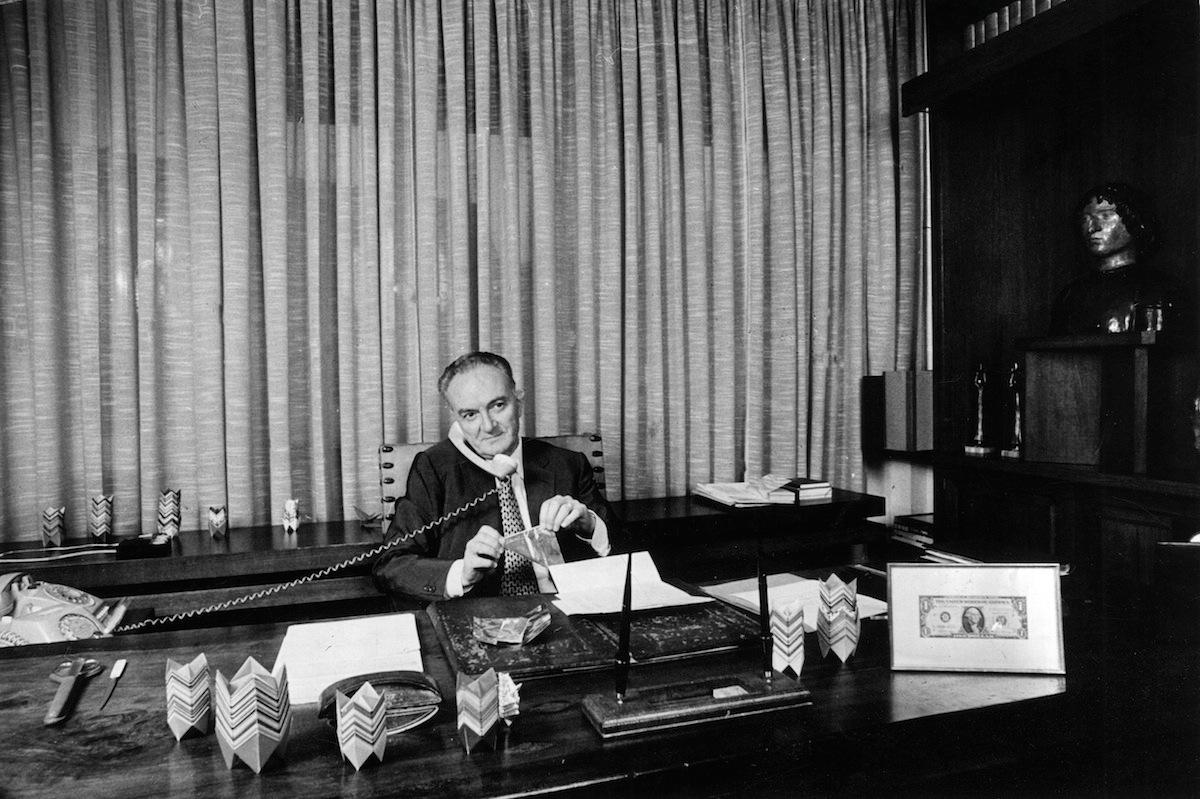
Michele Sindona In His Office
AA306766 cucina 438 292 300 5177 3449 Scala di grigio Mondadori Mondadori via Getty Images

This post is in partnership with Time. The article below was originally published at Time.com.

By Sam Frizell, TIME

When Franklin National Bank collapsed 40 years ago on Oct. 8, 1974, it was more of a beginning than an end. A lurid tale of the bank’s downfall emerged over the next decade, involving mafia connections, ambitious Wall Street wannabes à la Jordan Belfort and a principal investor with a suspicious bullet wound in his leg.

More importantly, the bank’s demise was the first notable instance in which federal regulators helped a major bank wind down its operations in order to prevent global economic damage.

Franklin began as a humble Long Island bank with big-league aspirations. In the 1960s, the bank made questionable financial decisions to expand its operations and bum-rush the Manhattan banking scene. Franklin’s overzealous bankers bought a luxurious, too-large office on Park Avenue and sold a controlling stake in the firm to a shady Milan-based international financier, Michele Sindona.

The Sindona story reads like an American Hustle-style, stranger-than-fiction tale. In 1974, high-risk loans, ill-advised foreign currency transactions, and swings in foreign exchange rates caused Franklin to hemorrhage cash. The company lost $63 million in the first five months of 1974, more than any other bank in American history until that point. Not long after, the U.S. charged Sindona with illegally transferring $40 million from banks he controlled in Italy to buy Franklin National, and then siphoning $15 million from it. In August of 1979, just before his trial was about to begin, Sindona — who had ties to the Vatican and likely the Mafia — disappeared under mysterious circumstances; his family and lawyers got letters that “supposedly proved that he had been abducted by Italian leftist radicals,” according to TIME’s coverage of the episode. When he finally emerged after nearly three months — in a payphone booth near Times Square — he had what he said was a bullet wound in his leg. (Sindona claimed he was kidnapped by Italian terrorists but his defense later admitted it was a hoax, and Italian magistrates said that a secret Masonic lodge helped Sindona fake his own kidnapping.) He was sentenced to serve a 25-year prison sentence and died in prison by cyanide poisoning in 1986.

But the bigger story about Franklin National was the boring one. The bank, which was the 20th-largest in the U.S., was the first major financial institution whose wind-down was orchestrated by federal regulators. In 1974, the biggest questions federal authorities faced were how much it would damage the global economy if Franklin collapsed, and whether regulators should get involved.

Sound familiar?

It should: A similar crisis occurred in 2008 when the collapse of the largest American financial institutions seriously damaged the global economy. Much like Lehman Brothers, JPMorgan Chase (JPM) and Goldman Sachs (GS), Franklin National was deeply enmeshed in the global economy. In both 1974 and 2008, federal regulators were in a position to take decisive action, but they responded in very different ways.

In 1974, as Franklin began to collapse, the Federal Reserve’s strategy was to lend it money in order to buy time for a bigger strategy, according to Joan Spero, author of The Failure of the Franklin National Bank: Challenge to the International. The Fed loaned Franklin a total of $1.75 billion, the largest bailout ever offered to a member bank at the time. Later, the Federal Deposit Insurance Corporation stepped in to help arrange a bank takeover. The FDIC set up negotiations with 16 banks, and a firm called European-American ultimately purchased Franklin for $125 million. The bottom line is that regulators helped to avoid an economic hit by lending Franklin money, and then smoothly transitioning the bank into a subsidiary of a functional institution.

“The entire financial world,” Arthur Burns, the chairman of the Federal Reserve Board, told TIME shortly after, “can breathe more easily, not only in this country but abroad.”

A very different scenario emerged in September 2008. The United States was on the cusp of the worst recession since the 1930s, and Lehman Brothers, the nation’s fourth-biggest bank, was in trouble. Granted, the problem was much more serious in 2008 than in 1974, and the stakes were higher — as would have been the size of the required bailout. The Fed ultimately allowed Lehman brothers to go bankrupt, and the economy seized up. (A sale to Barclays did look possible at the last minute, but it didn’t work out.) A litany of criticshave suggested that the Fed should have orchestrated a Franklin National Bank-like wind-down for Lehman, and thereby could have prevented an international catastrophe.

“For the equilibrium of the world financial system, this was a genuine error,” Christine Lagarde, France’s finance minister at the time, said in the days after Lehman’s bankruptcy, reports the New York Times. Indeed, what followed in the U.S. was the worst recession since the Great Depression.

Still, federal regulators tend to come under a lot of fire when things go wrong — no matter what they do, which is kind of the point. Even in 1974, TIME criticized federal authorities for not being proactive enough with Franklin National Bank, despite its orderly purchase by European-American. In its story published in October of that year, TIME said federal authorities should have scrutinized Franklin and others more closely:

Faced with the failure of more than 50 federally insured banks in the past decade, the FDIC and other regulatory agencies need to keep a much closer watch not only on the roughly 150 banks on the FDIC’S “problem” list but also on virtually every bank in the nation. That way ailing banks will stand a better chance of being helped long before they reach a Franklin finale.

In other words, TIME’s message to federal authorities was: Be vigilant and act quickly. It’s a mantra we could learn something from today.

About the Author
By TIME
See full bioRight Arrow Button Icon

Latest in Finance

Finance
Lorem ipsum dolor sit amet, consectetur adipiscing elit, sed do eiusmod tempor incididunt ut labore et dolore magna aliqua. Ut enim ad minim veniam
By Fortune Editors
October 20, 2025
Finance
Lorem ipsum dolor sit amet, consectetur adipiscing elit, sed do eiusmod tempor incididunt ut labore et dolore magna aliqua. Ut enim ad minim veniam
By Fortune Editors
October 20, 2025
Finance
Lorem ipsum dolor sit amet, consectetur adipiscing elit, sed do eiusmod tempor incididunt ut labore et dolore magna aliqua. Ut enim ad minim veniam
By Fortune Editors
October 20, 2025
Finance
Lorem ipsum dolor sit amet, consectetur adipiscing elit, sed do eiusmod tempor incididunt ut labore et dolore magna aliqua. Ut enim ad minim veniam
By Fortune Editors
October 20, 2025
Finance
Lorem ipsum dolor sit amet, consectetur adipiscing elit, sed do eiusmod tempor incididunt ut labore et dolore magna aliqua. Ut enim ad minim veniam
By Fortune Editors
October 20, 2025
Finance
Lorem ipsum dolor sit amet, consectetur adipiscing elit, sed do eiusmod tempor incididunt ut labore et dolore magna aliqua. Ut enim ad minim veniam
By Fortune Editors
October 20, 2025

Most Popular

Finance
Lorem ipsum dolor sit amet, consectetur adipiscing elit, sed do eiusmod tempor incididunt ut labore et dolore magna aliqua. Ut enim ad minim veniam
By Fortune Editors
October 20, 2025
Finance
Lorem ipsum dolor sit amet, consectetur adipiscing elit, sed do eiusmod tempor incididunt ut labore et dolore magna aliqua. Ut enim ad minim veniam
By Fortune Editors
October 20, 2025
Finance
Lorem ipsum dolor sit amet, consectetur adipiscing elit, sed do eiusmod tempor incididunt ut labore et dolore magna aliqua. Ut enim ad minim veniam
By Fortune Editors
October 20, 2025
Finance
Lorem ipsum dolor sit amet, consectetur adipiscing elit, sed do eiusmod tempor incididunt ut labore et dolore magna aliqua. Ut enim ad minim veniam
By Fortune Editors
October 20, 2025
Finance
Lorem ipsum dolor sit amet, consectetur adipiscing elit, sed do eiusmod tempor incididunt ut labore et dolore magna aliqua. Ut enim ad minim veniam
By Fortune Editors
October 20, 2025
Finance
Lorem ipsum dolor sit amet, consectetur adipiscing elit, sed do eiusmod tempor incididunt ut labore et dolore magna aliqua. Ut enim ad minim veniam
By Fortune Editors
October 20, 2025
Fortune Secondary Logo
Rankings
  • 100 Best Companies
  • Fortune 500
  • Global 500
  • Fortune 500 Europe
  • Most Powerful Women
  • World's Most Admired Companies
  • See All Rankings
  • Lists Calendar
Sections
  • Finance
  • Fortune Crypto
  • Features
  • Leadership
  • Health
  • Commentary
  • Success
  • Retail
  • Mpw
  • Tech
  • Lifestyle
  • CEO Initiative
  • Asia
  • Politics
  • Conferences
  • Europe
  • Newsletters
  • Personal Finance
  • Environment
  • Magazine
  • Education
Customer Support
  • Frequently Asked Questions
  • Customer Service Portal
  • Privacy Policy
  • Terms Of Use
  • Single Issues For Purchase
  • International Print
Commercial Services
  • Advertising
  • Fortune Brand Studio
  • Fortune Analytics
  • Fortune Conferences
  • Business Development
  • Group Subscriptions
About Us
  • About Us
  • Press Center
  • Work At Fortune
  • Terms And Conditions
  • Site Map
  • About Us
  • Press Center
  • Work At Fortune
  • Terms And Conditions
  • Site Map
  • Facebook icon
  • Twitter icon
  • LinkedIn icon
  • Instagram icon
  • Pinterest icon

Latest in Finance

The Strait of Hormuz is more open than previously thought as the U.S. shoots down Iranian drones threatening ships and provides ‘naval overwatch’
EnergyIran
The Strait of Hormuz is more open than previously thought as the U.S. shoots down Iranian drones threatening ships and provides ‘naval overwatch’
By Jason MaJune 6, 2026
1 hour ago
Oil drilling rises in longest U.S. streak since 2022 on price bump
EnergyOil
Oil drilling rises in longest U.S. streak since 2022 on price bump
By Emma Sanchez and BloombergJune 6, 2026
3 hours ago
SpaceX and other mega IPOs may wait years to join the S&P 500
InvestingS&P 500
SpaceX and other mega IPOs may wait years to join the S&P 500
By Bailey Lipschultz, Vildana Hajric and BloombergJune 6, 2026
3 hours ago
Here’s where U.S. debt may become unsustainable with interest payments triggering a default crisis that even steep tax hikes can’t fix
EconomyDebt
Here’s where U.S. debt may become unsustainable with interest payments triggering a default crisis that even steep tax hikes can’t fix
By Jason MaJune 6, 2026
6 hours ago
Marvell Technology, Flex to join S&P 500 later this month
InvestingS&P 500
Marvell Technology, Flex to join S&P 500 later this month
By Isabelle Lee and BloombergJune 6, 2026
8 hours ago
Ukraine targets St. Petersburg after Putin refuses talks
EuropeRussia
Ukraine targets St. Petersburg after Putin refuses talks
By BloombergJune 6, 2026
8 hours ago

Most Popular

AI CEOs from OpenAI, Anthropic, and Microsoft set aside their rivalry to warn Congress AI is making it too easy to design and create bioweapons
AI
AI CEOs from OpenAI, Anthropic, and Microsoft set aside their rivalry to warn Congress AI is making it too easy to design and create bioweapons
By Marco Quiroz-GutierrezJune 5, 2026
2 days ago
Social Security faces a 24% cut in 2032—that's a $345 billion hit to retirees nationwide, watchdog says
Economy
Social Security faces a 24% cut in 2032—that's a $345 billion hit to retirees nationwide, watchdog says
By Nick LichtenbergJune 5, 2026
2 days ago
Billionaires Elon Musk and Mark Zuckerberg used mortgages to buy multimillion-dollar mansions. Here’s why that’s a savvy financial decision
Real Estate
Billionaires Elon Musk and Mark Zuckerberg used mortgages to buy multimillion-dollar mansions. Here’s why that’s a savvy financial decision
By Sydney LakeJune 6, 2026
13 hours ago
MacKenzie Scott's approach to her $26 billion giving spree was inspired by a book she read in college about writing
Success
MacKenzie Scott's approach to her $26 billion giving spree was inspired by a book she read in college about writing
By Sydney LakeJune 5, 2026
2 days ago
Current price of oil as of June 5, 2026
Personal Finance
Current price of oil as of June 5, 2026
By Joseph HostetlerJune 5, 2026
1 day ago
Ohio city workers are covering automated license plate readers with trash bags as officials sound the alarm on 'egregious violations' of privacy
Cybersecurity
Ohio city workers are covering automated license plate readers with trash bags as officials sound the alarm on 'egregious violations' of privacy
By Sasha RogelbergJune 3, 2026
3 days ago

© 2026 Fortune Media IP Limited. All Rights Reserved. Use of this site constitutes acceptance of our Terms of Use and Privacy Policy | CA Notice at Collection and Privacy Notice | Do Not Sell/Share My Personal Information
FORTUNE is a trademark of Fortune Media IP Limited, registered in the U.S. and other countries. FORTUNE may receive compensation for some links to products and services on this website. Offers may be subject to change without notice.