• Home
  • Latest
  • Fortune 500
  • Finance
  • Tech
  • Leadership
  • Lifestyle
  • Rankings
  • Multimedia

Why the U.S. Supreme Court should protect software innovation

By
David J. Kappos
David J. Kappos
Down Arrow Button Icon
By
David J. Kappos
David J. Kappos
Down Arrow Button Icon
June 4, 2014, 11:45 AM ET

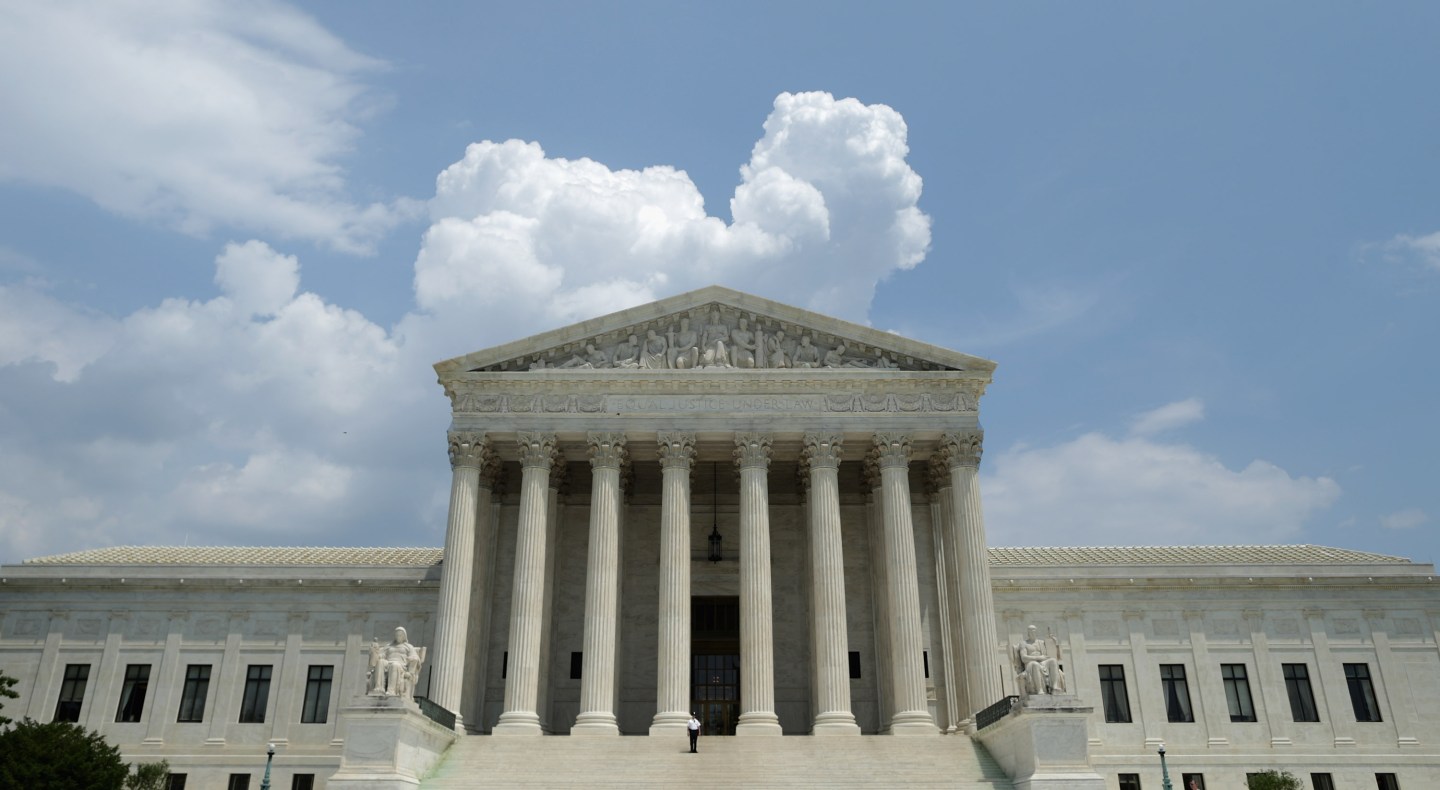
In a matter of weeks, the U.S. Supreme Court is expected to rule in Alice Corp. v. CLS Bank International, a case that should concern any company investing in software innovation. The question before the Court is whether software used in business is eligible to be protected by patent laws. The Patent Act has been interpreted to exclude from patentability, among other things, “abstract ideas.” But U.S. law has historically been interpreted to permit the patenting of software generally.

CLS Bank centers on a process that lessens settlement risk for trades of financial instruments—specifically, whether the process is too abstract for patenting. It was a case that the Federal Circuit, America’s exclusive venue for reviewing patent appeals below the Supreme Court, struggled mightily to decide. That court was unable to reach a consensus view. Six separate opinions were issued, leaving scant instruction for determining when an invention impermissibly has claimed an abstract idea.

The oral arguments suggested that delineating the boundaries of unpatentable abstraction would be no less formidable for the Supreme Court. Justice Stephen Breyer compared the task to that of Odysseus charting his ship’s course between Scylla and Charybdis, two oceanic perils, neither unavoidable, but either of which spelled disaster if approached too closely. He elaborated:

“[I]f you simply say, take an idea that’s abstract and implement it on a computer … if that’s good enough, there is a risk that you will take business in the United States or large segments and instead of having competition on price, service and better production methods, we’ll have competition on who has the best patent lawyer … And if you go the other way and say never, then what you do is you rule out real inventions with computers.”

The patenting waters have long been made treacherous by a judicial obsession with the threshold issue of divining categorically those subjects of human creativity eligible for patenting. The issue has incited no fewer than five Supreme Court cases in the last half-century. Whether the Court will succeed this time in providing a map by which the lower courts can navigate these waters remains to be seen. But one thing is certain: Software patents are not, as a class, “bad patents”—that is, too abstract or undeserving. And they should not be curtailed merely on account of our challenges in delimiting precise boundaries for them.

Software patents are more than just code–a point emphasized in the Supreme Court’s oral arguments. Significant technological advancements, from voice recognition to video compression, have been embodied in software—just as those advancements have been implemented at various points also in hardware and firmware, and patented without controversy.

Why should an important technological advance be patentable when implemented in hardware but not in software? Software code, like the English language, is a medium of expression—and no one would think to pass a law that said “no patents in English.” Whatever the relative merits of the claimed invention at the center of CLS Bank, the means of its implementation should not affect patentability.

Notably, Justice Sotomayor asked the question outright in CLS Bank, and neither litigant urged that the Court decide patentability of software generally in order to resolve the case at hand. The U.S. Solicitor General, however, proposed that the Court could do so—and should do so, at least by nullifying software patents not directed specifically to improvements in “computing technology.” This proposal, however, would merely shift the debate from defining “abstract idea” to defining “computing technology.” In a world where computers are so integrated with other technologies, the question of whether a claimed software-implemented invention improves “computer technology” is not easily answered. Chief Justice Roberts expressed doubts that such an approach would bring about greater clarity and certainty.

Much of the debate in the courts and among America’s innovators is concerned with establishing bright-line rules for patentability of software. Indeed, such rules would bring about greater predictability—a short-term gain for those uncomfortable with a flexible patent regime. But in the long term, inflexible rules would stifle innovation, since today’s rigid decrees cannot possibly account for tomorrow’s as-yet-unknown advancements in technology. The goal cannot be to articulate a watertight definition precisely separating that which, across the entire reach of human creativity, is worthy of patent protection and that which is not.

The worry that too low a threshold for subject-matter eligibility can only lead to the proliferation of bad patents granting unworthy exclusivity is misplaced. Other important requirements for patentability—novelty, non-obviousness, and the requirement that inventors adequately disclose what they are patenting—function as better gatekeepers. Some are hoping for a clear directive from the Supreme Court on subject-matter eligibility. Yet the reality for the extraordinarily nuanced and precariously balanced U.S. intellectual property system is that some level of imprecision (read: flexibility) is not only inevitable but is in fact a source of strength, encouraging innovators to constantly push into new frontiers.

David J. Kappos is a partner at New York City-based law firm, Cravath, Swaine & Moore, where he supports the firm’s clients with a wide range of intellectual property issues. From August 2009 to January 2013, Kappos served as director of the U.S. Patent and Trademark Office, advising the president, secretary of commerce and the administration on intellectual property policy matters. 

About the Author
By David J. Kappos
See full bioRight Arrow Button Icon

Latest in

Finance
Lorem ipsum dolor sit amet, consectetur adipiscing elit, sed do eiusmod tempor incididunt ut labore et dolore magna aliqua. Ut enim ad minim veniam
By Fortune Editors
October 20, 2025
Finance
Lorem ipsum dolor sit amet, consectetur adipiscing elit, sed do eiusmod tempor incididunt ut labore et dolore magna aliqua. Ut enim ad minim veniam
By Fortune Editors
October 20, 2025
Finance
Lorem ipsum dolor sit amet, consectetur adipiscing elit, sed do eiusmod tempor incididunt ut labore et dolore magna aliqua. Ut enim ad minim veniam
By Fortune Editors
October 20, 2025
Finance
Lorem ipsum dolor sit amet, consectetur adipiscing elit, sed do eiusmod tempor incididunt ut labore et dolore magna aliqua. Ut enim ad minim veniam
By Fortune Editors
October 20, 2025
Finance
Lorem ipsum dolor sit amet, consectetur adipiscing elit, sed do eiusmod tempor incididunt ut labore et dolore magna aliqua. Ut enim ad minim veniam
By Fortune Editors
October 20, 2025
Finance
Lorem ipsum dolor sit amet, consectetur adipiscing elit, sed do eiusmod tempor incididunt ut labore et dolore magna aliqua. Ut enim ad minim veniam
By Fortune Editors
October 20, 2025

Most Popular

Finance
Lorem ipsum dolor sit amet, consectetur adipiscing elit, sed do eiusmod tempor incididunt ut labore et dolore magna aliqua. Ut enim ad minim veniam
By Fortune Editors
October 20, 2025
Finance
Lorem ipsum dolor sit amet, consectetur adipiscing elit, sed do eiusmod tempor incididunt ut labore et dolore magna aliqua. Ut enim ad minim veniam
By Fortune Editors
October 20, 2025
Finance
Lorem ipsum dolor sit amet, consectetur adipiscing elit, sed do eiusmod tempor incididunt ut labore et dolore magna aliqua. Ut enim ad minim veniam
By Fortune Editors
October 20, 2025
Finance
Lorem ipsum dolor sit amet, consectetur adipiscing elit, sed do eiusmod tempor incididunt ut labore et dolore magna aliqua. Ut enim ad minim veniam
By Fortune Editors
October 20, 2025
Finance
Lorem ipsum dolor sit amet, consectetur adipiscing elit, sed do eiusmod tempor incididunt ut labore et dolore magna aliqua. Ut enim ad minim veniam
By Fortune Editors
October 20, 2025
Finance
Lorem ipsum dolor sit amet, consectetur adipiscing elit, sed do eiusmod tempor incididunt ut labore et dolore magna aliqua. Ut enim ad minim veniam
By Fortune Editors
October 20, 2025
Fortune Secondary Logo
Rankings
  • 100 Best Companies
  • Fortune 500
  • Global 500
  • Fortune 500 Europe
  • Most Powerful Women
  • Future 50
  • World’s Most Admired Companies
  • See All Rankings
Sections
  • Finance
  • Fortune Crypto
  • Features
  • Leadership
  • Health
  • Commentary
  • Success
  • Retail
  • Mpw
  • Tech
  • Lifestyle
  • CEO Initiative
  • Asia
  • Politics
  • Conferences
  • Europe
  • Newsletters
  • Personal Finance
  • Environment
  • Magazine
  • Education
Customer Support
  • Frequently Asked Questions
  • Customer Service Portal
  • Privacy Policy
  • Terms Of Use
  • Single Issues For Purchase
  • International Print
Commercial Services
  • Advertising
  • Fortune Brand Studio
  • Fortune Analytics
  • Fortune Conferences
  • Business Development
  • Group Subscriptions
About Us
  • About Us
  • Editorial Calendar
  • Press Center
  • Work At Fortune
  • Diversity And Inclusion
  • Terms And Conditions
  • Site Map
  • About Us
  • Editorial Calendar
  • Press Center
  • Work At Fortune
  • Diversity And Inclusion
  • Terms And Conditions
  • Site Map
  • Facebook icon
  • Twitter icon
  • LinkedIn icon
  • Instagram icon
  • Pinterest icon

Latest in

hormuz
EnergyMiddle East
Trump’s big accomplishment in Iran is ‘de facto ‘toll booth’ regime’ in the Strait of Hormuz, shipping analyst says
By David McHugh, Jon Gambrell and The Associated PressMarch 27, 2026
16 minutes ago
trump
PoliticsWhite House
Trump breaks with tradition, removing Treasury Secretary’s name with his own on the dollar
By Fatima Hussein and The Associated PressMarch 27, 2026
21 minutes ago
Maya MacGuineas, center, Committee for Responsible Federal Budget.
Economydebt crisis
‘There is no silver lining in this trajectory’: Budget watchdog warns of financial, inflation, or currency crisis due to $39 trillion U.S. debt
By Eleanor PringleMarch 27, 2026
42 minutes ago
NewslettersTerm Sheet
VC firms rarely reinvent themselves. Kleiner Perkins did—and has a new $3.5 billion to show for it
By Allie GarfinkleMarch 27, 2026
46 minutes ago
Abstract business graph of AI growth. market growth, analysis, and future projections.
NewslettersCFO Daily
Why CFOs—not chief AI officers—are the secret to getting real value from AI
By Sheryl EstradaMarch 27, 2026
48 minutes ago
chat
CybersecurityChatGPT
What if I told you the ‘AI slop’ debate was over 100 years old? It used to be about ‘ghostwriting’
By Emily Hodgson Anderson and The ConversationMarch 27, 2026
54 minutes ago

Most Popular

C-Suite
'I didn’t want anybody shooting me': Five Guys CEO gave away $1.5 million bonus to employees over botched BOGO burger birthday celebration
By Fortune EditorsMarch 25, 2026
2 days ago
Environment
Vail Resorts CEO says it’s time to think beyond the $1,000 ski pass that helped build the empire
By Fortune EditorsMarch 26, 2026
1 day ago
Success
Palantir’s billionaire CEO says only two kinds of people will succeed in the AI era: trade workers — ‘or you’re neurodivergent’
By Fortune EditorsMarch 24, 2026
3 days ago
Commentary
The Treasury just declared the U.S. insolvent. The media missed it
By Fortune EditorsMarch 23, 2026
4 days ago
Economy
Social Security insolvency: How a six-figure cap to flatten benefits for the ultrawealthy could buy the program 7 critical years
By Fortune EditorsMarch 26, 2026
1 day ago
Personal Finance
Current price of gold as of March 25, 2026
By Fortune EditorsMarch 25, 2026
2 days ago

© 2026 Fortune Media IP Limited. All Rights Reserved. Use of this site constitutes acceptance of our Terms of Use and Privacy Policy | CA Notice at Collection and Privacy Notice | Do Not Sell/Share My Personal Information
FORTUNE is a trademark of Fortune Media IP Limited, registered in the U.S. and other countries. FORTUNE may receive compensation for some links to products and services on this website. Offers may be subject to change without notice.