• Home
  • Latest
  • Fortune 500
  • Finance
  • Tech
  • Leadership
  • Lifestyle
  • Rankings
  • Multimedia

Trendingnow

1

Bolt CEO says he let go of his entire HR team for creating problems that didn’t exist: ‘Those problems disappeared when I let them go’ 

2

Despite a $500 million net worth, Shaq just finished his fourth degree. He warns graduates: 'Your character will take you further than your resume'

3

Meet a 21-year-old community college student who's going to China as the first American woman welder in the trades Olympics

1

Bolt CEO says he let go of his entire HR team for creating problems that didn’t exist: ‘Those problems disappeared when I let them go’ 

2

Despite a $500 million net worth, Shaq just finished his fourth degree. He warns graduates: 'Your character will take you further than your resume'

3

Meet a 21-year-old community college student who's going to China as the first American woman welder in the trades Olympics
FinanceTerm Sheet

Did Geithner save America from a Second Great Depression?

By
Dean Baker
Dean Baker
Down Arrow Button Icon
By
Dean Baker
Dean Baker
Down Arrow Button Icon
May 27, 2014, 10:08 AM ET

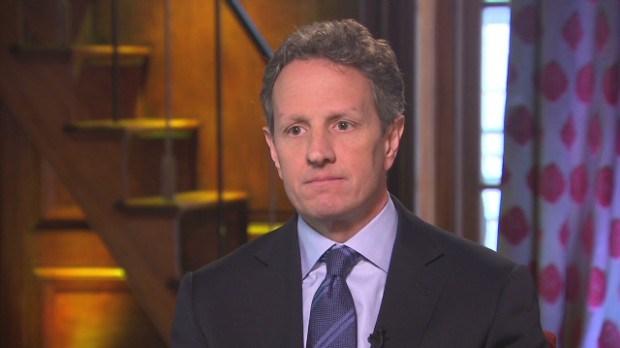
FORTUNE — Since the release of former U.S. Treasury Secretary Timothy Geithner’s new book, Stress Test: Reflections of Financial Crises, accounts of his stint in the Obama administration have been getting considerable attention in Washington policy circles. One assumption that has gone virtually unquestioned is that Geithner and his colleagues at the U.S. Federal Reserve and the Treasury saved us from a Second Great Depression (SGD). However, it is long past time that this narrative get some serious scrutiny.

The basis of the SGD story is that the first Great Depression of the 1930s was the result of the failure of the Fed to come to the rescue of the banks in the middle of a series of bank runs. If the Fed had flooded the banks with liquidity and offered various guarantees to depositors and other creditors, it could have put an end to the bank runs.

The failure to do so led to a chain of collapses that destroyed much of the economy’s wealth. This was a direct hit to the people who saw their life’s savings disappear when their banks went into bankruptcy. The macroeconomic consequences were enormous, as people had to radically cut back their spending, forcing massive layoffs. In addition to the loss of demand, many businesses also saw their working capital disappear when their banks collapsed.

MORE: The U.S. has the world’s most competitive economy. So what?

This was the disaster that Geithner and his colleagues were determined to prevent in the financial crisis in 2008-2009. But this is only part of the story. The Great Depression was not just the financial crisis that set it off; it was a prolonged period in which the economy operated well below its potential, leading to double-digit unemployment.

The recipe for countering these types of weaknesses in demand is simple: Spend money. This is something we have known since renowned economist John Maynard Keynes wrote The General Theory in 1937. It is also a proposition that we had the opportunity to test with the massive spending associated with the United States’ entry into World War II in 1941. And events played out just as Keynes predicted. The economy surged and unemployment plunged.

There is nothing magic about the economic impact of military spending. If the U.S. government had spent massive amounts of money building up its infrastructure and its education and health care systems, and done this in 1931 rather than 1941, we would not have seen a decade of double-digit unemployment. The initial downturn from the financial panic would have been quickly reversed and the economy returned to near full-employment levels of output.

MORE: Tim Geithner: Neither a god nor a devil

This is not just idle speculation, we had the opportunity to witness this set of events in Argentina in the last decade. In December of 2001, Argentina defaulted on its national debt and broke the link of its currency to the dollar. This led to the sort of meltdown that Geithner and company worked desperately to prevent. Banks couldn’t repay depositors, and businesses couldn’t get access to working capital. The country was overtaken by panic as the economy plummeted.

But the plunge proved to be short-lived. Government measures were able to stabilize the economy by the second quarter of 2002, and it was growing rapidly by the second half of the year. In fact, by the end of 2003, Argentina’s economy had fully recovered the ground lost from the crisis. By the end of 2004, the economy was larger than it had been before it went into recession in 1998. The country maintained healthy growth until the world recession brought it to a halt in 2009. (There are questions about the integrity of the data toward the end of this period, but there is little dispute that the data through 2004 are largely accurate.)

In short, Argentina had a full-fledged financial crisis and meltdown of its banking system, but it didn’t endure anything like the Great Depression. Its government and central bank were able to act aggressively to quickly get the country’s economy back on its feet.

Given Argentina’s experience, why would we think that U.S. policymakers would be paralyzed in the event of a financial meltdown? Would Congress lose the ability to vote spending measures and tax cuts that put money in people’s pockets? Would the Fed be unable to conduct the expansionary monetary policy it has been pursuing for the last five and a half years?

MORE: McDonald’s and America’s new low-wage economy explained

There are obviously differences between Argentina and the United States. A collapse of the U.S. financial system would have far greater global consequences than Argentina’s collapse. On the other hand, the U.S. would still be the world’s dominant economy and the U.S. dollar the leading reserve currency even after a collapse.

The veracity of the SGD story matters hugely in how we think about Geithner and the performance of the Bush-Obama economic teams through the crisis. If we really had to fear a decade of double-digit unemployment then we should be very thankful, even though the economy remains weak and unemployment is still high at 6.3% as of April. However, if the SGD is just a scare story for the kids, then people should be very angry about the current state of the economy. And the evidence suggests they should be very angry.

Dean Baker is co-founder of the Center for Economic and Policy Research. Follow him @DeanBaker13

About the Author
By Dean Baker
See full bioRight Arrow Button Icon

Latest in Finance

Finance
Lorem ipsum dolor sit amet, consectetur adipiscing elit, sed do eiusmod tempor incididunt ut labore et dolore magna aliqua. Ut enim ad minim veniam
By Fortune Editors
October 20, 2025
Finance
Lorem ipsum dolor sit amet, consectetur adipiscing elit, sed do eiusmod tempor incididunt ut labore et dolore magna aliqua. Ut enim ad minim veniam
By Fortune Editors
October 20, 2025
Finance
Lorem ipsum dolor sit amet, consectetur adipiscing elit, sed do eiusmod tempor incididunt ut labore et dolore magna aliqua. Ut enim ad minim veniam
By Fortune Editors
October 20, 2025
Finance
Lorem ipsum dolor sit amet, consectetur adipiscing elit, sed do eiusmod tempor incididunt ut labore et dolore magna aliqua. Ut enim ad minim veniam
By Fortune Editors
October 20, 2025
Finance
Lorem ipsum dolor sit amet, consectetur adipiscing elit, sed do eiusmod tempor incididunt ut labore et dolore magna aliqua. Ut enim ad minim veniam
By Fortune Editors
October 20, 2025
Finance
Lorem ipsum dolor sit amet, consectetur adipiscing elit, sed do eiusmod tempor incididunt ut labore et dolore magna aliqua. Ut enim ad minim veniam
By Fortune Editors
October 20, 2025

Most Popular

Finance
Lorem ipsum dolor sit amet, consectetur adipiscing elit, sed do eiusmod tempor incididunt ut labore et dolore magna aliqua. Ut enim ad minim veniam
By Fortune Editors
October 20, 2025
Finance
Lorem ipsum dolor sit amet, consectetur adipiscing elit, sed do eiusmod tempor incididunt ut labore et dolore magna aliqua. Ut enim ad minim veniam
By Fortune Editors
October 20, 2025
Finance
Lorem ipsum dolor sit amet, consectetur adipiscing elit, sed do eiusmod tempor incididunt ut labore et dolore magna aliqua. Ut enim ad minim veniam
By Fortune Editors
October 20, 2025
Finance
Lorem ipsum dolor sit amet, consectetur adipiscing elit, sed do eiusmod tempor incididunt ut labore et dolore magna aliqua. Ut enim ad minim veniam
By Fortune Editors
October 20, 2025
Finance
Lorem ipsum dolor sit amet, consectetur adipiscing elit, sed do eiusmod tempor incididunt ut labore et dolore magna aliqua. Ut enim ad minim veniam
By Fortune Editors
October 20, 2025
Finance
Lorem ipsum dolor sit amet, consectetur adipiscing elit, sed do eiusmod tempor incididunt ut labore et dolore magna aliqua. Ut enim ad minim veniam
By Fortune Editors
October 20, 2025
Fortune Secondary Logo
Rankings
  • 100 Best Companies
  • Fortune 500
  • Global 500
  • Fortune 500 Europe
  • Most Powerful Women
  • World's Most Admired Companies
  • See All Rankings
  • Lists Calendar
Sections
  • Finance
  • Fortune Crypto
  • Features
  • Leadership
  • Health
  • Commentary
  • Success
  • Retail
  • Mpw
  • Tech
  • Lifestyle
  • CEO Initiative
  • Asia
  • Politics
  • Conferences
  • Europe
  • Newsletters
  • Personal Finance
  • Environment
  • Magazine
  • Education
Customer Support
  • Frequently Asked Questions
  • Customer Service Portal
  • Privacy Policy
  • Terms Of Use
  • Single Issues For Purchase
  • International Print
Commercial Services
  • Advertising
  • Fortune Brand Studio
  • Fortune Analytics
  • Fortune Conferences
  • Business Development
  • Group Subscriptions
About Us
  • About Us
  • Press Center
  • Work At Fortune
  • Terms And Conditions
  • Site Map
  • About Us
  • Press Center
  • Work At Fortune
  • Terms And Conditions
  • Site Map
  • Facebook icon
  • Twitter icon
  • LinkedIn icon
  • Instagram icon
  • Pinterest icon

Latest in Finance

reeves
Personal FinanceInflation
British government’s answer to cost-of-living crisis: discounts on theme park tickets, chocolate bars
By Jill Lawless and The Associated PressMay 21, 2026
1 hour ago
trump
AIWhite House
Trump says he’s calling off widely anticipated order to rein in AI
By Collin Binkley, Matt O'Brien and The Associated PressMay 21, 2026
2 hours ago
ro khanna
AITech
Ro Khanna blames ‘clueless’ boomers for Gen Z booing AI: They handed over a ‘broken economy’
By Jake AngeloMay 21, 2026
2 hours ago
Young worker looking tired in front of a screen
EconomyYoung workers
A Nobel economist figured out 60 years ago that people learn best on the job. The Atlanta Fed says AI is making that almost impossible
By Tristan BoveMay 21, 2026
3 hours ago
The Midwest is leading America’s spring housing rebound because of ‘buyers who are actually showing up,’ Realtor.com says
Real EstateHousing
The Midwest is leading America’s spring housing rebound because of ‘buyers who are actually showing up,’ Realtor.com says
By Sydney LakeMay 21, 2026
3 hours ago
Intuit CFO on why the company is simplifying its structure
NewslettersCFO Daily
Intuit CFO on why the company is simplifying its structure
By Sheryl EstradaMay 21, 2026
4 hours ago

Most Popular

Bolt CEO says he let go of his entire HR team for creating problems that didn’t exist: ‘Those problems disappeared when I let them go’ 
Workplace Culture
Bolt CEO says he let go of his entire HR team for creating problems that didn’t exist: ‘Those problems disappeared when I let them go’ 
By Preston ForeMay 19, 2026
2 days ago
Despite a $500 million net worth, Shaq just finished his fourth degree. He warns graduates: 'Your character will take you further than your resume'
Success
Despite a $500 million net worth, Shaq just finished his fourth degree. He warns graduates: 'Your character will take you further than your resume'
By Preston ForeMay 20, 2026
1 day ago
Meet a 21-year-old community college student who's going to China as the first American woman welder in the trades Olympics
Future of Work
Meet a 21-year-old community college student who's going to China as the first American woman welder in the trades Olympics
By Mike Householder and The Associated PressMay 17, 2026
4 days ago
Pay transparency is exposing a bigger problem: Most companies can't explain why they pay what they pay
Workplace Culture
Pay transparency is exposing a bigger problem: Most companies can't explain why they pay what they pay
By Sydney LakeMay 20, 2026
1 day ago
Dr. Bernice King on why companies that walked back DEI were never truly committed: 'If you retreat that quick…that reveals who you really are'
Workplace Culture
Dr. Bernice King on why companies that walked back DEI were never truly committed: 'If you retreat that quick…that reveals who you really are'
By Preston ForeMay 19, 2026
2 days ago
A 'proudly autistic' workplace expert says putting neurodivergent employees in a typical office is like dropping a polar bear in Austin, Texas
Conferences
A 'proudly autistic' workplace expert says putting neurodivergent employees in a typical office is like dropping a polar bear in Austin, Texas
By Tristan BoveMay 20, 2026
1 day ago

© 2026 Fortune Media IP Limited. All Rights Reserved. Use of this site constitutes acceptance of our Terms of Use and Privacy Policy | CA Notice at Collection and Privacy Notice | Do Not Sell/Share My Personal Information
FORTUNE is a trademark of Fortune Media IP Limited, registered in the U.S. and other countries. FORTUNE may receive compensation for some links to products and services on this website. Offers may be subject to change without notice.