• Home
  • Latest
  • Fortune 500
  • Finance
  • Tech
  • Leadership
  • Lifestyle
  • Rankings
  • Multimedia

Trendingnow

1

After forcing workers back to the office, Goldman Sachs and JPMorgan Chase are now letting their staff work remotely—but only for the World Cup

2

The Pentagon said Iran War costs $29 billion,but the real cost is closer to $200 billion—and counting

3

Markets tumble worldwide as Fed resets expectations: $400 billion wiped off SpaceX stock

1

After forcing workers back to the office, Goldman Sachs and JPMorgan Chase are now letting their staff work remotely—but only for the World Cup

2

The Pentagon said Iran War costs $29 billion,but the real cost is closer to $200 billion—and counting

3

Markets tumble worldwide as Fed resets expectations: $400 billion wiped off SpaceX stock

Fitness trackers: A narcissist’s dream, but what else is behind the boom?

By
Ryan Holmes
Ryan Holmes
Down Arrow Button Icon
By
Ryan Holmes
Ryan Holmes
Down Arrow Button Icon
June 3, 2014, 8:48 AM ET
Newest Innovations In Consumer Technology On Display At 2014 International CES
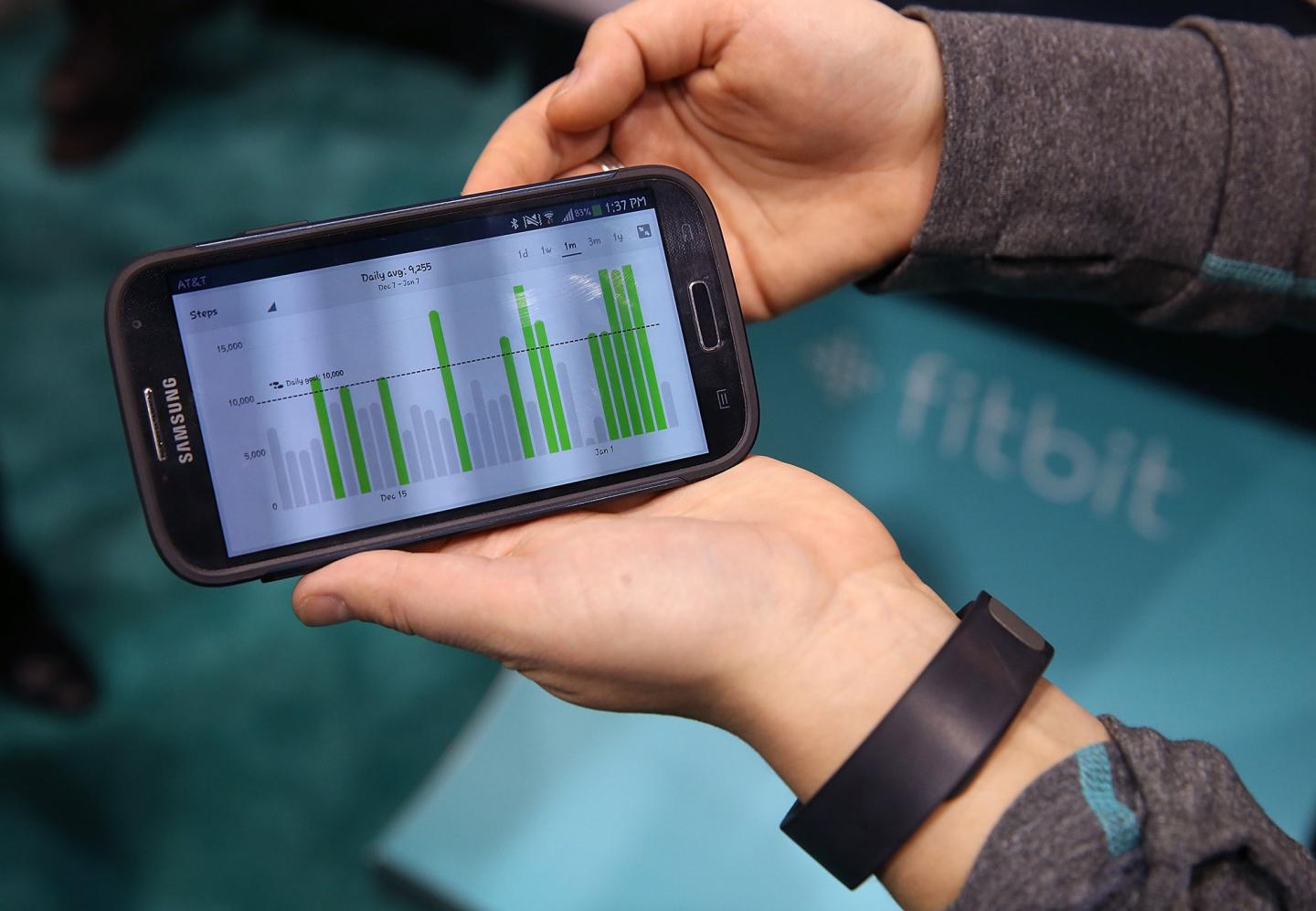
LAS VEGAS, NV - JANUARY 07: Data collected from the Fitbit Force is displayed on a smartphone in the Fitbit booth at the 2014 International CES at the Las Vegas Convention Center on January 7, 2014 in Las Vegas, Nevada. CES, the world's largest annual consumer technology trade show, runs through January 10 and is expected to feature 3,200 exhibitors showing off their latest products and services to about 150,000 attendees. (Photo by Justin Sullivan/Getty Images)Photograph by Justin Sullivan—Getty Images
Add Fortune on Google for similar content.

Mobile tools tracking everything from your heart rate to your blood-oxygen level are flourishing. Last month, chipmaker Intel (INTC) paid $100 million for Basis Science, a smartwatch capable of monitoring everything from perspiration to your heart rate. This follows Jawbone’s acquisition of BodyMedia, a maker of armbands that track exercise intensity and sleep patterns, and smartwatch maker Pebble’s ability to raise a record $10.2 million in less than 30 days through crowdfunding site Kickstarter.

Now all eyes are on Apple (AAPL), which is rumored to have a new app called Healthbook in the works (perhaps with an accompanying iWatch), which will function as an all-in-one resource for monitoring and tracking everything from basic fitness stats (steps, calories, etc.) to blood pressure, heart rate, sleep cycles and maybe even next-gen data like blood-sugar levels, hydration, and oxygen saturation. (Update: At this week’s Worldwide Developers Conference, Apple unveiled the new tool  — without the expected iWatch — under the name HealthKit).

So what’s behind the boom? Well, cheap and increasingly sophisticated sensors are definitely part of it. Samsung’s new Galaxy S5, for instance, comes packed with 10 different sensors capable of detecting everything from a user’s heart rate and fingerprints to temperature and humidity, as well as now-standard stuff like acceleration and orientation. By some estimates, there will soon be trillions of sensors in the world, as the so-called Internet of Things (smart, connected objects, from refrigerators to wristwatches) grows exponentially. In terms of fitness, these sensors have suddenly made it possible for anyone with a smartphone to easily monitor and log detailed bio data.

Tied into the proliferation of sensors is the rise of the “quantified self” movement. In 2007, Wired Magazine editors Gary Wolf and Kevin Kelly coined the term “quantified self” to refer to the use of new digital technologies to record and compile data on the most intimate aspects of one’s personal life–from physical and mental performance to foods consumed and even blood oxygen levels. From Silicon Valley’s tech-oriented early adopters, the “quantified self” idea has since spread to a much broader audience interested in health and wellness.

As a hack athlete, I can vouch for the appeal. Last week, I ran to a yoga class and logged the trip using Strava, a website and mobile app that tracks cycling and running routes, distances, speed, and more via GPS. Strapped to my chest was a Wahoo TICKR heart rate monitor that connects to the Strava app on my phone via bluetooth. I’m also an avid cyclist and use Wahoo’s RFLKT, a kind of mini-bike computer, to track routes, speed, and personal bests. I’ve also experimented with sleep monitoring via Sleep Cycle, and I’ve used Withings’ smart scale to keep tabs on my weight and body fat. I’m not a pro athlete and I’m not training for some major competition, but there’s something addictive about the “quantified self” idea.

On the most basic level, the movement taps into deep-seated human impulses–the quest for self-knowledge and self-improvement, with a touch of narcissism thrown in. By carefully tracking the metrics that define our physical lives, it’s possible to identify trends, make adjustments and, in theory, get a bit better at whatever we’re doing–from running 10Ks to trying to get a good night’s sleep. Of course, for people with serious health issues–from obesity to high blood pressure–health and fitness tracking has a much more immediate, practical appeal. Twenty-six million Americans, for instance, have diabetes: For this demographic, a more convenient tool for monitoring blood sugar is potentially life changing.

All of this is reflected in the sudden proliferation of smart, fitness-related devices and apps. In fact, it’s a little hard to keep up with the latest gadgets. Aside from the examples mentioned earlier, there’s Nike’s FuelBand, Fitbit’s line of activity trackers, and a growing array of watches like Samsung’s new Gear Fit that integrate sophisticated health sensors. The movement is still in its early stages to be sure. As the New York Times point out, lots of these new bands and watches “don’t really work–or at least not as well as their manufacturers would have you believe.” At the same time, the multiplication of accessories, each monitoring separate metrics, is already contributing to a kind of “fitness-tracker overload.” Still, 17 million wearables–including fitness bands and smart watches–will be sold this year, according to market research firm Canalys. By 2017, that number is expected to nearly triple.

These numbers, however, only partly explain the surge of interest from big tech companies in fitness tracking software and hardware.

The real money, not surprisingly, may lie not in apps and wristbands themselves but in the data they collect. Already, companies–with users’ permission, of course–are capitalizing on the massive stores of health information gathered from these devices in innovative ways.

Fitbit, for instance, sells its bracelets and clippable devices–which keep track of metrics like steps taken, distance travelled, and calories burned–in bulk to thousands of employers across the U.S. Employees who opt in are then given the trackers at little or no cost. Their aggregate health data is compiled and, in some cases, used to help the company negotiate lower insurance premiums with providers. This strategy could ultimately lead to a 13% reduction in insurance costs for employers, health insurer Cigna estimated. For this kind of data, and the associated savings, employers may be willing to pay companies like Fitbit handily.

Where the slope gets considerably more slippery is when dealing with personal health data on an individual basis. By now, many consumers have accepted cookies and highly targeted ads as a tradeoff for the convenience of using sites and services like Amazon (AMZN), Facebook (FB), and even Gmail (GOOG). Whether users would be as comfortable getting ads on the basis of their most personal health stats remains to be seen. (Imagine, for instance, a low blood-sugar reading automatically triggering an ad for a soft drink, or a night of tossing and turning leading to a pop-up ad for sleeping pills.) The idea of marketers directly targeting our innermost bodily urges and needs, in real time, would likely take some getting used to.

For now, however, health and fitness tracking–and the quantified self movement–remains in its infancy. Apple’s much-anticipated Healthbook app, not to mention the rumored iWatch to go along with it, has generated endless online buzz, but details remain a hotly kept secret. Leading experts in pulse oximeters (for measuring oxygen content in the blood) and sleep tracking have been brought on board by Apple execs. Meetings have been held with the U.S. Food and Drug Administration to discuss approvals for new mobile medical apps.

But the tech world remains divided on when (and exactly what) Apple will unveil. What is for certain, however, is that Apple’s plunge into the fitness tracking and health data space will only accelerate interest in one of tech’s newest and hottest sectors.

Ryan Holmes is CEO of Hootsuite. Follow him @invoker

About the Author
By Ryan Holmes
See full bioRight Arrow Button Icon
Add Fortune on Google for similar content.

Latest in

Finance
Lorem ipsum dolor sit amet, consectetur adipiscing elit, sed do eiusmod tempor incididunt ut labore et dolore magna aliqua. Ut enim ad minim veniam
By Fortune Editors
October 20, 2025
Finance
Lorem ipsum dolor sit amet, consectetur adipiscing elit, sed do eiusmod tempor incididunt ut labore et dolore magna aliqua. Ut enim ad minim veniam
By Fortune Editors
October 20, 2025
Finance
Lorem ipsum dolor sit amet, consectetur adipiscing elit, sed do eiusmod tempor incididunt ut labore et dolore magna aliqua. Ut enim ad minim veniam
By Fortune Editors
October 20, 2025
Finance
Lorem ipsum dolor sit amet, consectetur adipiscing elit, sed do eiusmod tempor incididunt ut labore et dolore magna aliqua. Ut enim ad minim veniam
By Fortune Editors
October 20, 2025
Finance
Lorem ipsum dolor sit amet, consectetur adipiscing elit, sed do eiusmod tempor incididunt ut labore et dolore magna aliqua. Ut enim ad minim veniam
By Fortune Editors
October 20, 2025
Finance
Lorem ipsum dolor sit amet, consectetur adipiscing elit, sed do eiusmod tempor incididunt ut labore et dolore magna aliqua. Ut enim ad minim veniam
By Fortune Editors
October 20, 2025

Most Popular

Finance
Lorem ipsum dolor sit amet, consectetur adipiscing elit, sed do eiusmod tempor incididunt ut labore et dolore magna aliqua. Ut enim ad minim veniam
By Fortune Editors
October 20, 2025
Finance
Lorem ipsum dolor sit amet, consectetur adipiscing elit, sed do eiusmod tempor incididunt ut labore et dolore magna aliqua. Ut enim ad minim veniam
By Fortune Editors
October 20, 2025
Finance
Lorem ipsum dolor sit amet, consectetur adipiscing elit, sed do eiusmod tempor incididunt ut labore et dolore magna aliqua. Ut enim ad minim veniam
By Fortune Editors
October 20, 2025
Finance
Lorem ipsum dolor sit amet, consectetur adipiscing elit, sed do eiusmod tempor incididunt ut labore et dolore magna aliqua. Ut enim ad minim veniam
By Fortune Editors
October 20, 2025
Finance
Lorem ipsum dolor sit amet, consectetur adipiscing elit, sed do eiusmod tempor incididunt ut labore et dolore magna aliqua. Ut enim ad minim veniam
By Fortune Editors
October 20, 2025
Finance
Lorem ipsum dolor sit amet, consectetur adipiscing elit, sed do eiusmod tempor incididunt ut labore et dolore magna aliqua. Ut enim ad minim veniam
By Fortune Editors
October 20, 2025
Fortune Secondary Logo
Rankings
  • 100 Best Companies
  • Fortune 500
  • Global 500
  • Fortune 500 Europe
  • Most Powerful Women
  • World's Most Admired Companies
  • See All Rankings
  • Lists Calendar
Sections
  • Finance
  • Fortune Crypto
  • Features
  • Leadership
  • Health
  • Commentary
  • Success
  • Retail
  • Mpw
  • Tech
  • Lifestyle
  • CEO Initiative
  • Asia
  • Politics
  • Conferences
  • Europe
  • Newsletters
  • Personal Finance
  • Environment
  • Magazine
  • Education
Customer Support
  • Frequently Asked Questions
  • Customer Service Portal
  • Privacy Policy
  • Terms Of Use
  • Single Issues For Purchase
  • International Print
Commercial Services
  • Advertising
  • Fortune Brand Studio
  • Fortune Analytics
  • Fortune Conferences
  • Business Development
  • Group Subscriptions
About Us
  • About Us
  • Press Center
  • Work At Fortune
  • Terms And Conditions
  • Site Map
  • About Us
  • Press Center
  • Work At Fortune
  • Terms And Conditions
  • Site Map
  • Facebook icon
  • Twitter icon
  • LinkedIn icon
  • Instagram icon
  • Pinterest icon

Latest in

Taktile cofounders Maik Taro Wehmeyer (left) and Maximilian Eber (right) stand side by side, smiling at the camera.
Startups & VentureVenture Capital
Exclusive: Taktile raises $110 million from Goldman Sachs, Tiger Global to automate high-stakes financial decisions 
By Camila Grigera NaónJune 24, 2026
1 hour ago
price-of-oil-06-23-2026
Personal FinanceOil
Current price of oil as of June 24, 2026
By Joseph HostetlerJune 24, 2026
1 hour ago
Sarah Youngwood, EVP and CFO at Nasdaq.
AICFO Daily
Nasdaq’s CFO says leaders must learn AI—not just their teams
By Sheryl EstradaJune 24, 2026
1 hour ago
Current price of silver as of Wednesday, June 24, 2026
Personal Financesilver
Current price of silver as of Wednesday, June 24, 2026
By Joseph HostetlerJune 24, 2026
2 hours ago
steve
Commentary250 Years of Innovation
Steve Case: America was built by entrepreneurs. Here’s how we keep that edge for the next 250 years
By Steve CaseJune 24, 2026
2 hours ago
(left to right) Andrew Berman, Tal Peretz, and Vitor Balocco
AIVenture Capital
Exclusive: Vinod Khosla wanted ‘every available dollar’ of Runlayer’s funding round. It just raised $30 million to govern the agent workforce
By Lily Mae LazarusJune 24, 2026
2 hours ago

Most Popular

After forcing workers back to the office, Goldman Sachs and JPMorgan Chase are now letting their staff work remotely—but only for the World Cup
Success
After forcing workers back to the office, Goldman Sachs and JPMorgan Chase are now letting their staff work remotely—but only for the World Cup
By Orianna Rosa RoyleJune 23, 2026
1 day ago
The Pentagon said Iran War costs $29 billion,but the real cost is closer to $200 billion—and counting
Economy
The Pentagon said Iran War costs $29 billion,but the real cost is closer to $200 billion—and counting
By Jacqueline MunisJune 24, 2026
7 hours ago
Markets tumble worldwide as Fed resets expectations: $400 billion wiped off SpaceX stock
Banking
Markets tumble worldwide as Fed resets expectations: $400 billion wiped off SpaceX stock
By Jim EdwardsJune 23, 2026
1 day ago
Current price of oil as of June 23, 2026
Personal Finance
Current price of oil as of June 23, 2026
By Joseph HostetlerJune 23, 2026
1 day ago
Texas and Charlotte used to build huge McMansions—now they're copying the California design tricks they once mocked
Real Estate
Texas and Charlotte used to build huge McMansions—now they're copying the California design tricks they once mocked
By Sydney LakeJune 22, 2026
2 days ago
Current price of gold as of June 23, 2026
Personal Finance
Current price of gold as of June 23, 2026
By Danny BakstJune 23, 2026
1 day ago

© 2026 Fortune Media IP Limited. All Rights Reserved. Use of this site constitutes acceptance of our Terms of Use and Privacy Policy | CA Notice at Collection and Privacy Notice | Do Not Sell/Share My Personal Information
FORTUNE is a trademark of Fortune Media IP Limited, registered in the U.S. and other countries. FORTUNE may receive compensation for some links to products and services on this website. Offers may be subject to change without notice.