• Home
  • Latest
  • Fortune 500
  • Finance
  • Tech
  • Leadership
  • Lifestyle
  • Rankings
  • Multimedia
CommentaryMinimum Wage

The Minimum Wage Just Turned 80. Economists Don’t Give It Enough Credit

By
James K. Galbraith
James K. Galbraith
and
Bethany Cianciolo
Bethany Cianciolo
Down Arrow Button Icon
By
James K. Galbraith
James K. Galbraith
and
Bethany Cianciolo
Bethany Cianciolo
Down Arrow Button Icon
June 25, 2018, 8:00 AM ET
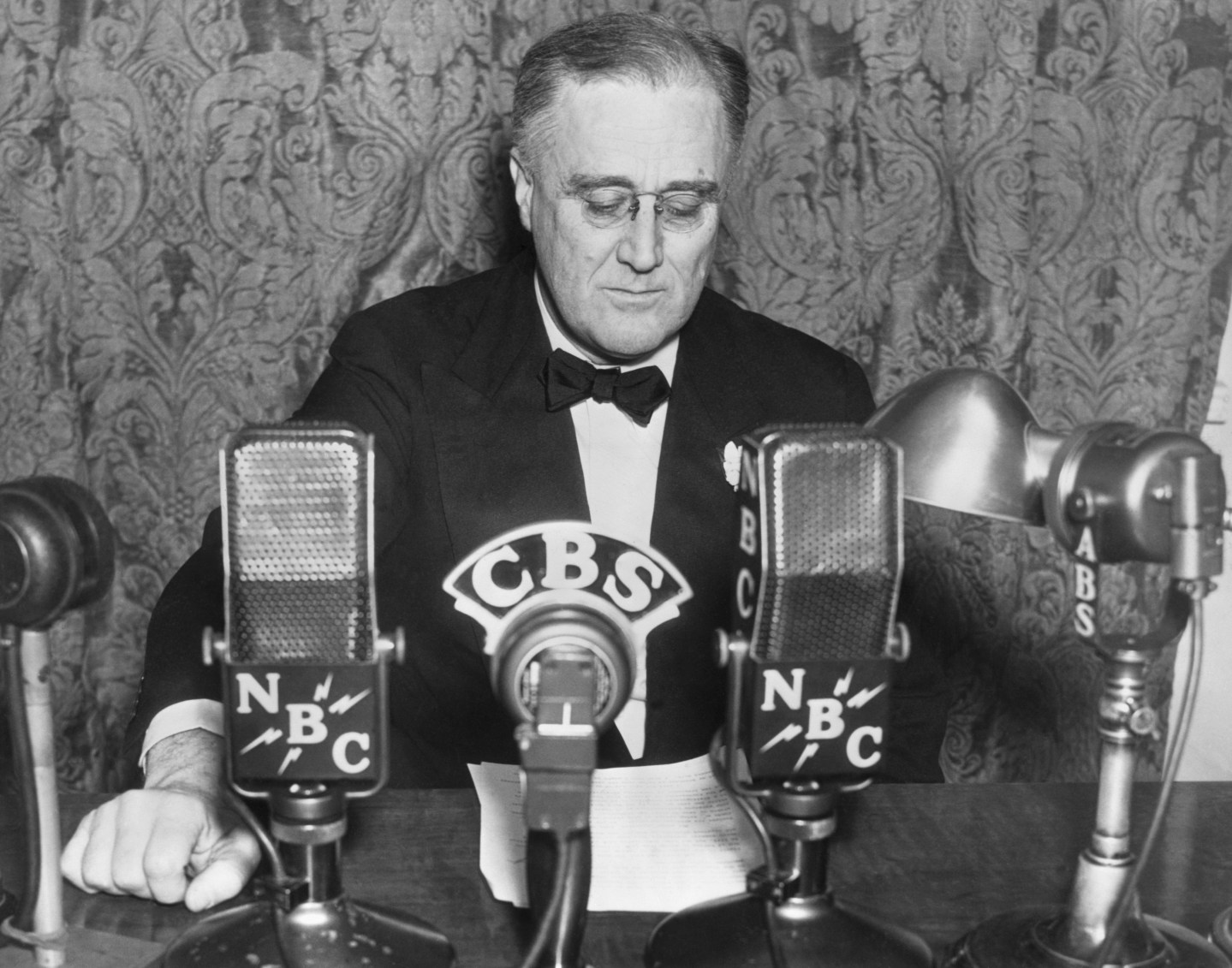
Franklin D. Roosevelt Giving Radio Address
Franklin D. Roosevelt addresssing the nation over the radio in one of his "Fireside chats." Undated photograph.Bettmann Archive

The minimum wage is a pathetic little thing. First enacted in 1938 at 25 cents per hour, it was largely a sop to the International Ladies’ Garment Workers’ Union, one of the very few for whose members, even then, such a pittance might matter. Domestic servants and farmworkers—persons of color, not coincidentally—were excluded. And for most of the 80 years since, the effect of the federal minimum on wages and welfare has been small.

Why has this been so? First, the real value of the minimum is low. That value reached a peak 50 years ago under President Lyndon B. Johnson in 1968, at about $10.50 in today’s money. It was then eroded by inflation and political neglect, and is today no higher than it was around 1980.

Second, because the level is so low, few workers are affected. In 2016, the total number of workers earning at the minimum or below was just 2.2 million—not even 3% of the employed workforce at that time. A very large share of those were young, with half of minimum wage workers age 25 or younger, and many of those earned tips in addition to their wages.

And yet, few economic policies have been subjected to such obsessive criticism, in particular by mainstream (which is to say, conservative) economists, as the minimum wage.

Economists teach that markets reward each worker exactly according to what he or she contributes, not more nor less. Hence the wage that is, is right and just. Further, they say that by meddling in the “labor market,” government can only set a minimum wage that is too high, and employers will not hire those workers. Unemployment is the result of this well-meaning but misguided practice.

As often happens, the facts do not agree. One famous study showed that a higher minimum wage in one of two neighboring cities led to more fast-food jobs in the city where the minimum went up. Why? Because with higher wages, workers quit less frequently, and turnover went down.

But there’s more. The Swedes discovered in the 1950s that high wage standards promote productivity, improving the performance of industry, therefore raising living conditions for the whole country. More equal countries have more economic mobility. But they also have less economic stress, less compulsion to seek better jobs, and therefore less internal migration and less unemployment.

The minimum wage is an efficient regulation. It doesn’t cost much to oversee. It is simple and it is largely self-enforcing. It is not a burden on the federal budget. And it is a blessing for Social Security, since with higher wages, payroll tax collections improve.

A minimum wage at $15 per hour as demanded by workers in fast food and other low-wage services would give a raise, in most cases modest, to about 40% of American workers. It would put some pressure on businesses that currently pay less—but by and large, what they lose in labor costs they’d make back in sales to a more prosperous clientele.

So should the minimum be raised? Of course it should. States such as Texas and Florida would benefit, because they have too many low-wage workers, too much poverty, and too many people who are getting food stamps and other welfare since they aren’t getting paid enough.

At the deepest level, the minimum wage embodies justice. It speaks to the words of Martin Luther King Jr. that “all labor has dignity”—and so deserves a decent rate of pay. Productivity and pragmatism have nothing to do with this. It is a moral judgment, based on the belief that the community has the final right to set standards by which all members of the community must abide.

For this reason above all, Happy Birthday, minimum wage.

James K. Galbraith is the Lloyd M. Bentsen, Jr. Chair in Government and Business Relations in the LBJ School of Public Affairs at The University of Texas at Austin.
About the Authors
By James K. Galbraith
See full bioRight Arrow Button Icon
By Bethany Cianciolo
See full bioRight Arrow Button Icon

Latest in Commentary

Julian Braithwaite is the Director General of the International Alliance for Responsible Drinking
CommentaryProductivity
Gen Z is drinking 20% less than Millennials. Productivity is rising. Coincidence? Not quite
By Julian BraithwaiteDecember 13, 2025
1 day ago
carbon
Commentaryclimate change
Banking on carbon markets 2.0: why financial institutions should engage with carbon credits
By Usha Rao-MonariDecember 13, 2025
1 day ago
Dr. Javier Cárdenas is the director of the Rockefeller Neuroscience Institute NeuroPerformance Innovation Center.
Commentaryconcussions
Fists, not football: There is no concussion protocol for domestic violence survivors
By Javier CárdenasDecember 12, 2025
2 days ago
Gary Locke is the former U.S. ambassador to China, U.S. secretary of commerce, and governor of Washington.
CommentaryChina
China is winning the biotech race. Patent reform is how we catch up
By Gary LockeDecember 12, 2025
2 days ago
millennial
CommentaryConsumer Spending
Meet the 2025 holiday white whale: the millennial dad spending $500+ per kid
By Phillip GoerickeDecember 12, 2025
2 days ago
Sarandos
CommentaryAntitrust
Netflix, Warner, Paramount and antitrust: Entertainment megadeal’s outcome must follow the evidence, not politics or fear of integration
By Satya MararDecember 12, 2025
2 days ago

Most Popular

placeholder alt text
Economy
Tariffs are taxes and they were used to finance the federal government until the 1913 income tax. A top economist breaks it down
By Kent JonesDecember 12, 2025
2 days ago
placeholder alt text
Success
Apple cofounder Ronald Wayne sold his 10% stake for $800 in 1976—today it’d be worth up to $400 billion
By Preston ForeDecember 12, 2025
2 days ago
placeholder alt text
Success
40% of Stanford undergrads receive disability accommodations—but it’s become a college-wide phenomenon as Gen Z try to succeed in the current climate
By Preston ForeDecember 12, 2025
2 days ago
placeholder alt text
Economy
The Fed just ‘Trump-proofed’ itself with a unanimous move to preempt a potential leadership shake-up
By Jason MaDecember 12, 2025
2 days ago
placeholder alt text
Success
Apple CEO Tim Cook out-earns the average American’s salary in just 7 hours—to put that into context, he could buy a new $439,000 home in just 2 days
By Emma BurleighDecember 12, 2025
2 days ago
placeholder alt text
Uncategorized
Transforming customer support through intelligent AI operations
By Lauren ChomiukNovember 26, 2025
18 days ago
Rankings
  • 100 Best Companies
  • Fortune 500
  • Global 500
  • Fortune 500 Europe
  • Most Powerful Women
  • Future 50
  • World’s Most Admired Companies
  • See All Rankings
Sections
  • Finance
  • Leadership
  • Success
  • Tech
  • Asia
  • Europe
  • Environment
  • Fortune Crypto
  • Health
  • Retail
  • Lifestyle
  • Politics
  • Newsletters
  • Magazine
  • Features
  • Commentary
  • Mpw
  • CEO Initiative
  • Conferences
  • Personal Finance
  • Education
Customer Support
  • Frequently Asked Questions
  • Customer Service Portal
  • Privacy Policy
  • Terms Of Use
  • Single Issues For Purchase
  • International Print
Commercial Services
  • Advertising
  • Fortune Brand Studio
  • Fortune Analytics
  • Fortune Conferences
  • Business Development
About Us
  • About Us
  • Editorial Calendar
  • Press Center
  • Work At Fortune
  • Diversity And Inclusion
  • Terms And Conditions
  • Site Map

© 2025 Fortune Media IP Limited. All Rights Reserved. Use of this site constitutes acceptance of our Terms of Use and Privacy Policy | CA Notice at Collection and Privacy Notice | Do Not Sell/Share My Personal Information
FORTUNE is a trademark of Fortune Media IP Limited, registered in the U.S. and other countries. FORTUNE may receive compensation for some links to products and services on this website. Offers may be subject to change without notice.