• Home
  • Latest
  • Fortune 500
  • Finance
  • Tech
  • Leadership
  • Lifestyle
  • Rankings
  • Multimedia
TechShipping

The United Nations is helping subsidize Chinese shipping. Here’s how.

By
David Z. Morris
David Z. Morris
Down Arrow Button Icon
By
David Z. Morris
David Z. Morris
Down Arrow Button Icon
March 11, 2015, 11:57 AM ET
Container ships Oakland port
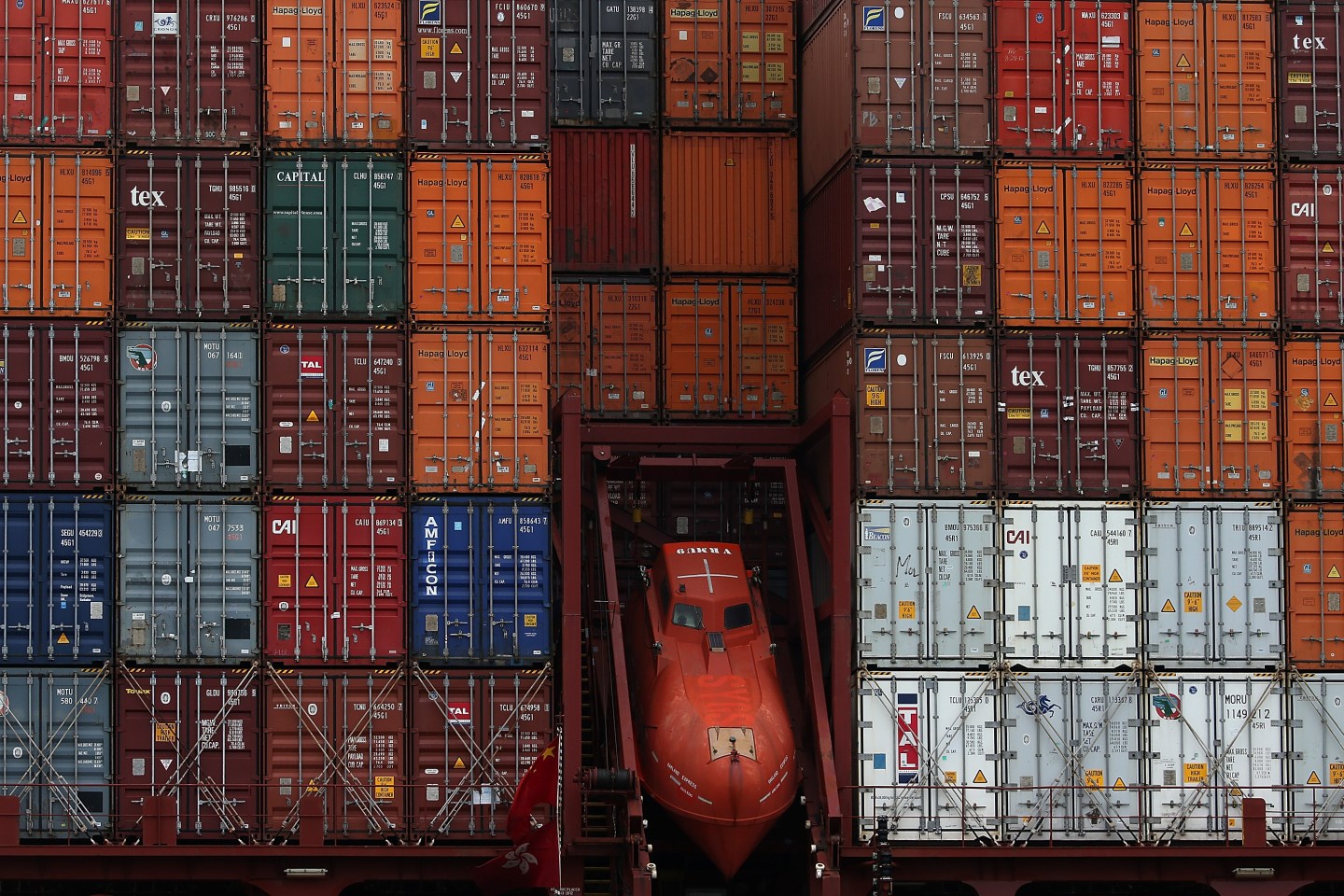
Containers sit on a ship that is docked in a berth at the Port of Oakland in February 2015 in Oakland, California.Photograph by Justin Sullivan — Getty Images

If you’re an electronics hobbyist, you should get to know 3dayandnight. The Shenzhen, China-based eBay seller is a retail jack of all trades, but offers some particularly great deals on microchips for applications like infrared sensing ($1.20) and voice recording ($1.96).

Just how great a deal is this, you ask? On RadioShack’s website, a very similar voice recording component sells for $9.99—plus another $6.99 charge to ship the item from a U.S. warehouse. Total cost: $18.17.

The shipping cost to get that item to a U.S. doorstep all the way from Shenzhen, China? Zero dollars.

Total cost? $1.96.

There are millions of cases like this across the Internet. Platforms for digital commerce like eBay have made it easy for Chinese producers to connect directly with purchasers from Oklahoma City to Oslo. But how could it be free to ship a microchip to Norway’s capital? With such low prices, there’s no way the cost of shipping is built in.

How is it possible to manufacture and ship an item across an ocean for two bucks?

A big part of the explanation is a United Nations body called the Universal Postal Union. The UPU helps coordinate rates and standards between nearly every national postal system, and has been a crucial piece of global infrastructure since its founding in 1874 (it was absorbed into the United Nations only in the 20th century). But critics argue that the system now amounts to a subsidy for international shipping from developing countries and net exporters.

At the heart of the matter is a mixed system of barter and compensation. Postal services within the UPU agree to carry one another’s international letters and small parcels from their point of arrival—say, a port—to their final destinations. They then compensate each other for this service at rates set by the UPU. These are known as terminal dues, and are amended at a UPU congress every four to five years.

The UPU system is extremely complex, with countries slotted into at least nine different categories, which are based on their level of development and effect the terminal dues rates they pay to each other. These rates are generally far below rates paid by domestic shippers. For example, as of 2012, the terminal dues on items from China to the U.S. were about one U.S. dollar per kilogram. This means that in many if not most cases, the U.S. Postal Service received less compensation for a China Post package moved from a Los Angeles port to its final destination inland, than it would have from someone in Los Angeles who sent an identical package within the United States. The last half of that voice chip’s journey would have cost China Post less than the price of a U.S. stamp.

In some cases, terminal dues are below, not just the domestic customer price, but the real underlying cost of shipping. Many developed countries, with higher postal costs in wages, services, or infrastructure, actually lose money on each piece of mail sent to them internationally. Norway Post has stated that its losses under the UPU must be compensated for by higher costs elsewhere in its postal system—meaning that Norwegians sending mail to one another, or out of the country, are subsidizing the price of shipping into Norway from abroad.

It’s little surprise, then, that Norway Post officials are critical of the UPU’s current structure. Kristen Bergum, Norway Post’s Vice President for Governmental and International Affairs, claimed in a 2011 conference presentation that postal services with low shipping costs and those who are net exporters have allied with developing nations to keep terminal dues low.

The impact of this imbalance has grown over the past five years with the rise of international e-commerce through platforms like eBay (EBAY) and Aliexpress, a consumer-oriented sister site of Alibaba (BABA). The volume of small packages from developing countries into developed nations has exploded as an ever-greater portion of international trade moves through national posts, rather than through commercial shipping routes to wholesalers.

The UPU has taken some steps towards reform. Beginning in 2004, countries have been progressively transitioned into a target system intended to more closely match compensation rates with real costs. As part of this reform process, China will be transitioned in 2016 into a category for more developed nations, who generally pay higher terminal dues.

However, critics are skeptical of the substance of these changes. “[China will have] the same rates as before, they’re just going to nominally be in the target system,” says Jim Campbell, a former DHL executive and policy consultant who is critical of the UPU. One reason for this is that the current UPU system includes caps on terminal dues paid to the most developed countries.

The next UPU congress is scheduled for 2016, but observers see little sign of big changes coming. National governments haven’t paid much attention to the UPU, and representation is largely left to loosely supervised postal service heads. This means high-cost postal systems like Norway’s will continue to lose money on inbound mail, while businesses in developed countries continue to face the pressure of artificially cheap international shipping.


About the Author
By David Z. Morris
See full bioRight Arrow Button Icon

Latest in Tech

Finance
Lorem ipsum dolor sit amet, consectetur adipiscing elit, sed do eiusmod tempor incididunt ut labore et dolore magna aliqua. Ut enim ad minim veniam
By Fortune Editors
October 20, 2025
Finance
Lorem ipsum dolor sit amet, consectetur adipiscing elit, sed do eiusmod tempor incididunt ut labore et dolore magna aliqua. Ut enim ad minim veniam
By Fortune Editors
October 20, 2025
Finance
Lorem ipsum dolor sit amet, consectetur adipiscing elit, sed do eiusmod tempor incididunt ut labore et dolore magna aliqua. Ut enim ad minim veniam
By Fortune Editors
October 20, 2025
Finance
Lorem ipsum dolor sit amet, consectetur adipiscing elit, sed do eiusmod tempor incididunt ut labore et dolore magna aliqua. Ut enim ad minim veniam
By Fortune Editors
October 20, 2025
Finance
Lorem ipsum dolor sit amet, consectetur adipiscing elit, sed do eiusmod tempor incididunt ut labore et dolore magna aliqua. Ut enim ad minim veniam
By Fortune Editors
October 20, 2025
Finance
Lorem ipsum dolor sit amet, consectetur adipiscing elit, sed do eiusmod tempor incididunt ut labore et dolore magna aliqua. Ut enim ad minim veniam
By Fortune Editors
October 20, 2025

Most Popular

Finance
Lorem ipsum dolor sit amet, consectetur adipiscing elit, sed do eiusmod tempor incididunt ut labore et dolore magna aliqua. Ut enim ad minim veniam
By Fortune Editors
October 20, 2025
Finance
Lorem ipsum dolor sit amet, consectetur adipiscing elit, sed do eiusmod tempor incididunt ut labore et dolore magna aliqua. Ut enim ad minim veniam
By Fortune Editors
October 20, 2025
Finance
Lorem ipsum dolor sit amet, consectetur adipiscing elit, sed do eiusmod tempor incididunt ut labore et dolore magna aliqua. Ut enim ad minim veniam
By Fortune Editors
October 20, 2025
Finance
Lorem ipsum dolor sit amet, consectetur adipiscing elit, sed do eiusmod tempor incididunt ut labore et dolore magna aliqua. Ut enim ad minim veniam
By Fortune Editors
October 20, 2025
Finance
Lorem ipsum dolor sit amet, consectetur adipiscing elit, sed do eiusmod tempor incididunt ut labore et dolore magna aliqua. Ut enim ad minim veniam
By Fortune Editors
October 20, 2025
Finance
Lorem ipsum dolor sit amet, consectetur adipiscing elit, sed do eiusmod tempor incididunt ut labore et dolore magna aliqua. Ut enim ad minim veniam
By Fortune Editors
October 20, 2025
Rankings
  • 100 Best Companies
  • Fortune 500
  • Global 500
  • Fortune 500 Europe
  • Most Powerful Women
  • Future 50
  • World’s Most Admired Companies
  • See All Rankings
Sections
  • Finance
  • Leadership
  • Success
  • Tech
  • Asia
  • Europe
  • Environment
  • Fortune Crypto
  • Health
  • Retail
  • Lifestyle
  • Politics
  • Newsletters
  • Magazine
  • Features
  • Commentary
  • Mpw
  • CEO Initiative
  • Conferences
  • Personal Finance
  • Education
Customer Support
  • Frequently Asked Questions
  • Customer Service Portal
  • Privacy Policy
  • Terms Of Use
  • Single Issues For Purchase
  • International Print
Commercial Services
  • Advertising
  • Fortune Brand Studio
  • Fortune Analytics
  • Fortune Conferences
  • Business Development
About Us
  • About Us
  • Editorial Calendar
  • Press Center
  • Work At Fortune
  • Diversity And Inclusion
  • Terms And Conditions
  • Site Map
  • Facebook icon
  • Twitter icon
  • LinkedIn icon
  • Instagram icon
  • Pinterest icon

Latest in Tech

NewslettersTerm Sheet
Bretton AI raises $75 million to use AI to combat financial crime
By Leo SchwartzFebruary 10, 2026
55 minutes ago
NewslettersFortune Tech
Google’s borrowing binge: $20 billion in new debt and a rare 100 year bond
By Alexei OreskovicFebruary 10, 2026
2 hours ago
InvestingMarkets
Why that $2 trillion software stock wipeout didn’t derail the AI bull market
By Jim EdwardsFebruary 10, 2026
2 hours ago
AIOpenAI
Panicked about losing GPT-4o, some ChatGPT users are building DIY versions. A psychologist explains why ‘feel-good hormones’ make it hard to let go
By Marco Quiroz-GutierrezFebruary 10, 2026
3 hours ago
EconomyAerospace and defense
France’s Thales ‘extensively’ ramps up production to meet a global boom in defense spending, says international CEO Pascale Sourisse
By Angelica AngFebruary 10, 2026
7 hours ago
Photo of Elon Musk
C-SuiteElon Musk
‘Don’t look at the résumé’: Elon Musk admits he’s ‘fallen prey’ to flashy credentials but says conversation matters most when hiring
By Jacqueline MunisFebruary 9, 2026
17 hours ago

Most Popular

placeholder alt text
C-Suite
Meet Jody Allen, the billionaire owner of the Seattle Seahawks, who plans to sell the team and donate the proceeds to charity
By Jake AngeloFebruary 9, 2026
17 hours ago
placeholder alt text
AI
As billionaires bail, Mark Zuckerberg doubles down on California with $50 million donation
By Sydney LakeFebruary 9, 2026
20 hours ago
placeholder alt text
Economy
China might be beginning to back away from U.S. debt as investors get nervous about overexposure to American assets
By Eleanor PringleFebruary 9, 2026
1 day ago
placeholder alt text
Economy
Elon Musk warns the U.S. is '1,000% going to go bankrupt' unless AI and robotics save the economy from crushing debt
By Jason MaFebruary 7, 2026
3 days ago
placeholder alt text
Commentary
America marks its 250th birthday with a fading dream—the first time that younger generations will make less than their parents
By Mark Robert Rank and The ConversationFebruary 8, 2026
2 days ago
placeholder alt text
Personal Finance
Current price of silver as of Monday, February 9, 2026
By Joseph HostetlerFebruary 9, 2026
23 hours ago

© 2026 Fortune Media IP Limited. All Rights Reserved. Use of this site constitutes acceptance of our Terms of Use and Privacy Policy | CA Notice at Collection and Privacy Notice | Do Not Sell/Share My Personal Information
FORTUNE is a trademark of Fortune Media IP Limited, registered in the U.S. and other countries. FORTUNE may receive compensation for some links to products and services on this website. Offers may be subject to change without notice.